How sprocket chain drives power automotive assembly lines — covering transfer conveyors, paint line systems, robotic cell material handling, and the precision requirements that keep production moving.
The Role of Chain Drives in Automotive Manufacturing
Automotive assembly plants are among the most chain-intensive manufacturing environments in the world. From the body shop where stamped panels arrive on overhead trolley conveyors, through paint preparation and coating lines, to final assembly where engines, transmissions, and interior components are married to the body — chain drives move parts, tools, and assemblies at every stage. A single automotive plant may contain hundreds of individual chain-driven conveyors, each synchronized to the production takt time that governs the entire line.
The defining requirement in automotive manufacturing is zero unplanned downtime. A chain failure on a single transfer conveyor can halt the entire assembly line within minutes, with costs measured in thousands of dollars per minute of lost production. This criticality drives the specification of premium-grade chains with tight pitch tolerance, comprehensive condition monitoring, and redundant lubrication systems.
Precision Requirements for Synchronized Production
Chain Specifications by Assembly Line Zone
ANSI 60-80 precision-grade chains with pitch accuracy within 0.05%. Overhead trolley and floor-level skillet conveyors moving stamped body panels between welding stations at exact takt intervals.
Stainless steel or nickel-plated chains resistant to phosphate wash, E-coat chemicals, and DI water rinse. Clean-side chains must not shed particles that could contaminate paint surfaces.
Alloy steel chains with PFPE lubricant rated for 200+ degrees Celsius bake oven transit. Extended-pitch configurations reduce link count and maintenance points in the oven zone.
Precision roller chains synchronized with PLC-controlled servo drives. Position accuracy within 1 mm ensures that components arrive at each workstation in the correct orientation for robotic or manual installation.
Automotive transfer conveyors demand precision-grade roller chains with pitch accuracy within 0.05% — significantly tighter than the 0.15% tolerance acceptable for general industrial applications. This precision ensures that the chain’s position at any point in the conveyor loop corresponds exactly to the PLC-programmed target, allowing robots and automated tooling to engage with the workpiece at the correct location and angle.
Chains that exceed the 0.05% tolerance cause positioning errors that compound along the line. A chain running 50 meters between the body shop and paint prep area with 0.1% pitch error accumulates 50 mm of positional drift — enough to cause robotic grippers to miss their pickup points. The resulting production interruptions are far more expensive than the premium cost of precision-grade chain.
Paint Line and Clean Environment Chain Selection
Paint line conveyors transit through some of the most chemically aggressive zones in an automotive plant: alkaline cleaning baths, zinc phosphate conversion coating tanks, electrocoat (E-coat) immersion baths, and high-temperature bake ovens. The chain must resist all of these environments in sequence without generating particulate contamination that could compromise paint quality.
Nickel-plated carbon steel chains provide adequate corrosion resistance for pretreatment zones at reasonable cost. For the E-coat immersion zone where chains are fully submerged in charged paint solution, stainless steel (SUS316) is preferred because any surface corrosion products would contaminate the entire E-coat bath. In the bake oven zone, alloy steel chains with PFPE dry-film lubrication replace standard oil-lubricated chains that would smoke and produce volatile organic compounds at curing temperatures.
Condition Monitoring and Predictive Maintenance
Automotive plants increasingly deploy chain condition monitoring systems that track elongation, temperature, and vibration in real time. Inductive sensors mounted at the sprocket measure the time interval between roller engagements — any deviation from the nominal interval indicates pitch elongation. Temperature sensors on sprocket bearings detect lubrication failures before they cause chain damage. Vibration accelerometers identify misalignment, worn sprockets, and stiff links.
These monitoring systems feed data to the plant’s centralized maintenance management system (CMMS), which generates automated work orders when any parameter exceeds its threshold. The result is truly predictive maintenance: chains are replaced during scheduled weekend shutdowns based on measured condition rather than calendar-based intervals, maximizing both chain utilization and production uptime.
Integration with PLC and Servo Drive Systems
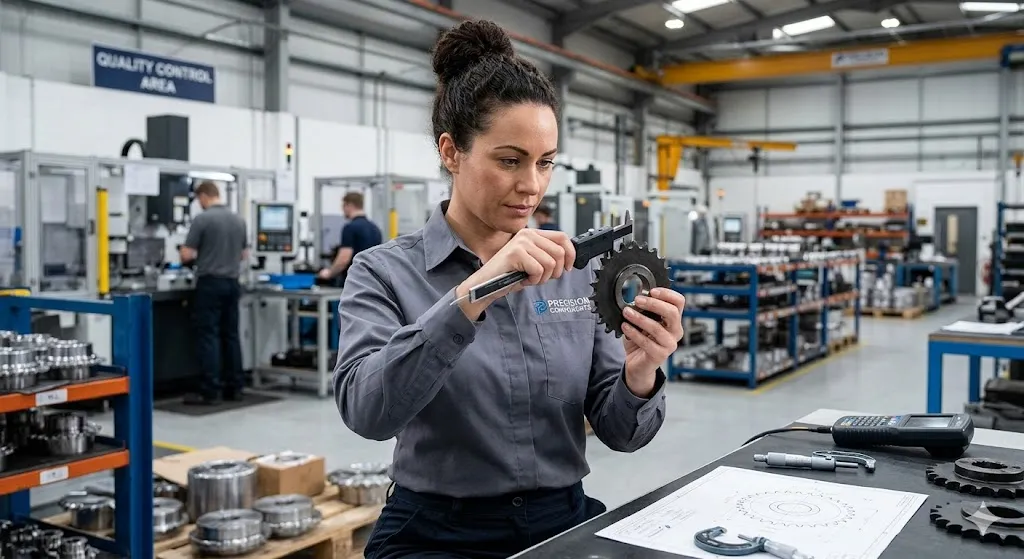
Modern automotive conveyors are controlled by programmable logic controllers (PLC) that coordinate chain speed, position, and acceleration with upstream and downstream processes. The chain drive motor — typically a servo-geared motor — receives speed and position commands from the PLC and adjusts in real time to maintain takt synchronization. The chain is the mechanical link between the electronic control system and the physical workpiece.
This integration means that chain performance directly affects control system accuracy. A chain with excessive elongation introduces positional backlash that the PLC cannot compensate for without adding costly sensor feedback at every workstation. Maintaining chain pitch accuracy through proper lubrication, tension management, and timely replacement is therefore essential for control system performance.
Why Choose Hangzhou Ever-Power as Your Supplier
Selecting a sprocket chain supplier is a decision that extends far beyond unit price. Delivery reliability, dimensional consistency across production batches, willingness to support OEM customization, and responsive after-sales technical backing all factor into the total cost of ownership. Hangzhou Ever-Power Sprocket Chain Co., Ltd. has built its reputation over decades by treating each of these factors as a baseline expectation rather than a premium add-on.
From raw steel blanking through heat treatment, shot peening, and final assembly, every production stage happens under one roof in Hangzhou — eliminating the quality drift that plagues multi-vendor supply chains.
Non-standard bore sizes, special tooth profiles, proprietary surface coatings, and unique attachment configurations are routine production orders — not special projects that require months of back-and-forth negotiation.
Every batch undergoes tensile testing, Rockwell hardness verification, dimensional inspection with CMM equipment, and pre-shipment elongation checks before products leave the factory floor.
Products ship to over 60 countries with packaging rated for ocean freight and documentation compliant with EU, North American, and Southeast Asian import regulations.
Frequently Asked Questions
Get in Touch with Our Engineering Team
Whether you need a standard catalog chain or a fully custom-engineered solution, our technical sales team is ready to assist with specification, pricing, and logistics.
Company
Hangzhou Ever-Power Sprocket Chain Co., Ltd.
Address
Shenhua Road, Hangzhou, China
Phone
+86-571-88220653