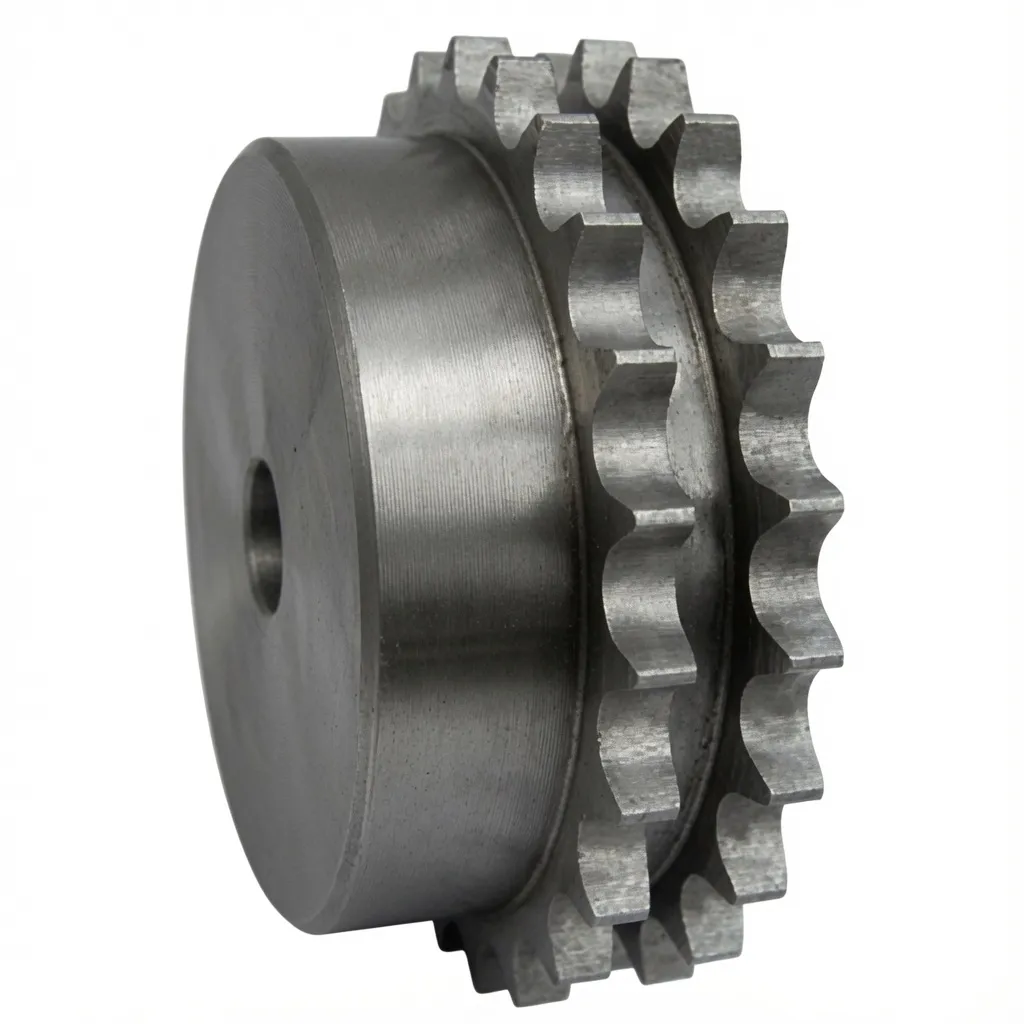
Description
Stainless Steel Sprockets
SUS35B
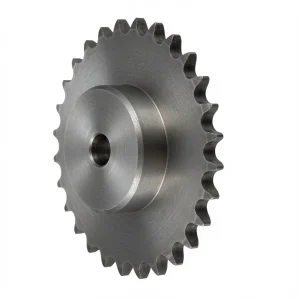
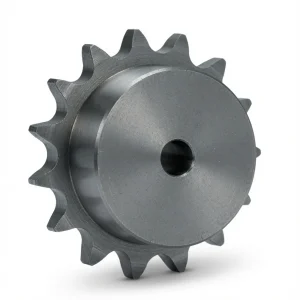
Medium-pitch 304 stainless steel sprockets engineered for No.35SS roller chain — balancing corrosion immunity with the load capacity demanded by conveyors, packaging lines, and process-industry drives.
Understanding the SUS35B Stainless Steel Sprocket
The SUS35B sits one pitch class above the SUS25B in the stainless roller chain sprocket hierarchy. Its 9.525 mm pitch — equivalent to 3/8 inch — places it in a working range that serves a broad band of medium-duty industrial drives: wider and more capable than the compact 6.35 mm pitch of the 25B series, yet compact enough for machinery where installation space is a genuine constraint. The designation follows the same convention as the wider SUS range: “SUS” signals 304 austenitic stainless steel, while “35B” identifies the pitch class compatible with No.35SS roller chain. This pairing is a common choice across the food processing, pharmaceutical, and chemical sectors, where the combination of a slightly higher load capacity than the 25B and the same corrosion-free operating characteristics makes it suitable for production-scale machinery rather than just instrument-level drives.
In the engineering context, selecting SUS35B over a carbon steel 35B sprocket is rarely about the material’s strength — 304 stainless is somewhat lower in yield strength than heat-treated carbon steel, but this difference is immaterial at the load levels for which No.35SS chain is typically rated. The real driver for specifying stainless is the operating environment. Anywhere that moisture, cleaning agents, acidic or alkaline process streams, or regulatory cleanliness requirements are present, the corrosion resistance and hygienic surface of the SUS35B stainless steel sprocket eliminates a class of failure modes and maintenance activities that would otherwise consume engineering time and operating budget.
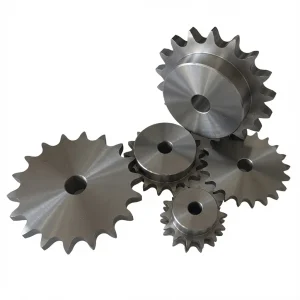
Hangzhou Ever-Power machines SUS35B sprockets from solid 304 stainless bar across the complete 10T–40T range, covering 26 discrete tooth counts. Bores are finished to H7 tolerance as standard, with keyway and set-screw options available. The tooth profile is CNC-hobbed to the correct geometry for No.35SS chain roller engagement, and every part passes dimensional inspection before dispatch.
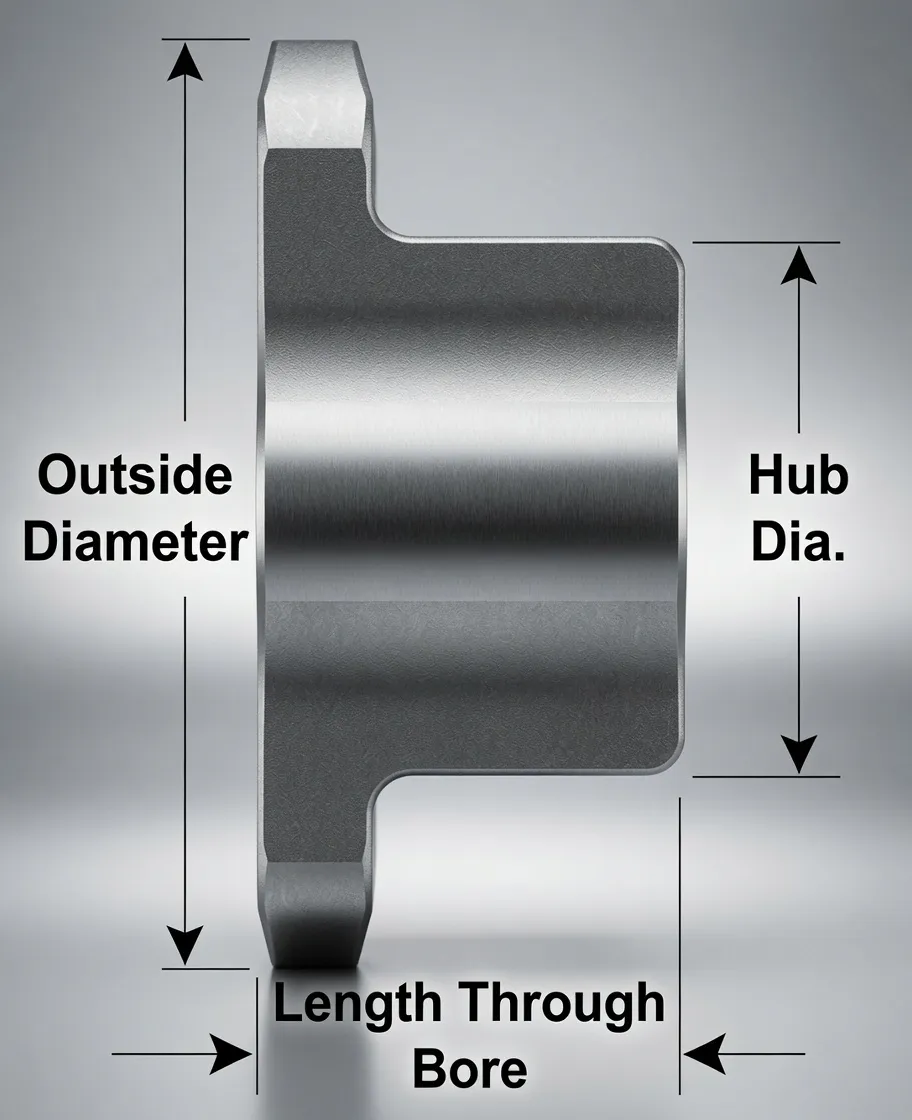
Chain Parameters & Full Dimensional Specifications
The four chain parameters below govern every aspect of SUS35B tooth geometry — from the root radius that accommodates the roller to the flank width that fits between the chain’s inner link plates. These values are fixed by the No.35SS chain standard and are the basis from which all 26 tooth count variants are derived. Getting these parameters right at the design stage, and holding them consistently in production, is what separates sprockets that run quietly through full chain life from those that produce early wear and elevated noise within weeks of installation.
Complete SUS35B Dimensional Table — All 26 Sizes
Outside diameter (Do), pitch circle diameter (Dp), stock bore, minimum bore, maximum bore, hub outer diameter (BD), hub length (BL), and part weight are listed for every available tooth count. All linear dimensions in millimeters; weight in kilograms. Entries marked with * in the original hub BD indicate sizes where hub geometry may be adjusted on custom orders.
| Type | Teeth | OD Do (mm) | PCD Dp (mm) | Stock Bore | Min. Bore | Max. Bore | Hub BD | Hub BL | Wt. (kg) |
|---|---|---|---|---|---|---|---|---|---|
| SUS35B | 10 | 34 | 30.82 | 8.8 | 10.8 | 12 | 24.5 | 20 | 0.08 |
| SUS35B | 11 | 38 | 33.81 | 8.8 | 10.8 | 14 | 27 | 20 | 0.09 |
| SUS35B | 12 | 41 | 36.80 | 9.8 | 11.8 | 16 | 30.5 | 20 | 0.12 |
| SUS35B | 13 | 44 | 39.80 | 9.8 | 11.8 | 18 | 32 | 20 | 0.12 |
| SUS35B | 14 | 47 | 42.81 | 9.8 | 11.8 | 18 | 32 | 20 | 0.12 |
| SUS35B | 15 | 51 | 45.81 | 9.8 | 11.8 | 20 | 35 | 20 | 0.16 |
| SUS35B | 16 | 54 | 48.82 | 9.8 | 11.8 | 20 | 37 | 20 | 0.19 |
| SUS35B | 17 | 57 | 51.84 | 11.5 | 13.5 | 25 | 41 | 20 | 0.22 |
| SUS35B | 18 | 60 | 54.85 | 11.5 | 13.5 | 25 | 44 | 20 | 0.25 |
| SUS35B | 19 | 63 | 57.87 | 11.5 | 13.5 | 28 | 47 | 20 | 0.28 |
| SUS35B | 20 | 66 | 60.89 | 11.5 | 13.5 | 30 | 50 | 20 | 0.32 |
| SUS35B | 21 | 69 | 63.91 | 11.5 | 13.5 | 32 | 53 | 20 | 0.36 |
| SUS35B | 22 | 72 | 66.93 | 11.5 | 13.5 | 35 | 56 | 20 | 0.37 |
| SUS35B | 23 | 75 | 69.95 | 11.5 | 13.5 | 38 | 60 | 20 | 0.38 |
| SUS35B | 24 | 78 | 72.97 | 11.5 | 13.5 | 32 | 53 | 22 | 0.43 |
| SUS35B | 25 | 81 | 76.00 | 11.5 | 13.5 | 32 | 53 | 22 | 0.44 |
| SUS35B | 26 | 84 | 79.02 | 11.5 | 13.5 | 32 | 53 | 22 | 0.45 |
| SUS35B | 27 | 87 | 82.05 | 11.5 | 13.5 | 32 | 53 | 22 | 0.46 |
| SUS35B | 28 | 90 | 85.07 | 11.5 | 13.5 | 32 | 53 | 22 | 0.48 |
| SUS35B | 30 | 96 | 91.12 | 11.5 | 13.5 | 32 | 53 | 22 | 0.51 |
| SUS35B | 32 | 102 | 97.18 | 11.5 | 13.5 | 32 | 53 | 22 | 0.54 |
| SUS35B | 34 | 109 | 103.23 | 11.5 | 13.5 | 32 | 53 | 22 | 0.57 |
| SUS35B | 35 | 112 | 106.26 | 11.5 | 13.5 | 32 | 53 | 22 | 0.59 |
| SUS35B | 36 | 115 | 109.29 | 11.5 | 13.5 | 32 | 53 | 22 | 0.61 |
| SUS35B | 38 | 121 | 115.34 | 11.5 | 13.5 | 42 | 63 | 25 | 0.82 |
| SUS35B | 40 | 127 | 121.40 | 12.5 | 14.5 | 42 | 63 | 25 | 0.85 |
Why 304 Stainless Steel Suits the SUS35B Working Range
At the 9.525 mm pitch level, No.35SS chain drives typically transmit moderate loads across conveyor lines, packaging machines, and process equipment. The working environment for this sprocket class frequently involves moisture, periodic cleaning with detergents or disinfectants, or direct contact with food or chemical process streams — conditions that would corrode unprotected carbon steel within months, producing rust staining that fails hygiene audits and contamination checks alike. AISI 304 stainless steel sidesteps this problem by forming a passive chromium oxide film that regenerates after each cleaning cycle, keeping the surface clean and dimensionally intact across years of service without any protective coating maintenance.
For the stainless steel roller chain for food industry applications that represent a major end-use for SUS35B sprockets, the austenitic nature of 304 stainless brings a secondary benefit: it is non-magnetic. This property matters in production lines where metal detection equipment is used to verify product integrity, because a non-magnetic stainless component near the detector does not trigger false positives the way ferromagnetic materials can. The non-magnetic characteristic also eliminates stray field interactions in equipment containing permanent magnet motors or sensors mounted close to the drive system.
Grade 304 provides reliable corrosion protection across most food, pharmaceutical, and general industrial environments. In applications with prolonged exposure to concentrated chlorides — seawater, brining tanks, chlorinated hot-water washdowns above 60°C — 316 stainless (with 2–3% molybdenum addition) is the correct choice. We supply SUS35B equivalents in 316 grade on request. Contact our team to discuss the environment and confirm the appropriate material for your application.
| Property | 304 Stainless (SUS35B) | C45 Carbon Steel |
|---|---|---|
| Corrosion resistance | Excellent (self-passivating) | Rusts without protection |
| Food & pharma compliance | FDA / GMP acceptable | Not suitable uncoated |
| Surface maintenance | None required | Coating renewal needed |
| Magnetic response | Non-magnetic | Ferromagnetic |
| Tooth hardness (induction) | As-machined ~180 HB | 40–50 HRC (hardened) |
| Tensile strength | ≥ 515 MPa | 600–850 MPa |
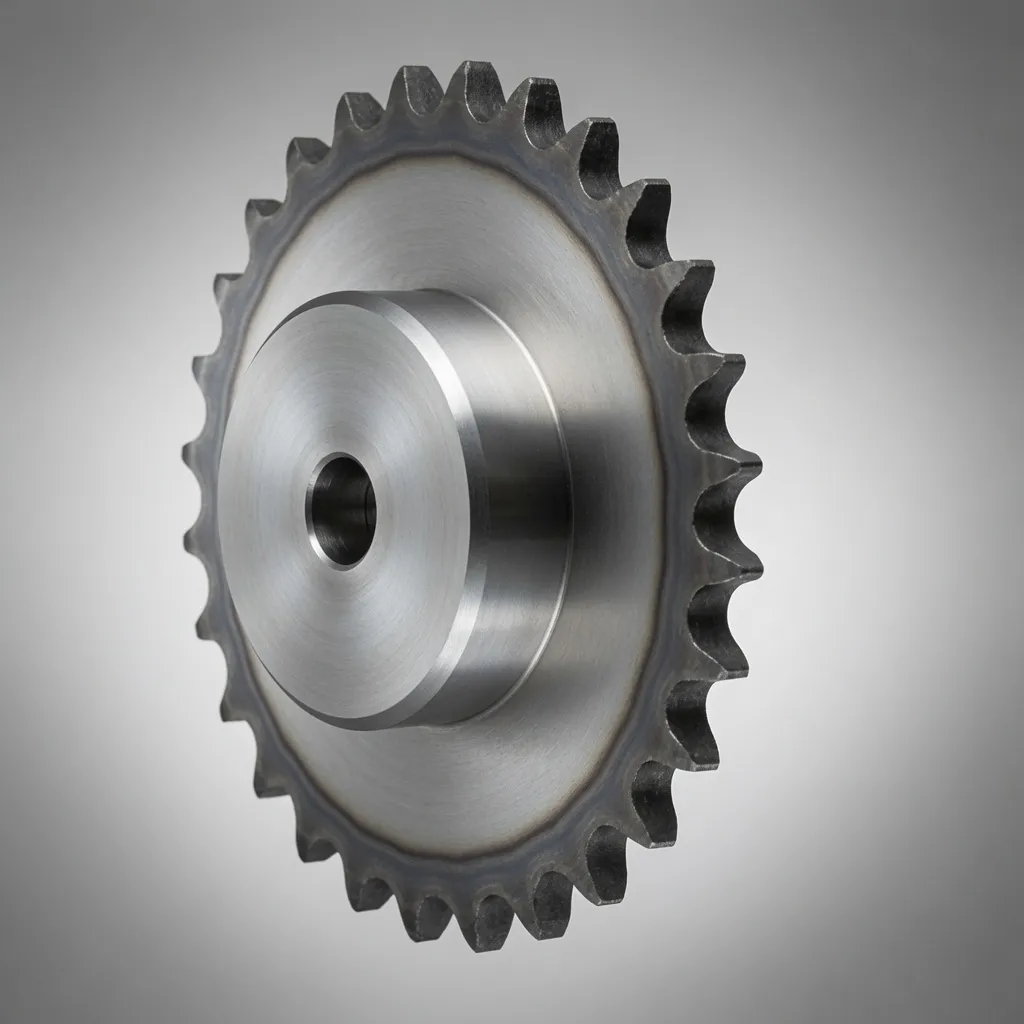
Machining Accuracy for Reliable Chain Drive Performance
At the 9.525 mm pitch scale, machining tolerances directly determine how smoothly the chain drive runs and how long the chain lasts before elongation requires replacement. Our SUS35B production sequence is structured to eliminate error stacking between operations, so the finished part carries the tightest achievable tolerance on the dimensions that matter most for chain engagement: pitch circle diameter, tooth spacing, tooth root radius, and bore concentricity.
Where SUS35B Sprockets Are Specified
The 9.525 mm pitch places the No.35SS chain in a load and speed range that suits the production rates and conveyor lengths common in food, beverage, pharmaceutical, and medium-scale industrial automation. As a chain drive sprocket for these sectors, the SUS35B is often the workhorse of a packaging or conveying system — not the highest-loaded component, but the one that runs the most hours and gets the fewest unscheduled maintenance interventions because its stainless construction requires so little attention.
Meat, Poultry & Seafood Processing
Processing lines in slaughterhouses, poultry deboning facilities, and seafood plants operate in permanently wet environments with frequent caustic and acid-based cleaning cycles between production shifts. SUS35B sprockets running stainless chain in these washdown zones outlast carbon steel alternatives by a wide margin and meet the hygiene requirements of HACCP-certified facilities without surface preparation or protective coatings.
Beverage Filling & Pasteurization Lines
Bottle and can conveyors in breweries, soft drink plants, and dairy operations pass through wet zones, steam-cleaning stations, and pasteurizer tunnels where temperature and humidity are extreme. The combination of heat resistance (304 stainless retains its passive film at normal process temperatures) and moisture immunity makes SUS35B the standard specification for drive chains and sprockets in these environments.
Chemical & Specialty Coating Lines
Conveyor drives in electroplating shops, surface treatment lines, and chemical process plants are exposed to acidic fumes, alkaline rinse baths, and solvent vapors. Carbon steel corrodes rapidly in these atmospheres even with protective finishes. SUS35B sprockets tolerate these environments without service disruption, reducing the maintenance overhead that comes with frequent component replacement in aggressive chemical surroundings.
Pharmaceutical Manufacturing
Solid dose production lines — tablet press feeds, blister packaging, and inspection conveyors — require drive components that do not generate contaminating particles, resist frequent IPA and hydrogen peroxide sanitization, and comply with GMP material requirements. SUS35B sprockets satisfy these conditions and can be supplied with electropolished surfaces for applications in cleanroom or ISO-classified environments where surface roughness is a regulated parameter.
Greenhouse & Horticulture Automation
Automated transplanting machines, planting conveyors, and watering system drives in commercial greenhouse operations run in environments combining high humidity, fertilizer mist, and periodic water jets. Carbon steel chain drives would require protection and regular maintenance to avoid rust formation that stains plants and contaminates substrate. SUS35B sprockets require no such intervention, making them a practical fit for continuous greenhouse automation.
Outdoor & Exposed Industrial Equipment
Machinery installed outdoors or in open-sided factory buildings is subject to rain, condensation, and temperature cycling that accelerates corrosion on unprotected steel. SUS35B sprockets on outdoor conveyor drives, automatic gate mechanisms, and irrigation system actuators eliminate the rust-related failures that commonly bring maintenance crews out to remote or difficult-to-access installation sites.
Duplex Configuration & Custom Options
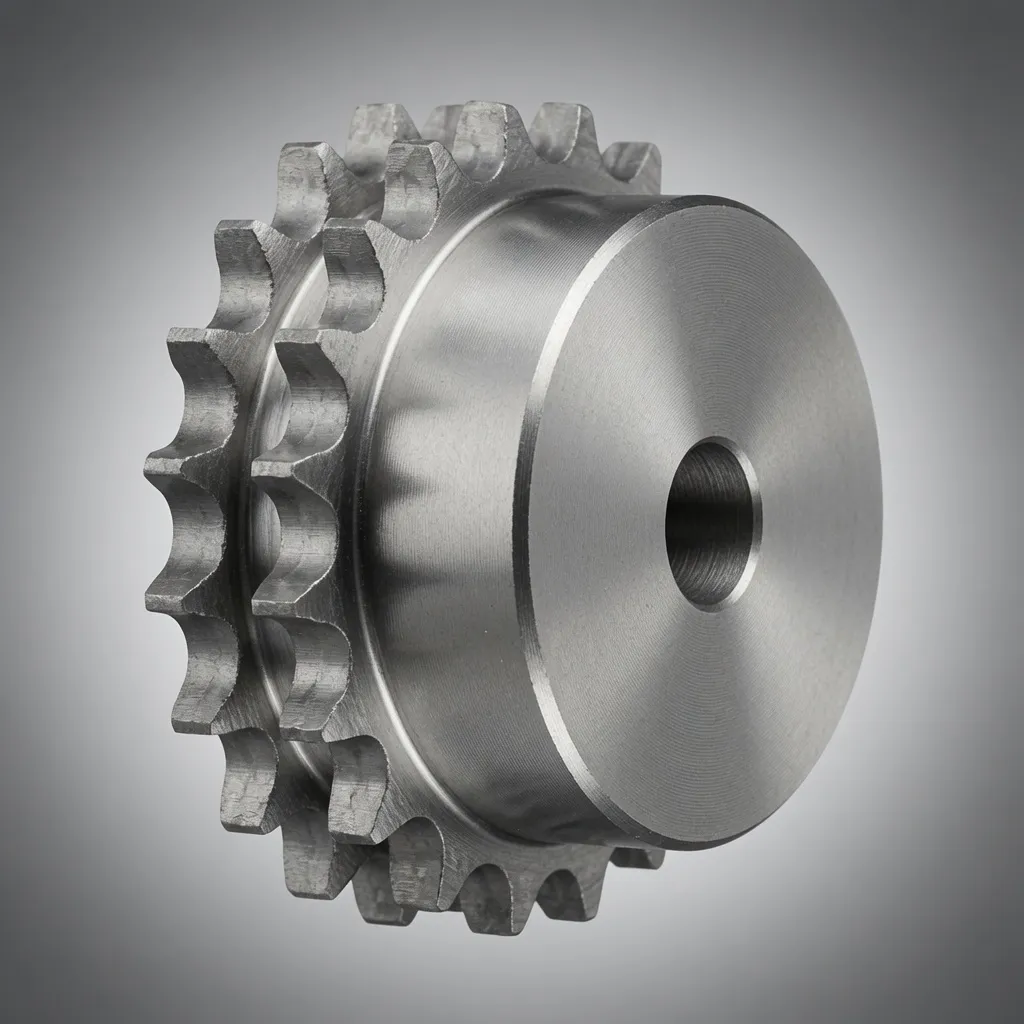
When the load requirement of a No.35SS single-strand drive exceeds the capacity of a simplex chain, the standard solution is to move to a duplex chain sprocket configuration — running two parallel strands of No.35SS chain side by side on a wider sprocket that carries twice the load at the same pitch and speed. Hangzhou Ever-Power produces SUS35B duplex sprockets to order, with tooth face widths machined to the exact double-strand dimension and both tooth rows hobbed to the same pitch tolerance as the simplex versions. Triplex (three-strand) configurations are also available where load requirements demand it.
Simplex (Single-Strand)
Standard catalogue configuration. Tooth width 4.3 mm as listed in the specification table. Covers the full 10T–40T range from stock or short-run production. Used for the vast majority of SUS35B applications where chain load does not approach the rated capacity of a single No.35SS strand.
Duplex (Double-Strand)
Tooth face width extended to accommodate two parallel No.35SS chain strands. Doubles the load capacity at the same pitch, speed, and sprocket diameter. Produced to order with the same bore and hub options as simplex versions. Lead time is typically the same as custom simplex orders — 7–14 business days from confirmed drawing.
OEM Custom Geometry
Non-standard tooth counts, hub geometries, face profiles, or special bore arrangements produced from customer drawings or sample parts. Reverse engineering service available. Drawing approval before production, first-article inspection report with delivery. No minimum order quantity on custom configurations.
For duplex or triplex orders, please specify the chain strand count, required tooth count, bore diameter, keyway specification if needed, and quantity. If you are designing a new drive system and need guidance on whether a simplex, duplex, or larger pitch class is the appropriate choice for your load and speed requirements, our engineering team can walk through the selection process with you before any hardware is ordered.
Sourcing SUS35B from Hangzhou Ever-Power
As a dedicated sprocket chain manufacturer with two decades of export experience, we understand that procurement engineers need more than a product that looks right on paper. They need a supplier who delivers on tolerance, material grade, and lead time consistently, without surprises. Our factory in Hangzhou operates on that expectation.
All machining is performed in-house at our Hangzhou facility. No trading company margins, no subcontracting fees. Prices reflect actual production costs, giving wholesale and OEM customers a competitive landed cost in their market.
Commercial invoice, packing list, certificate of origin, EN 10204 3.1 material certificate (on request), and dimensional inspection report are prepared for every shipment. All documents are available in English for customs clearance.
Standard SUS35B sizes in common tooth counts are held in semi-finished stock, allowing finished part delivery in 3–5 business days for urgent requirements. Custom bore and keyway modifications add 2–4 days to this timeline.
Technical questions — on material selection, bore sizing, duplex vs simplex trade-offs, or replacement fit — are handled by in-house engineers, not forwarded to a general customer service queue. Responses arrive within one business day.
How to Order SUS35B Stainless Steel Sprockets
Getting a quote is straightforward. For standard sizes, we only need three pieces of information: tooth count, bore diameter, and quantity. For custom configurations — duplex strand, non-standard keyway, special hub length, or anything outside the table above — a brief written spec or a dimensioned sketch eliminates the back-and-forth that slows down the quoting process. Send your requirements to [email protected] or call +86-571-88220653. You can also use the contact form on our contact page.
Frequently Asked Questions
Common questions about SUS35B stainless steel sprockets.