Description
Understanding European Standard Stainless Steel Sprockets
European standard sprockets are defined by their compliance with DIN 8187, DIN 8188, and the internationally recognized ISO/R 606 specification — a set of dimensional and performance criteria that governs metric roller chain drives used widely across Germany, France, Italy, the UK, and broader continental Europe. Unlike the ANSI standard system dominant in North America, which is based on inch-pitch chains, the European metric series uses specific pitch dimensions, bore tolerances, and tooth profile geometry calibrated for metric chain systems. This makes dimensional interoperability between the sprocket and the drive chain absolutely critical.
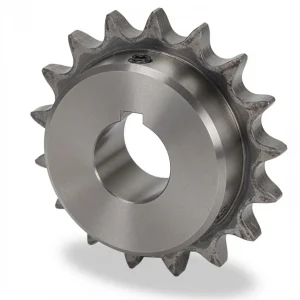
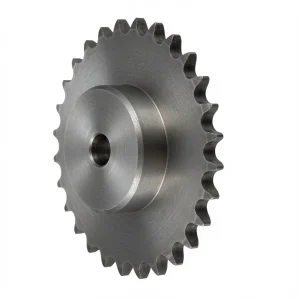
Our stainless steel sprockets for the European standard are machined to match both the B-series (DIN 8187) and the parallel-link ANSI-equivalent (DIN 8188) chain families. Material options span high-carbon C45 structural steel for heavy-load applications and 304-grade stainless steel for environments where corrosion, moisture, steam, or chemical exposure is a concern. Both variants are fully CNC-profiled to maintain the involute tooth form required by the ISO/R 606 geometry, keeping roller engagement smooth across the full load range and extending chain and sprocket service life significantly beyond lower-precision alternatives.
Hangzhou Ever-Power has been producing European-standard industrial sprockets for over two decades, exporting to customers across Europe, Southeast Asia, and the Americas. Our production line handles simplex (single-strand), duplex (double-strand), and triplex (triple-strand) configurations, covering the full B-series pitch range from 06B through 24B. Custom bore diameters, keyways, set-screw holes, and hub length modifications are executed in-house to meet project-specific requirements.
Core Technical Specifications
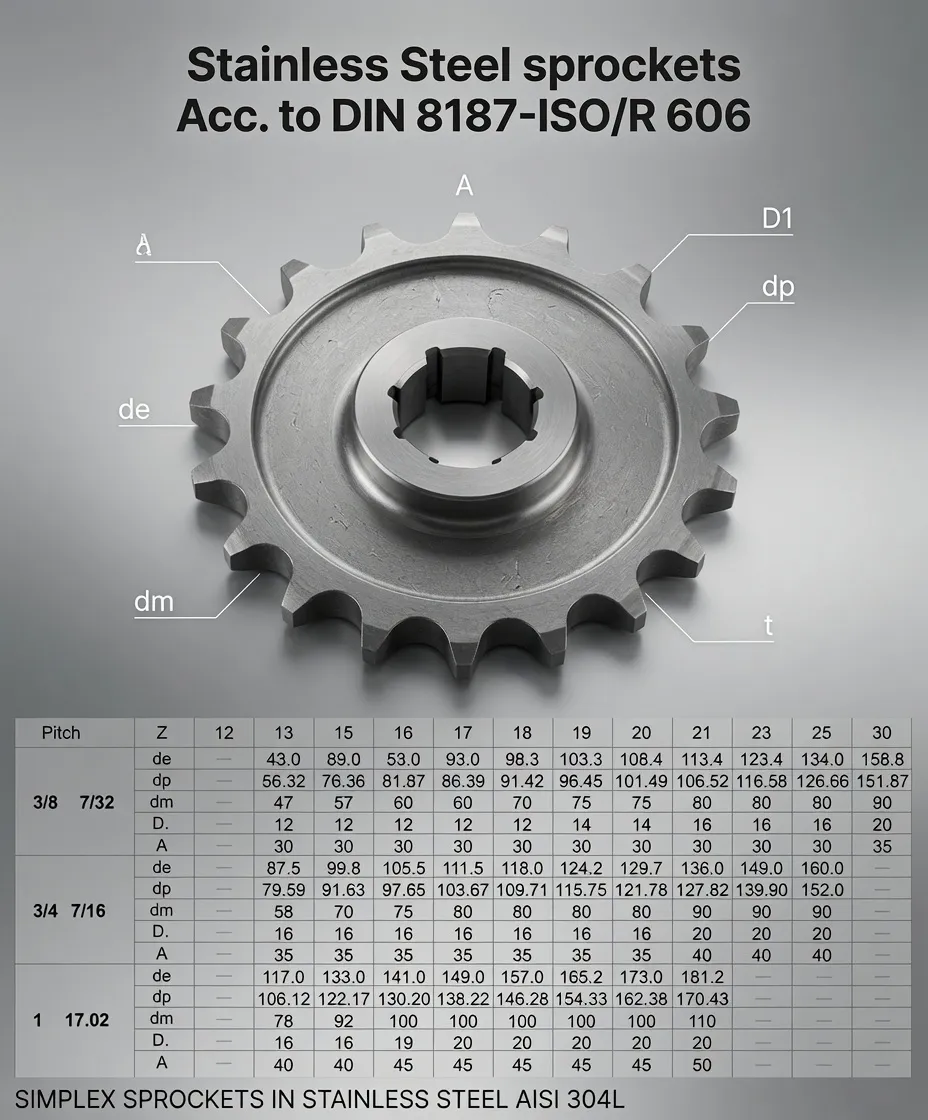
European metric B-series roller chain sprockets are characterized by their pitch dimension in millimeters rather than fractional inches. The table below covers the standard pitches and corresponding key chain parameters for the most commonly ordered sizes. Each size can be supplied in simplex, duplex, or triplex strand configurations, and each can be manufactured in C45 steel, A3 mild steel, or 304 stainless steel depending on the operating environment. Teeth count typically ranges from 9T to 114T per size class, though non-standard teeth counts can be produced from customer drawings. All bore dimensions are finished to H7 tolerance as standard, and keyways are milled to DIN 6885 unless otherwise specified.
| Chain No. | Pitch (mm) | Inner Width (mm) | Roller Dia. (mm) | Strand | Standard |
|---|---|---|---|---|---|
| 06B | 9.525 | 5.72 | 6.35 | 1 / 2 / 3 | DIN 8187 / ISO 606 |
| 08B | 12.700 | 7.75 | 8.51 | 1 / 2 / 3 | DIN 8187 / ISO 606 |
| 10B | 15.875 | 9.65 | 10.16 | 1 / 2 / 3 | DIN 8187 / ISO 606 |
| 12B | 19.050 | 11.68 | 12.07 | 1 / 2 / 3 | DIN 8187 / ISO 606 |
| 16B | 25.400 | 17.02 | 15.88 | 1 / 2 / 3 | DIN 8187 / ISO 606 |
| 20B | 31.750 | 19.56 | 19.05 | 1 / 2 / 3 | DIN 8187 / ISO 606 |
| 24B | 38.100 | 25.40 | 25.40 | 1 / 2 / 3 | DIN 8187 / ISO 606 |
Material Grades & Surface Treatment Technology
The selection of sprocket material is not a formality — it is one of the most consequential engineering decisions in a chain drive system’s design. Different operating environments impose fundamentally different requirements. High-speed general industrial drives under controlled factory conditions favor C45 medium-carbon steel because of its favorable combination of strength, machinability, and cost. Wet, chemically aggressive, or hygienic environments — where contact with process fluids, steam cleaning, saline spray, or acidic compounds is routine — call for stainless steel, specifically AISI 304 (equivalent to 1.4301 in European EN notation), which maintains its passive oxide layer and resists pitting and crevice corrosion under most service conditions without the risk of contaminating contact surfaces.
C45 Carbon Steel
- Tensile strength: 600–850 MPa
- Excellent machinability for complex bores
- Suitable for high-torque, dry drive environments
- Post-process blackening or zinc plating available
- Cost-effective for bulk OEM orders
304 Stainless Steel
- Chromium 18% / Nickel 8% composition
- Resistant to most acids, alkalis, and chlorides
- FDA-acceptable for food-contact applications
- Non-magnetic (austenitic grade)
- Low particle shedding — critical in pharma
A3 Mild Steel
- Lower-cost option for light-duty drives
- Good weldability for fabricated assemblies
- Surface treateable — electrogalvanizing, paint
- Used where load and speed cycles are modest
- Suitable for agricultural and material-handling machinery
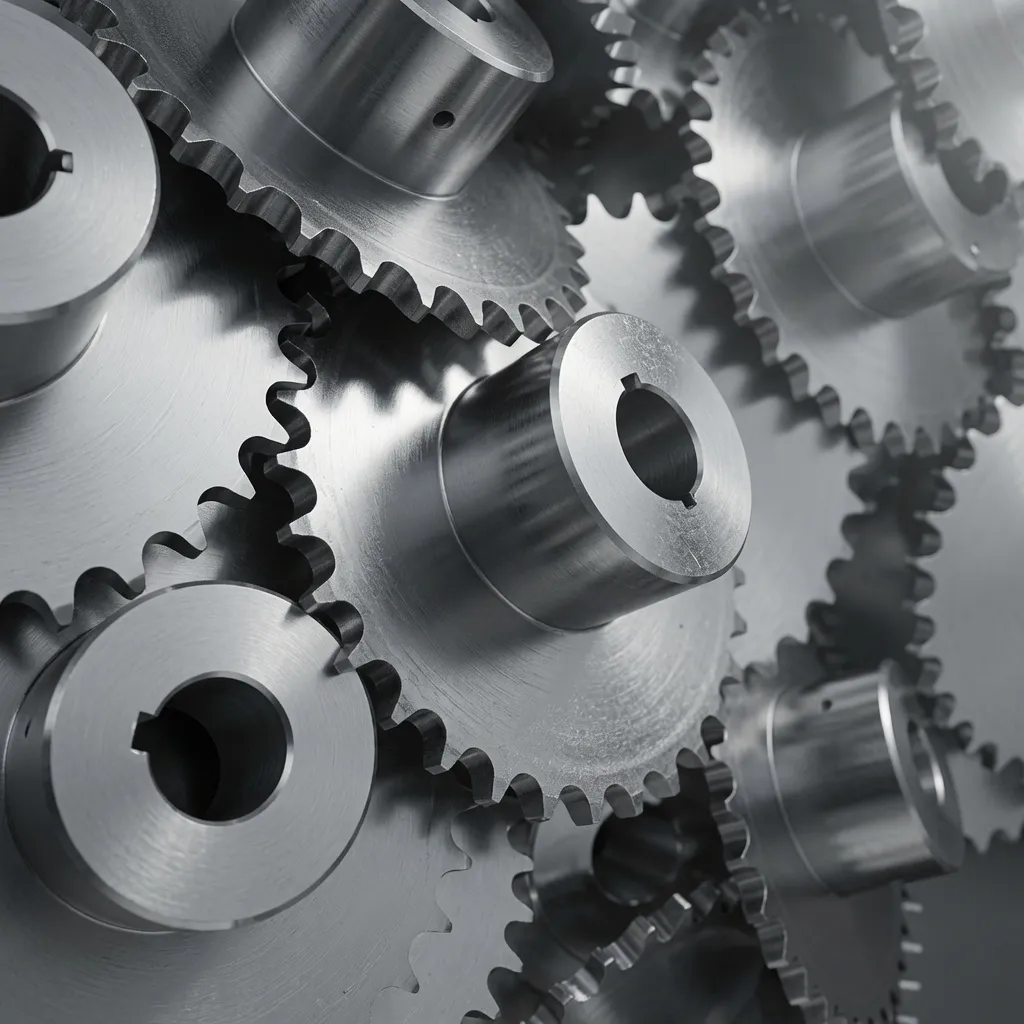
Surface hardening further extends service life regardless of substrate material. Our high-frequency induction quenching process heats only the tooth flanks and tips — the zones that experience the highest contact stress — to the austenitizing temperature before rapid quenching, producing a case hardness of 40 to 50 HRC while leaving the core and hub zone in a tougher, more impact-resistant condition. This selective hardening strategy prevents the tooth-tip brittleness that results from through-hardening, and it is fully compatible with all DIN/ISO dimensional requirements since dimensional distortion during induction quenching is minimal and controlled.
Five-Stage Precision Manufacturing Process
Dimensional accuracy in sprocket production is non-negotiable when targeting DIN 8187 and ISO/R 606 compliance. A sprocket tooth that is even marginally out of profile will produce accelerated chain wear, elevated noise, and unpredictable load distribution — conditions that shorten drive system service life and increase unplanned maintenance costs. Our manufacturing sequence is designed to eliminate accumulated tolerance errors at every stage, from raw material verification through to final inspection, ensuring that each sprocket leaving the factory matches its nominal design exactly.
Industry Applications
European standard stainless steel sprockets serve a remarkably broad equipment base. Their combination of dimensional compatibility with metric chain systems and the corrosion-resistant properties of 304-grade stainless steel makes them the default choice for any production environment where moisture, cleaning agents, process fluids, or regulated hygiene requirements are present. Below are the primary sectors where these sprockets are regularly specified, along with the specific operational conditions that drive the selection decision.
Food Processing & Beverage
Conveyor systems in meat, dairy, bakery, and bottling plants require washdown-compatible drives. Stainless steel prevents rust contamination and withstands CIP (clean-in-place) chemical cleaning cycles without surface degradation or seizing.
Pharmaceutical Manufacturing
GMP-compliant production lines require materials that do not shed particles or react with solvents. Austenitic 304 stainless, being non-magnetic and non-reactive, is the standard material in tablet press, filling machine, and packaging line drives.
Chemical & Petrochemical Plants
Pump drives, agitator drives, and transfer conveyors operating in environments with acid vapors, alkali splashes, or saline atmospheres depend on the passive film stability of 304 stainless to maintain component integrity across multi-year service intervals.
Packaging & Logistics Equipment
Cartoning machines, palletizers, stretch-wrap systems, and sorting conveyors built to European OEM standards routinely specify DIN 8187/ISO 606 sprockets. The dimensional compliance ensures drop-in interchangeability when servicing equipment made by major European OEMs.
Marine & Offshore Equipment
Winch systems, anchor handling equipment, and deck machinery on vessels operating in seawater environments need materials that can tolerate constant salt spray. Stainless steel sprockets serve these applications reliably without the protective coating maintenance that carbon steel requires.
Water Treatment & Wastewater
Screen drives, sludge conveyor chains, and clarifier mechanisms in water infrastructure are permanently exposed to corrosive effluents. European standard stainless sprockets offer the long service intervals and low maintenance that operators require in these typically remote, hard-to-service installations.
Custom & Non-Standard OEM Configurations
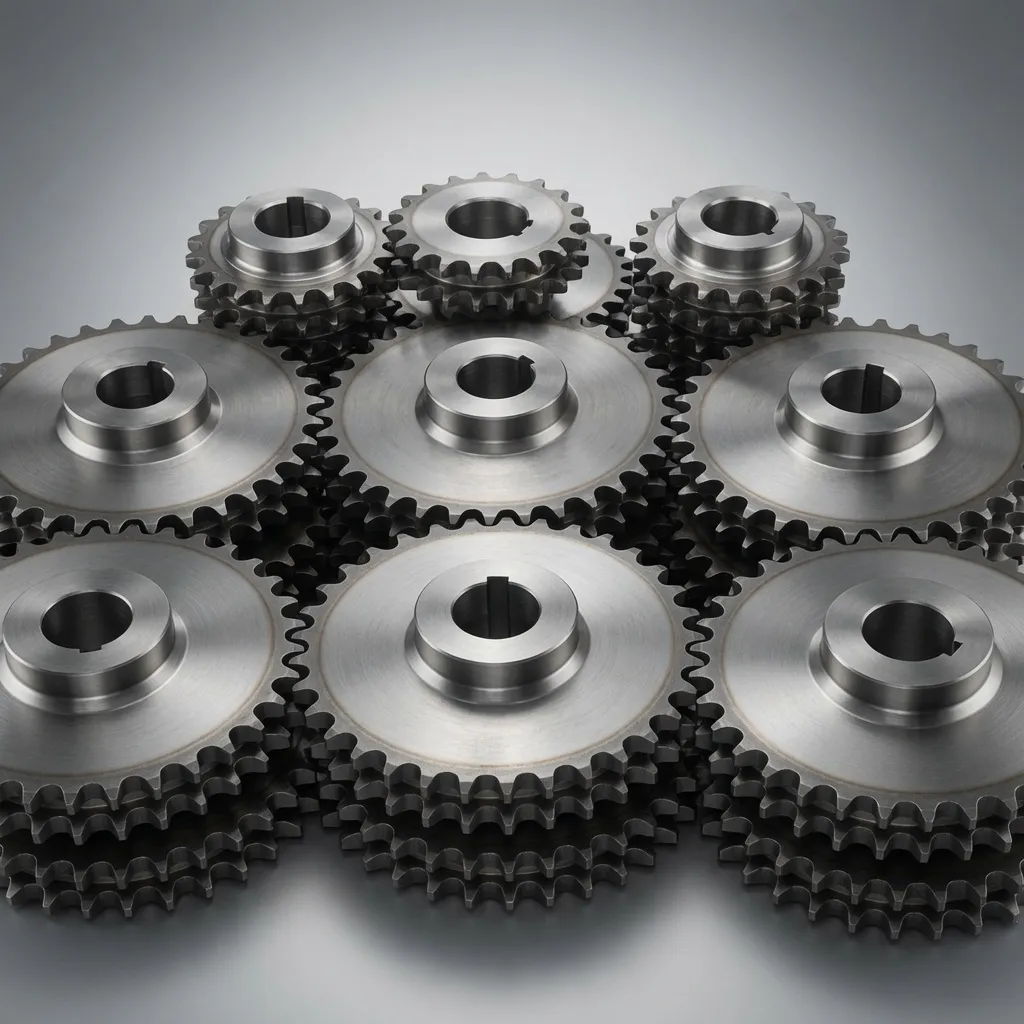
Many European machinery builders require sprockets that deviate from catalogue standards — either because the machine design calls for a specific center distance that demands a non-standard tooth count, or because the application involves an unusual bore diameter, a tapered bushing mount, an extended hub for a particular shaft arrangement, or surface-specific finishes not available in standard production. As a chain sprocket OEM factory with full in-house CNC and gear-hobbing capability, Hangzhou Ever-Power handles non-standard orders without outsourcing any machining operations. This means dimensional traceability and process control remain in-house from raw material through to final inspection.
📐 Drawing-Based Manufacturing
Submit a 2D drawing (DXF, DWG, or PDF) or a 3D model, and we will program the part directly from the file. Typical lead time for first-article samples from new drawings is 7–14 working days depending on complexity.
🧩 Sample-Based Reverse Engineering
If you have a worn or broken sprocket without documentation, our metrology team can reverse-engineer the geometry from the physical sample using CMM, producing a dimensioned drawing for approval before production begins.
🔧 Hub & Bore Modifications
Pilot bore, finished bore with keyway, tapered QD bushing, taper-lock, set-screw, or through-hole configurations are all available. Extended hubs, flanged hubs, and split sprocket designs for maintenance-free installation are produced to order.
🏷️ Private Label & OEM Marking
OEM customers requiring laser marking with their own part numbers, brand name, or certification marks can specify this as part of the order. Neutral packaging or branded packaging with customer artwork is available for dropship and private-label programs.
📦 Low MOQ Availability
We accept orders from a single prototype piece for initial engineering validation through to full production runs of thousands of units. Pricing scales predictably with volume, and sample orders can transition to blanket production orders once the design is confirmed.
🧾 Material Certification
EN 10204 3.1 material test certificates are available upon request for stainless steel grades, providing full traceability of chemical composition and mechanical properties from mill to finished part for quality-critical applications.
For projects requiring DIN standard sprocket chain components in unusual sizes or materials not listed in our standard catalogue, we invite technical discussions at the inquiry stage. Our engineering team can advise on material selection, tooth geometry optimization, and fit-for-purpose surface treatment before any commitment is made. Early engineering involvement reduces iteration cycles and speeds time-to-production.
Why Engineers Choose Hangzhou Ever-Power
Established in Hangzhou, China, Hangzhou Ever-Power Sprocket Chain Co., Ltd. has built its reputation not through catalogue depth alone but through the consistency of its machining tolerances and the responsiveness of its engineering support. As a direct-factory stainless steel sprocket manufacturer with complete vertical integration, we control every step from raw material sourcing to final packaging — which is how we maintain the quality floor that European and North American OEM customers depend on.
industrial sprockets
worldwide
management system
for custom parts
How to Place Your Order
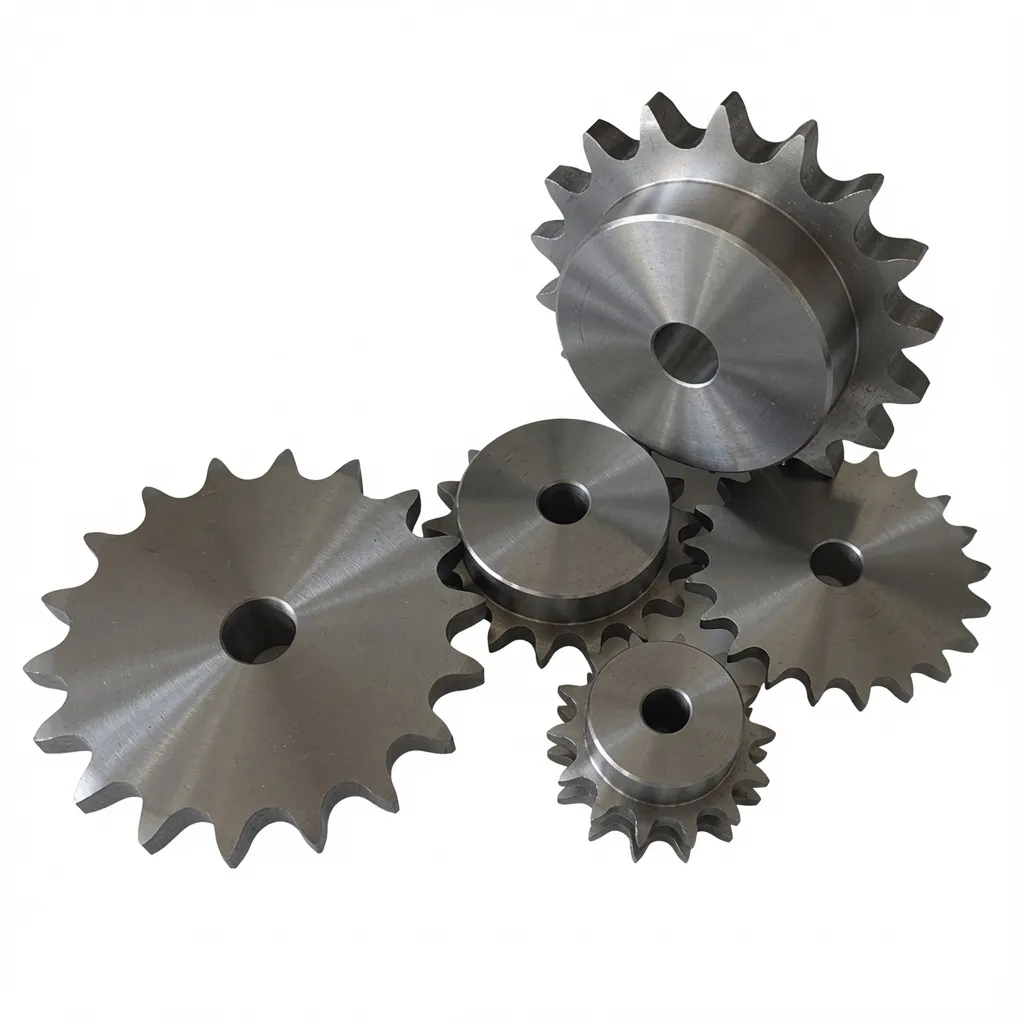
Getting from initial inquiry to delivered parts is a straightforward process. We ask for the minimum amount of information needed to quote accurately and confirm compatibility — no lengthy questionnaires. For standard catalogue sizes, a DIN/ISO chain number plus required teeth count and bore diameter is sufficient. For non-standard parts, attach a dimensional drawing or sample photograph alongside the inquiry. Our team responds to all technical inquiries within one business day, and formal quotations follow within 24–48 hours for standard configurations.
Frequently Asked Questions
Common questions about our European standard stainless steel sprockets.