Description
Stainless Steel Sprockets
SUS60B
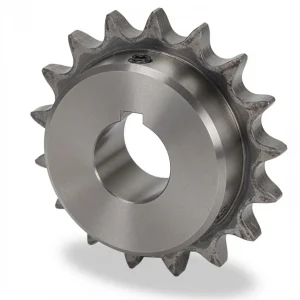
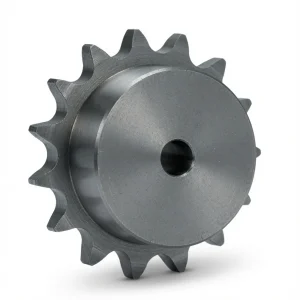
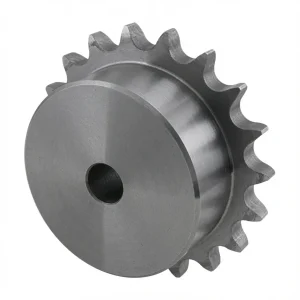
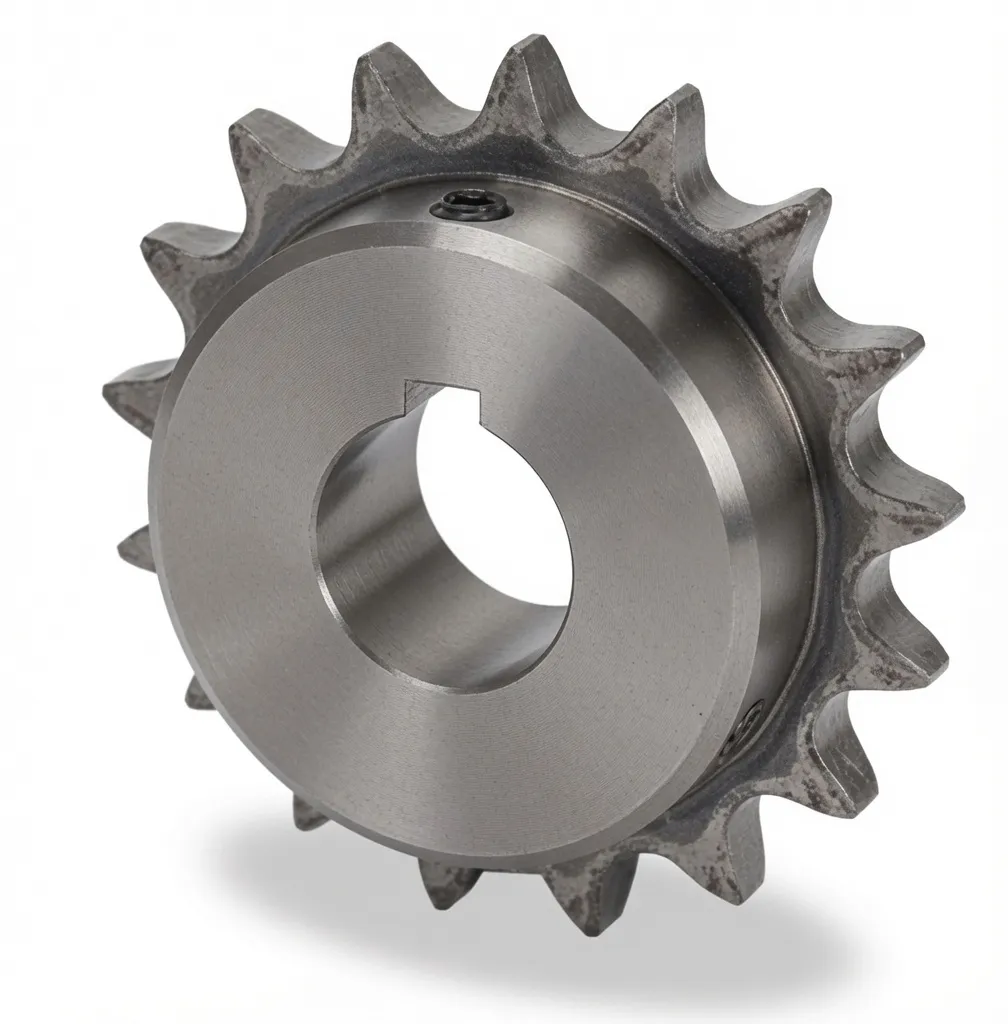
The 3/4-inch pitch class in full 304 stainless — SUS60B sprockets deliver heavy-load chain drive capacity where corrosion resistance, hygiene compliance, and structural integrity must coexist.
SUS60B in Heavy-Duty Stainless Chain Drive Systems
The 19.05 mm pitch — three-quarters of an inch — marks the boundary between medium and genuinely heavy chain drive engineering. At this pitch class, chain cross-sections are large enough to carry substantial working loads on relatively slow conveyors, elevator chains, and process machinery drives, making the No.60SS chain a staple in sectors like food processing at production scale, heavy chemical handling, and paper mill auxiliary drives. The SUS60B sprocket is the stainless steel component that makes these drives viable in wet or chemically active environments where carbon steel equivalents would require continuous anti-corrosion maintenance to remain serviceable.
As a China sprocket manufacturer with over two decades of production history in the stainless roller chain sprocket family, Hangzhou Ever-Power machines SUS60B parts from solid 304 stainless bar across all 26 tooth counts. The 40T version weighs 5.30 kg — a substantial part by stainless sprocket standards — and its hub dimensions (BD=83 mm, BL=40 mm at the larger end of the range) reflect the structural requirements of heavy-load shaft mounting. Every dimension in the table is held to the same machining tolerances applied across the smaller SUS series: pitch circle diameter to ±0.05 mm, bore to H7, tooth spacing to ±0.04 mm tooth-to-tooth.
For engineers comparing the SUS60B to the SUS50B, the step up in pitch provides approximately 25–30% more chain rated breaking load at the same strand count, along with a wider tooth contact face (11.7 mm vs 8.7 mm) that distributes contact forces over a greater area, reducing tooth face pressure at equivalent loads. This wider tooth contact also gives the SUS60B better tolerance of minor misalignment between sprocket faces — a practical advantage in large-scale machinery where perfect shaft parallelism is difficult to maintain over long bearing spans.
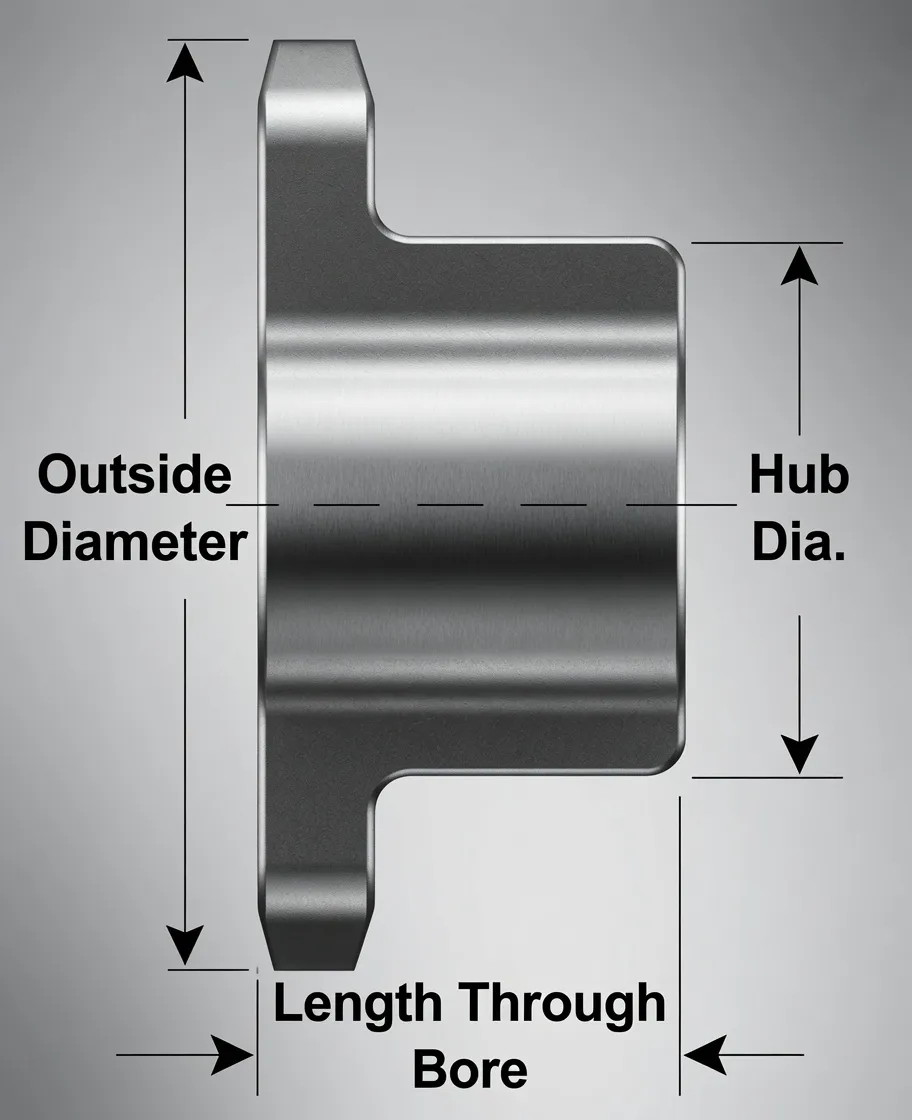
Chain Parameters & Complete Dimensional Specifications
The No.60SS chain has a roller diameter (11.91 mm) that is slightly smaller than its internal width (12.70 mm), a proportional relationship distinct from both the 40-series (equal values) and the 50-series (roller larger than width). This geometry directly determines the tooth root radius and flank clearance angle machined into every SUS60B tooth. Using a sprocket from a different pitch class — even one with a close-but-different roller diameter — will produce poor engagement quality and concentrated contact stress that accelerates wear far beyond what correct specification would generate.
Complete SUS60B Dimensional Table — All 26 Sizes
All linear dimensions in millimeters; weight in kilograms. Stock bore = pilot bore as supplied; min./max. bore = achievable finished bore range.
| Type | Teeth | OD Do (mm) | PCD Dp (mm) | Stock Bore | Min. Bore | Max. Bore | Hub BD | Hub BL | Wt. (kg) |
|---|---|---|---|---|---|---|---|---|---|
| SUS60B | 10 | 68 | 61.65 | 14.5 | 16.5 | 30 | 49 | 32 | 0.49 |
| SUS60B | 11 | 76 | 67.62 | 14.5 | 16.5 | 32 | 51 | 32 | 0.60 |
| SUS60B | 12 | 83 | 73.60 | 14.5 | 16.5 | 32 | 51 | 32 | 0.69 |
| SUS60B | 13 | 89 | 79.60 | 14.5 | 16.5 | 35 | 57 | 32 | 0.81 |
| SUS60B | 14 | 95 | 85.61 | 16.5 | 18.5 | 40 | 62 | 32 | 0.96 |
| SUS60B | 15 | 101 | 91.62 | 16.5 | 18.5 | 45 | 68 | 32 | 1.10 |
| SUS60B | 16 | 107 | 97.65 | 16.5 | 18.5 | 48 | 73 | 32 | 1.30 |
| SUS60B | 17 | 113 | 103.67 | 16.5 | 18.5 | 48 | 73 | 32 | 1.40 |
| SUS60B | 18 | 119 | 109.71 | 16.5 | 18.5 | 55 | 83 | 40 | 2.00 |
| SUS60B | 19 | 126 | 115.74 | 16.5 | 18.5 | 55 | 83 | 40 | 2.10 |
| SUS60B | 20 | 132 | 121.78 | 16.5 | 18.5 | 55 | 83 | 40 | 2.20 |
| SUS60B | 21 | 138 | 127.82 | 16.5 | 18.5 | 55 | 83 | 40 | 2.30 |
| SUS60B | 22 | 144 | 133.86 | 16.5 | 18.5 | 55 | 83 | 40 | 2.50 |
| SUS60B | 23 | 150 | 139.90 | 16.5 | 18.5 | 55 | 83 | 40 | 2.50 |
| SUS60B | 24 | 156 | 145.95 | 16.5 | 18.5 | 55 | 83 | 40 | 2.60 |
| SUS60B | 25 | 162 | 151.99 | 16.5 | 18.5 | 55 | 83 | 40 | 2.70 |
| SUS60B | 26 | 168 | 158.04 | 16.5 | 18.5 | 55 | 83 | 40 | 2.90 |
| SUS60B | 27 | 174 | 164.09 | 17 | 19 | 55 | 83 | 40 | 3.00 |
| SUS60B | 28 | 180 | 170.14 | 17 | 19 | 55 | 83 | 40 | 3.10 |
| SUS60B | 30 | 193 | 182.25 | 17 | 19 | 55 | 83 | 40 | 3.40 |
| SUS60B | 32 | 205 | 194.35 | 18 | 20 | 55 | 83 | 40 | 3.80 |
| SUS60B | 34 | 217 | 206.46 | 18 | 20 | 55 | 83 | 40 | 4.15 |
| SUS60B | 35 | 223 | 212.52 | 18 | 20 | 55 | 83 | 40 | 4.33 |
| SUS60B | 36 | 229 | 218.57 | 18 | 20 | 55 | 83 | 40 | 4.52 |
| SUS60B | 38 | 241 | 230.69 | 18 | 20 | 55 | 83 | 40 | 4.90 |
| SUS60B | 40 | 253 | 242.80 | 18 | 20 | 55 | 83 | 40 | 5.30 |
Structural Integrity at the 3/4-Inch Pitch Class
When moving to a heavier pitch class like the SUS60B, structural questions become more pertinent. Hub wall thickness, bore-to-OD ratio, and axial loading capacity all scale with part size — and at 5.30 kg for the 40T variant, the SUS60B is a meaningfully heavy component whose hub geometry must sustain the full shaft torque under the loaded chain tension without yielding or fatigue cracking. The consistent 83 mm hub BD and 40 mm hub BL in the mid-to-large tooth count range reflects a design decision to maintain adequate wall thickness and bearing surface as bore diameters increase, rather than reducing hub size to save material weight.
304 stainless steel’s yield strength (≥ 205 MPa) is lower than heat-treated C45 carbon steel, which means hub wall thickness must account for the material’s lower strength-to-cross-section ratio when determining maximum allowable bore. The maximum bore values in the table reflect this calculation — they represent the largest bore at which the hub cross-section in 304 stainless retains an adequate safety factor against hub failure under the design torque for this pitch class. Do not exceed the listed maximum bore diameter without consulting our engineering team for a structural assessment.
Bore & Hub Wall Design
Maximum bore is conservatively set for each tooth count to maintain a minimum 304 SS hub wall thickness that sustains the rated chain load at that pitch class. Hub BD and BL increase at the 18T step (83 mm / 40 mm) to accommodate the larger bores required by heavier shaft sizes in industrial machinery.
Weight & Balance
SUS60B parts are turned and hobbed with the bore concentric to the OD within 0.02 mm, minimizing dynamic imbalance. At the larger tooth counts (30T+, OD above 190 mm), mass distribution becomes a factor in higher-speed installations — contact us if the application speed exceeds 1.5 m/s for sprockets at this pitch class.
Tooth Width & Alignment Tolerance
The 11.7 mm tooth face width for No.60SS simplex chain is the widest in the standard SUS series up to this pitch class. The extra face width absorbs a larger proportion of axial misalignment before chain edge loading occurs — a practical benefit in large industrial drives where maintaining perfect shaft parallelism across long bearing spans is constrained by structural deflection.
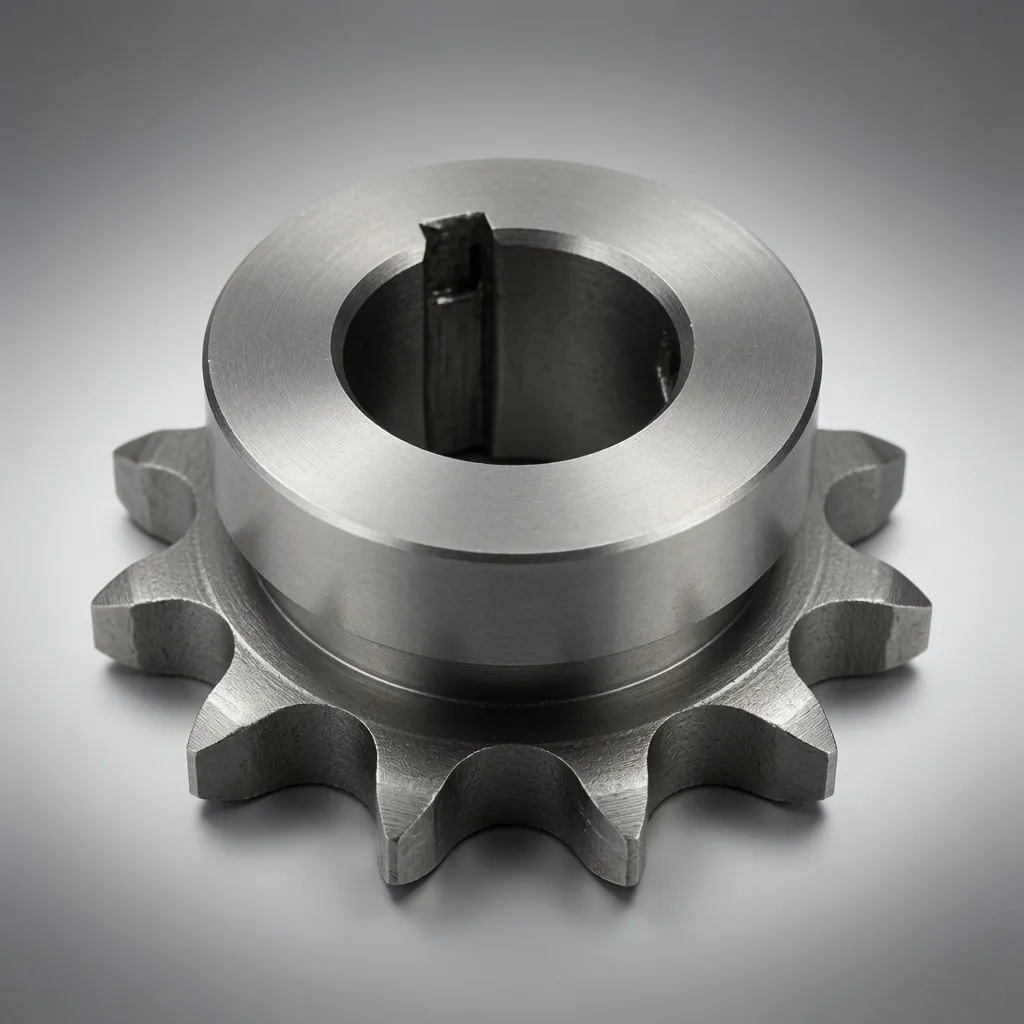
Manufacturing Excellence — Consistency at Scale
Machining SUS60B sprockets at the larger tooth counts presents specific challenges: the blanks are heavier, vibration during cutting must be controlled more carefully on larger-diameter parts, and 304 stainless tends to work-harden during machining if cutting parameters are not managed correctly. Work hardening locally raises the surface hardness of the machined face, which can interfere with bore tolerances if allowed to accumulate. Our CNC programs for SUS60B blanks use cutting speeds, feeds, and coolant strategies specifically tuned to 304 stainless machining — not generic parameters carried over from carbon steel production — to produce consistent bore and tooth quality across the full size range.
Heavy-Duty Industry Applications
The SUS60B occupies a specific engineering position: high enough load capacity for production-scale heavy industrial drives, combined with full stainless construction for environments where carbon steel would not survive the service interval without major maintenance intervention. The six sectors below represent the core markets where the 3/4-inch stainless sprocket is the standard specification rather than a premium option.
Large-Scale Food Processing Plants
Production-scale slaughter lines, industrial cheese processing conveyors, and large-volume vegetable processing lines require chain drives with higher torque capacity than the 50-series provides at production throughput speeds. SUS60B sprockets on main conveyor drives handle the heavier loads while remaining fully compliant with HACCP, BRC, and IFS food hygiene standards. Hot caustic washdown cycles — sometimes multiple times per shift — are tolerated without surface degradation or rust formation.
Chemical Reactor & Process Plant Drives
Agitator drives, pump couplings, and feed conveyor systems in chemical manufacturing plants face acid vapors, caustic splashes, and solvent exposure that destroy carbon steel drive components within one production cycle. The heavy duty roller chain drives at this scale use SUS60B sprockets where carbon steel would trigger unplanned maintenance shutdowns. The 19.05 mm pitch provides the structural margin for continuous high-load operation in these environments.
Water & Wastewater Infrastructure
Sludge belt press drives, heavy bar screen mechanisms, and aeration tank mixers in water treatment plants carry substantial loads under permanently corrosive conditions. The 60B pitch class handles the torque requirements of these large, slow-moving drives while the stainless construction eliminates the corrosion failures that are the leading cause of emergency shutdowns at water treatment facilities operating with hard-to-source spare parts.
Mining & Mineral Processing
Underground wet-heading belt conveyors, mineral slurry pump drives, and ore washing conveyor systems operate in permanently saturated conditions with acidic groundwater or mineral process liquids. The combination of heavy mechanical loads and highly corrosive environments is precisely the operating window where SUS60B sprockets outperform both zinc-plated carbon steel (insufficient corrosion resistance) and smaller stainless pitch classes (insufficient load capacity).
Pulp & Paper Mill Auxiliary Drives
Paper mills use chain drives on pulp screening machines, stock chest agitators, and felt tension systems in environments saturated with steam, white water, and bleaching chemicals. SUS60B sprockets outlast carbon steel equivalents in these installations by avoiding the accelerated pitting and crevice corrosion that bleach and chloride-bearing process water causes on unprotected steel, reducing the frequency of planned maintenance shutdowns required to replace corroded drive components.
Marine & Port Handling Equipment
Shipboard cargo handling systems, port crane auxiliary drives, and dock conveying machinery operate in salt spray environments where ordinary protective coatings have a service life measured in months. SUS60B sprockets for marine use are rated for continuous salt-atmosphere exposure without surface treatment renewal, reducing the maintenance burden on hard-to-reach shipboard installations and eliminating rust contamination of cargo holds that can carry penalty costs in regulated commodities shipping.
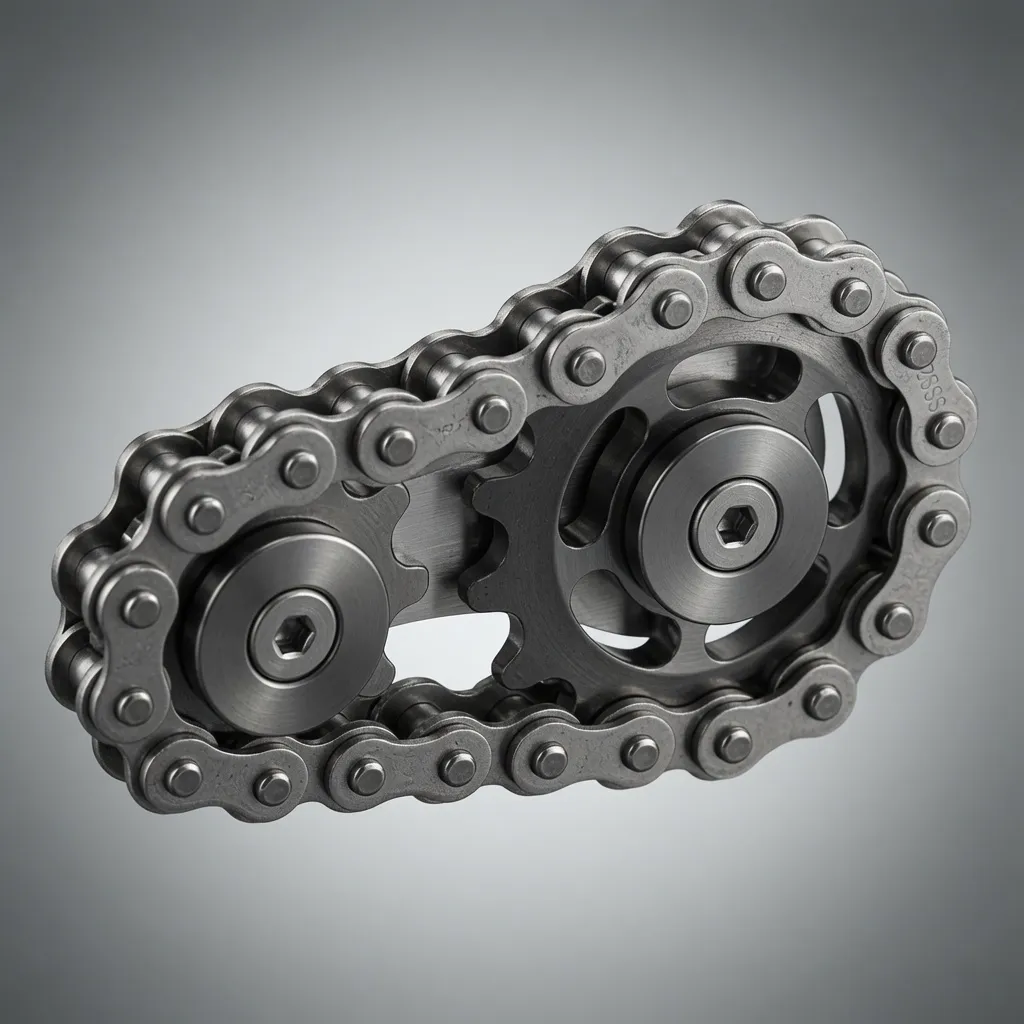
Custom Bore, Hub & Multi-Strand Configurations
At the 19.05 mm pitch class, machinery designers frequently need hub geometry or bore configurations that differ from the catalogue standard — either because shaft sizes at this torque level are non-standard, or because the machine layout requires an extended hub for a specific bearing span arrangement. Duplex configuration is also particularly common at this pitch, as heavy conveyor designers often use two parallel strands to reach the required load without moving to a larger pitch and a larger centre distance. All SUS60B custom work is completed entirely in-house.
🔗 Simplex Standard
11.7 mm tooth width. All 26 sizes from stock or short-run production. Standard bore (H7) with DIN 6885 keyway. 3–7 day lead time for common tooth counts.
🔗🔗 Duplex to Order
Double tooth face for two No.60SS strand chains. Same pitch circle and tooth count as simplex. Specify strand, teeth, bore, hub length. 7–14 day lead time from confirmed order.
🛠️ Taper-Lock & Extended Hub
Taper-lock pocket machined to specified bush size (1610 through 3535). Extended hub lengths for wider bearing span clearance. Drawing sign-off before production. No minimum quantity.
📐 Full OEM / Drawing
Non-standard teeth counts, split sprockets, flanged hubs, reverse-engineered replacements from worn samples. First-article inspection report included with delivery. EN 10204 3.1 mill cert on request.
Why Choose Ever-Power for High-Load Stainless Sprockets
Heavy-pitch stainless sprockets demand tighter process discipline than smaller sizes. Larger parts amplify any concentricity error, 304 stainless requires specific machining strategies to avoid work-hardening, and the higher loads they carry make dimensional shortcomings visible faster in service. Our production process is built around these realities — not borrowed from carbon steel practice.
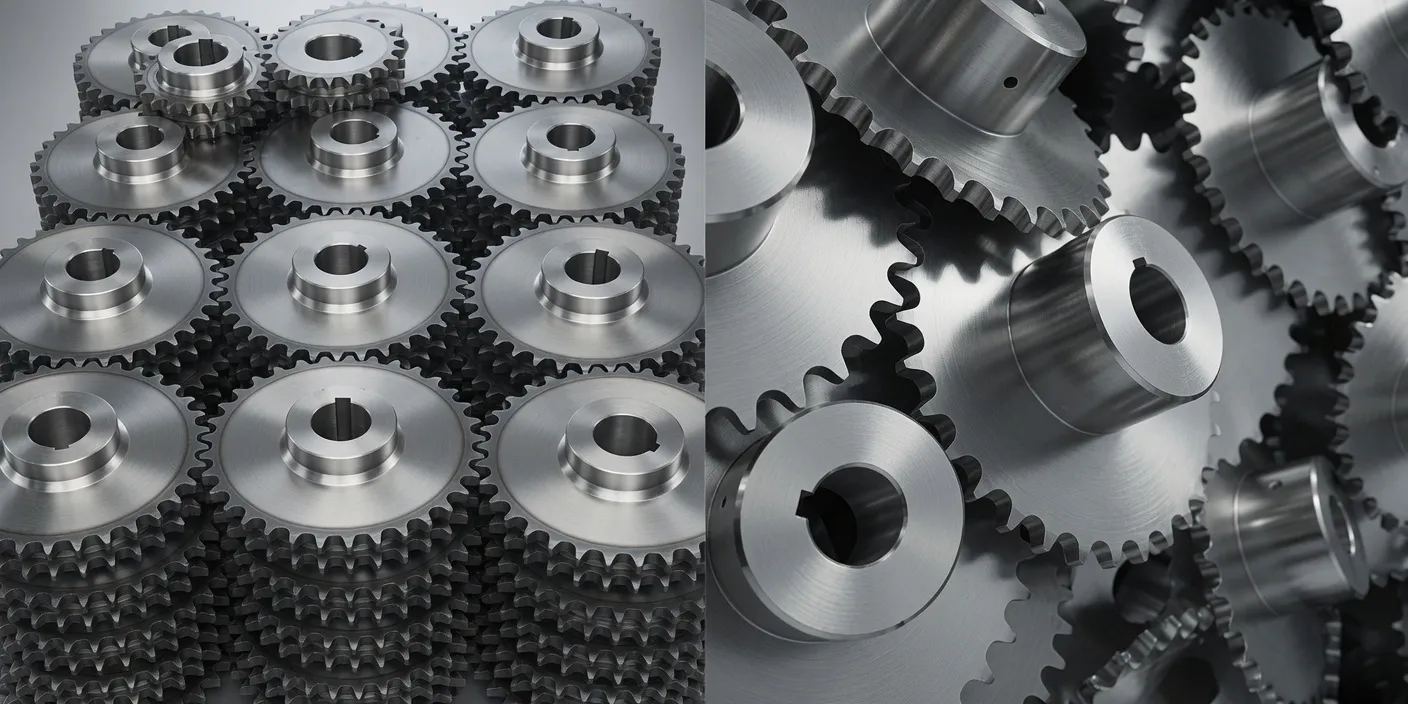
CNC programs for SUS60B are tuned for 304 stainless material properties — cutting speed, feed rate, and coolant strategy are set to prevent work hardening and maintain dimensional consistency across full production runs.
CMM inspection record, packing list, commercial invoice, certificate of origin, and EN 10204 3.1 material certificates (on request) supplied with every SUS60B shipment. All documents in English.
For production shutdown situations, urgent SUS60B replacement orders on common tooth counts can be scheduled with expedited turnaround. Contact us directly with production shutdown details for scheduling assessment.
Hub wall thickness assessments, bore-limit queries, and duplex load calculations are answered by production engineers rather than sales staff. Technical accuracy on the first response reduces ordering iteration cycles.
How to Place Your Order
For standard SUS60B sizes, we need tooth count, bore diameter, and quantity to generate a quotation. For custom configurations — duplex, taper-lock, non-standard hub, or OEM reverse engineering — a written spec or dimensioned drawing gets you an accurate price and lead time without unnecessary back-and-forth. Reach us at [email protected] or +86-571-88220653.
Frequently Asked Questions
Common questions about SUS60B stainless steel sprockets.