
Eight field-proven maintenance strategies that maximize the operating life of industrial sprocket chain drives — backed by engineering data on wear reduction, cost savings, and reliability improvement.
The Business Case for Proactive Chain Maintenance
Reactive maintenance — running a chain until it fails, then replacing it — is the most expensive maintenance strategy measured by total cost per operating hour. Every unplanned chain failure carries costs beyond the replacement part: emergency procurement premiums, production downtime valued at hundreds or thousands of dollars per hour, overtime labor for unscheduled repairs, and secondary damage to sprockets, bearings, and shafts caused by the failed chain. A structured preventive maintenance program eliminates the majority of these costs.
The eight tips in this article are ranked by impact — the first tip alone addresses the root cause of over 60% of premature chain failures. Implementing even the top three tips consistently across all chain drives in a plant typically extends average chain service life by 2 to 3 times compared to run-to-failure operation, while simultaneously reducing the frequency and severity of unplanned downtime events.
Tip 1: Implement a Lubrication Schedule
Maintenance Investment vs. Chain Life Return
Lubrication is the highest-impact, lowest-cost maintenance action available. Apply the correct viscosity chain oil (ISO VG 68 to VG 150 for most industrial applications) to the inside of the chain loop at intervals of 200 to 500 operating hours. For dusty or wet environments, halve the interval. Automatic drip-feed or bath lubrication systems eliminate the human-error risk and provide consistent oil delivery around the clock.
Target the oil application just ahead of the driving sprocket engagement point, where the chain begins to articulate. Gravity and capillary action draw the oil inward through the plate clearances to the pin-bushing interface. Avoid applying oil to the outside of the chain — this merely attracts contaminants without reaching the wear surfaces.
Tip 2: Monitor and Record Chain Elongation
Measure chain elongation across 10 pitches at regular intervals — quarterly for continuous duty, start-of-season for intermittent equipment. Record each measurement with the date and cumulative operating hours. Plotting these values reveals the wear trend, allowing you to predict when the chain will reach the 1.5% planning threshold and the 3% replacement limit.
This data-driven approach transforms chain replacement from a surprise expense into a planned budget item. It also identifies drives that wear faster than expected, flagging potential root causes (misalignment, contamination, overload) that can be corrected before the next chain is installed.
Tips 3 and 4: Maintain Alignment and Correct Tension
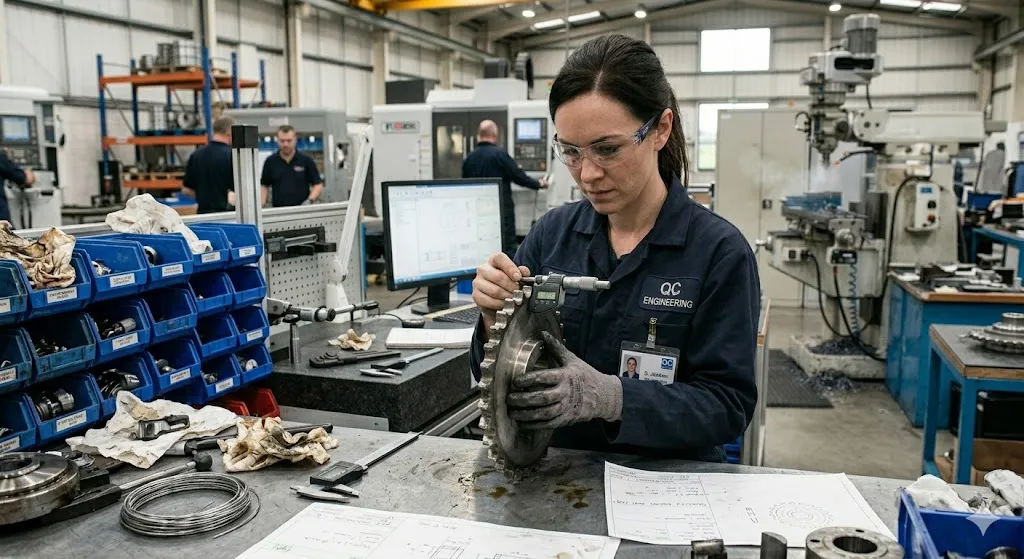
Verify sprocket alignment at every chain replacement and annually on long-life installations. Use a straight edge for general drives or a laser alignment tool for precision drives. The maximum allowable offset is 3 mm per meter of center distance. Correct any misalignment by shimming the motor base, adjusting the take-up frame, or remachining the sprocket bore if the shaft is true but the sprocket is canted.
Check chain tension monthly. The slack-span sag should measure 2% to 4% of the center distance. Re-tension using the motor slide base or an idler sprocket. Document the tensioner position at each adjustment — when the tensioner reaches its travel limit, the chain has consumed its elongation allowance and needs replacement.
Tips 5 and 6: Control Contamination and Replace Sprockets with Chains
Install chain guards, covers, or enclosures wherever feasible to keep abrasive dust, moisture, and debris away from the chain. In environments where full enclosure is impractical — agricultural fields, outdoor installations — increase the lubrication frequency and use high-viscosity oils that resist washoff. Periodic chain cleaning with a solvent-dampened cloth removes accumulated grit from the plate surfaces before it migrates into the pin-bushing clearance.
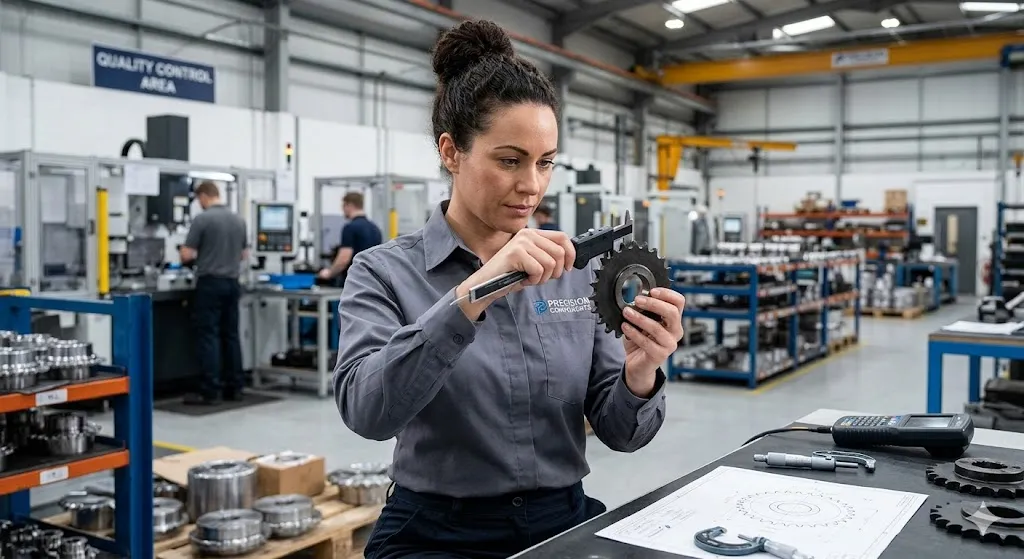
Always replace sprockets when replacing the chain. Worn sprocket teeth with hooked profiles force a new chain into an incorrect seating position, causing it to elongate to match the worn tooth geometry within a fraction of its normal life. The cost of new sprockets is a small percentage of the total chain drive investment and pays for itself immediately through the full service life delivered by the new chain.
Tips 7 and 8: Train Operators and Maintain a Spare Parts Inventory
Equipment operators are the first line of defense against chain failures. Train them to recognize abnormal chain noise, visible sag changes, and stiff links during daily walkthroughs. A simple laminated reference card mounted near each drive — showing the target sag, last lubrication date, and current elongation reading — transforms every operator into a condition monitor.
Maintain a minimum stock of one replacement chain and one set of sprockets for each critical drive in the plant. Critical drives are those whose failure halts production entirely (single-line conveyor, main transfer drive) or creates a safety hazard. The carrying cost of spare inventory is insignificant compared to the production loss from waiting 2-4 weeks for an emergency international shipment.
Why Choose Hangzhou Ever-Power as Your Supplier
Selecting a sprocket chain supplier is a decision that extends far beyond unit price. Delivery reliability, dimensional consistency across production batches, willingness to support OEM customization, and responsive after-sales technical backing all factor into the total cost of ownership. Hangzhou Ever-Power Sprocket Chain Co., Ltd. has built its reputation over decades by treating each of these factors as a baseline expectation rather than a premium add-on.
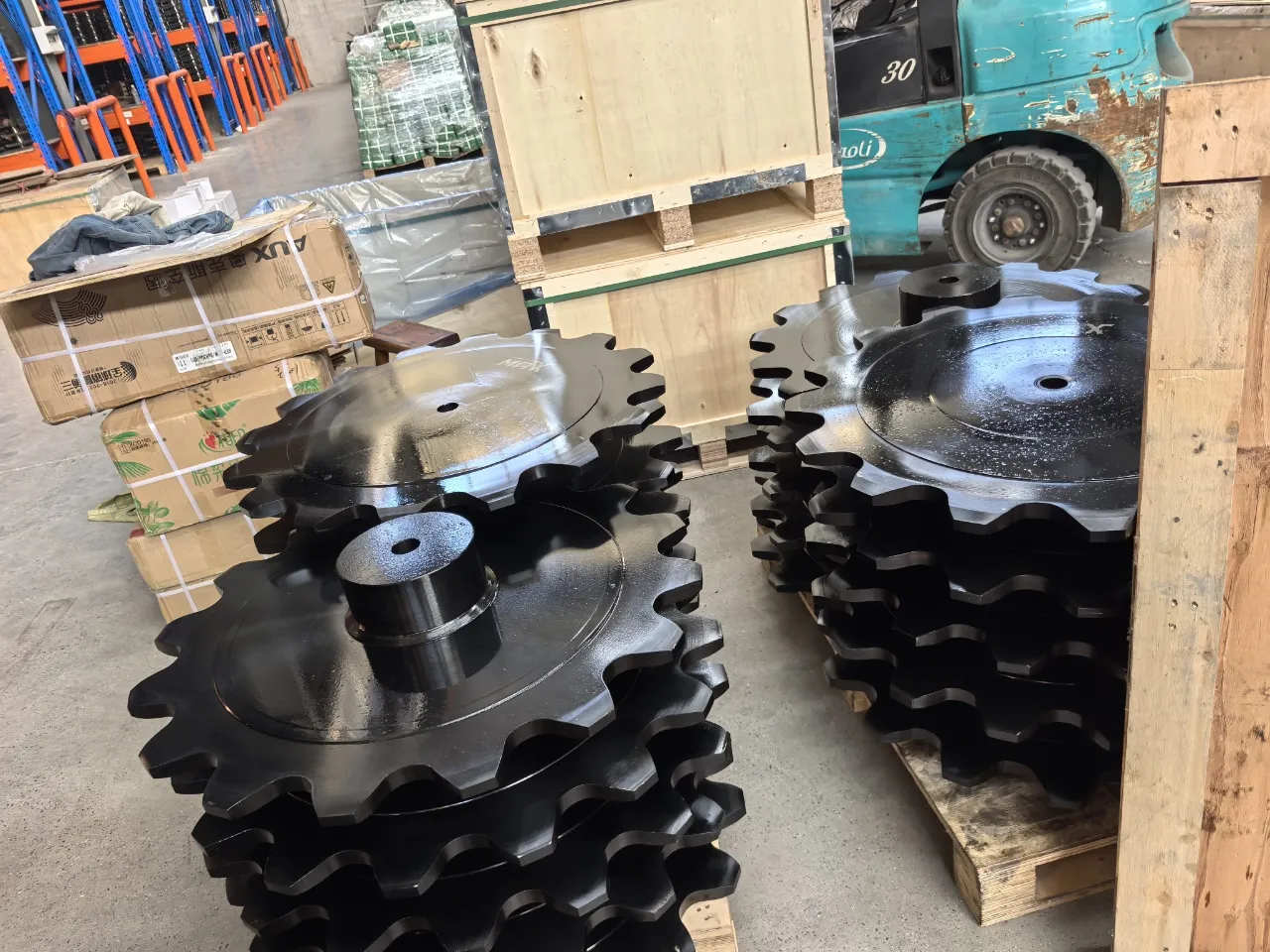
From raw steel blanking through heat treatment, shot peening, and final assembly, every production stage happens under one roof in Hangzhou — eliminating the quality drift that plagues multi-vendor supply chains.
Non-standard bore sizes, special tooth profiles, proprietary surface coatings, and unique attachment configurations are routine production orders — not special projects that require months of back-and-forth negotiation.
Every batch undergoes tensile testing, Rockwell hardness verification, dimensional inspection with CMM equipment, and pre-shipment elongation checks before products leave the factory floor.
Products ship to over 60 countries with packaging rated for ocean freight and documentation compliant with EU, North American, and Southeast Asian import regulations.
Frequently Asked Questions
Get in Touch with Our Engineering Team
Whether you need a standard catalog chain or a fully custom-engineered solution, our technical sales team is ready to assist with specification, pricing, and logistics.
Company
Hangzhou Ever-Power Sprocket Chain Co., Ltd.
Address
Shenhua Road, Hangzhou, China
Phone
+86-571-88220653