Engineering guidance for selecting corrosion-resistant sprocket chains in wastewater treatment — bar screens, sludge collectors, aeration equipment, and chemical dosing conveyors.
The Wastewater Treatment Chain Environment
Wastewater treatment plants subject sprocket chains to one of the most corrosive operating environments in industrial engineering. Chains operate fully submerged in sewage containing dissolved hydrogen sulfide (H2S), ammonia, organic acids, and suspended abrasive solids. Chemical treatment stages add chlorine, ferric chloride, aluminum sulfate, and polymer flocculants to the mix. The pH can swing from acidic (pH 4-5 in anaerobic zones) to alkaline (pH 9-10 in lime treatment stages) within the same facility.
Standard carbon steel chains corrode rapidly in these conditions — often failing within 6-12 months. SUS316 stainless steel chains, with their molybdenum-enhanced resistance to chloride pitting, are the standard specification for submerged wastewater applications. The higher initial cost is offset by a 5-10 times longer service life compared to carbon steel in the same environment.
Chain Selection by Treatment Stage
| Equipment | Environment | Chain Material | Lubrication | Typical Life |
|---|---|---|---|---|
| Bar Screen Rake | Submerged, raw sewage | SUS316 | Self-lube / none | 8-12 years |
| Sludge Collector | Submerged, digested sludge | SUS316 | Self-lube / none | 8-12 years |
| Aeration Chain | Submerged, oxygenated | SUS316 / SUS304 | Water-lubricated | 10-15 years |
| Scum Skimmer | Surface, grease-laden | SUS304 | NSF H1 oil | 6-10 years |
| Chemical Dosing | Chlorine / FeCl3 splash | SUS316L | PFPE synthetic | 5-8 years |
| Dewatering Press | Polymer, high moisture | SUS304 | NSF H1 oil | 8-12 years |
| Service life estimates assume proper material selection and installation. Actual life depends on specific chemical concentrations and operating conditions. | ||||
Bar screen rakes and sludge collectors operate continuously submerged in raw or digested sewage. Self-lubricating chains with sintered bronze bushings are ideal because external lubricant would wash away immediately and contaminate the treatment process. SUS316 is mandatory — the 2-3% molybdenum content prevents the chloride pitting that destroys SUS304 within 2-3 years in chlorinated wastewater.
Chemical dosing and storage areas present a different challenge — chains are not submerged but are exposed to splashes and vapors of concentrated chemicals. SUS316L (low-carbon variant) resists intergranular corrosion in welded fabrications. PFPE-based lubricants survive chemical exposure that would break down mineral or synthetic hydrocarbon oils within days.
Self-Lubricating Chain Technology for Submerged Applications
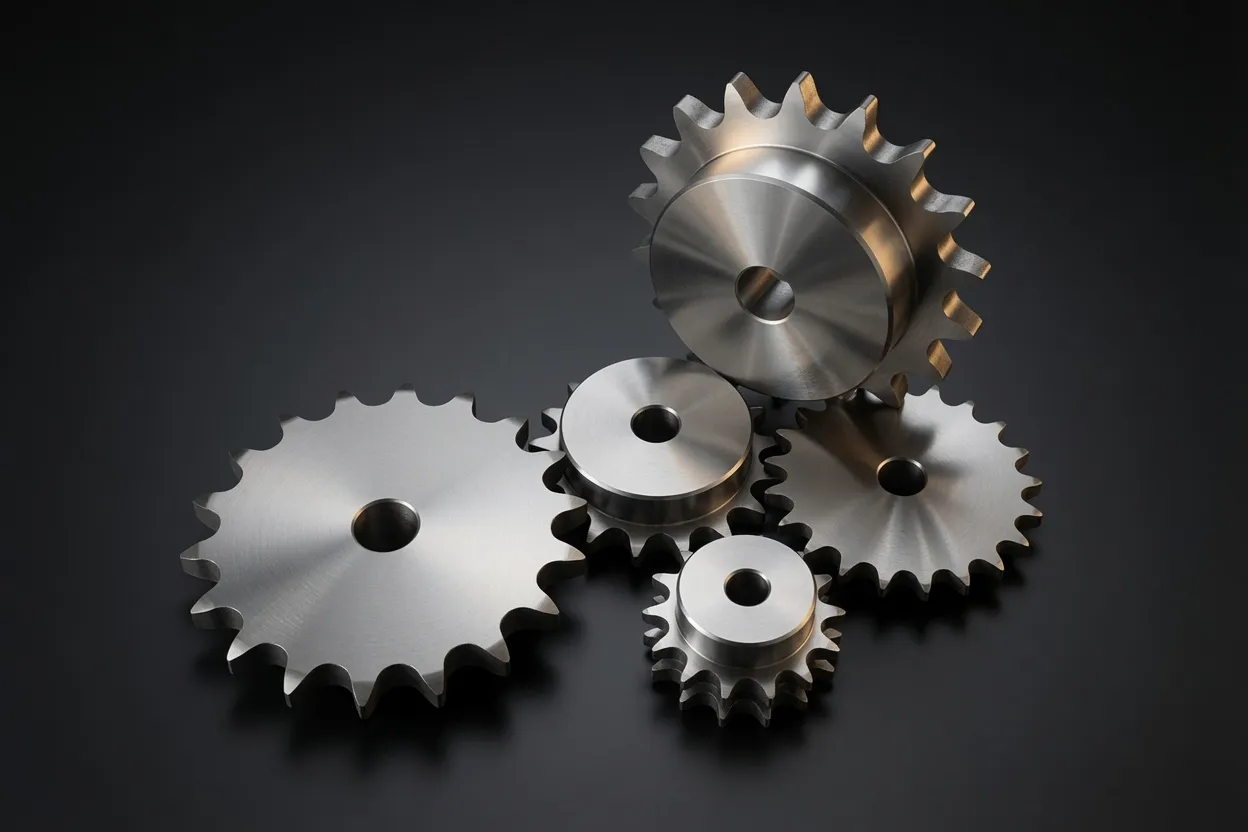
Conventional lubrication is impossible for chains operating fully submerged in wastewater — any applied oil is immediately displaced by water and carried into the treatment stream as a contaminant. Self-lubricating chains solve this problem with sintered bronze bushings that contain an internal oil reservoir. The oil migrates slowly through the porous bronze matrix to the pin-bushing contact surface, providing continuous lubrication without external application.
The oil reservoir in a quality sintered bushing provides lubrication for the full service life of the chain — typically 8-12 years in a properly specified wastewater application. No maintenance lubrication is needed. This maintenance-free characteristic is particularly valuable in wastewater plants where chain drives are located in confined spaces, below water level, or in areas with hazardous atmospheric conditions that restrict personnel access.
Corrosion Mechanisms and Material Defense
Three corrosion mechanisms attack chains in wastewater environments. Chloride pitting — caused by dissolved chlorine and chloride ions — creates deep, localized holes in stainless steel surfaces. SUS316 resists pitting to chloride concentrations of 1,000+ ppm, while SUS304 fails at 200-400 ppm. Crevice corrosion occurs in the tight gaps between pins and bushings where oxygen is depleted and local acidity increases; this is the most aggressive mechanism and drives the requirement for SUS316 over SUS304.
Microbiologically influenced corrosion (MIC) from sulfate-reducing bacteria produces H2S that attacks both carbon and stainless steels. Maintaining adequate dissolved oxygen levels in the treatment process is the primary defense against MIC. For anaerobic zones where MIC is unavoidable, super-duplex stainless steels (e.g., SAF 2507) provide superior resistance but at significantly higher cost. Consult with both the chain manufacturer and the treatment plant engineer to determine the most cost-effective material for each specific chemical environment.
Installation and Maintenance Considerations
Wastewater treatment chains are typically installed during plant construction or during scheduled dewatering shutdowns. Access is limited once the basins are filled, so the installation must be correct the first time. Verify sprocket alignment using a laser alignment tool — realignment of submerged drives is extremely difficult and disruptive. Use stainless steel fasteners (A4-grade, equivalent to SUS316) for all mounting hardware to prevent galvanic corrosion between dissimilar metals.
Maintenance is primarily limited to elongation monitoring and sprocket tooth inspection during scheduled basin dewatering events (typically annual). Install elongation measurement access points above the water line so that chain condition can be assessed without dewatering. When replacement is eventually needed — typically after 8-12 years — replace both chain and sprockets as a set.
Why Choose Hangzhou Ever-Power as Your Supplier
Selecting a sprocket chain supplier is a decision that extends far beyond unit price. Delivery reliability, dimensional consistency across production batches, willingness to support OEM customization, and responsive after-sales technical backing all factor into the total cost of ownership. Hangzhou Ever-Power Sprocket Chain Co., Ltd. has built its reputation over decades by treating each of these factors as a baseline expectation rather than a premium add-on.
From raw steel blanking through heat treatment, shot peening, and final assembly, every production stage happens under one roof in Hangzhou — eliminating the quality drift that plagues multi-vendor supply chains.
Non-standard bore sizes, special tooth profiles, proprietary surface coatings, and unique attachment configurations are routine production orders — not special projects that require months of back-and-forth negotiation.
Every batch undergoes tensile testing, Rockwell hardness verification, dimensional inspection with CMM equipment, and pre-shipment elongation checks before products leave the factory floor.
Products ship to over 60 countries with packaging rated for ocean freight and documentation compliant with EU, North American, and Southeast Asian import regulations.
Frequently Asked Questions
Get in Touch with Our Engineering Team
Whether you need a standard catalog chain or a fully custom-engineered solution, our technical sales team is ready to assist with specification, pricing, and logistics.
Company
Hangzhou Ever-Power Sprocket Chain Co., Ltd.
Address
Shenhua Road, Hangzhou, China
Phone
+86-571-88220653