Everything riders and workshops need to know about motorcycle chain and sprocket kits — covering chain types, sizing, installation, and maintenance for maximum mileage and performance.
Why the Chain and Sprocket Kit Is the Heart of Motorcycle Power Delivery
The motorcycle chain sprocket system transfers every bit of engine power to the rear wheel. Unlike automotive drivetrains that use enclosed gearboxes and driveshafts, most motorcycles rely on an exposed roller chain running between a small front (countershaft) sprocket and a large rear sprocket. This simple, lightweight, and efficient system handles the rapid acceleration, deceleration, and vibration forces that make motorcycle drivetrain duty among the most demanding of any chain application per unit weight.
A worn or poorly maintained chain robs power, increases fuel consumption, creates dangerous slack that can derail at speed, and accelerates sprocket wear. Understanding chain types, correct sizing, and maintenance intervals is essential for every rider and workshop.
Chain Types: Standard, O-Ring, and X-Ring Compared
| Chain Type | Seal | Lubrication | Typical Life | Best For |
|---|---|---|---|---|
| Standard Roller | None | Every 500 km | 8,000-15,000 km | Budget / vintage bikes |
| O-Ring Sealed | O-Ring between plates | Every 1,000 km | 20,000-30,000 km | Street / touring |
| X-Ring Sealed | X-profile ring | Every 1,500 km | 25,000-40,000 km | Sport / high-perf |
| Z-Ring Sealed | Z-profile ring | Every 1,500 km | 25,000-40,000 km | Sport / adventure |
| Life estimates assume proper maintenance. Actual life depends on riding style, conditions, and lubrication discipline. | ||||
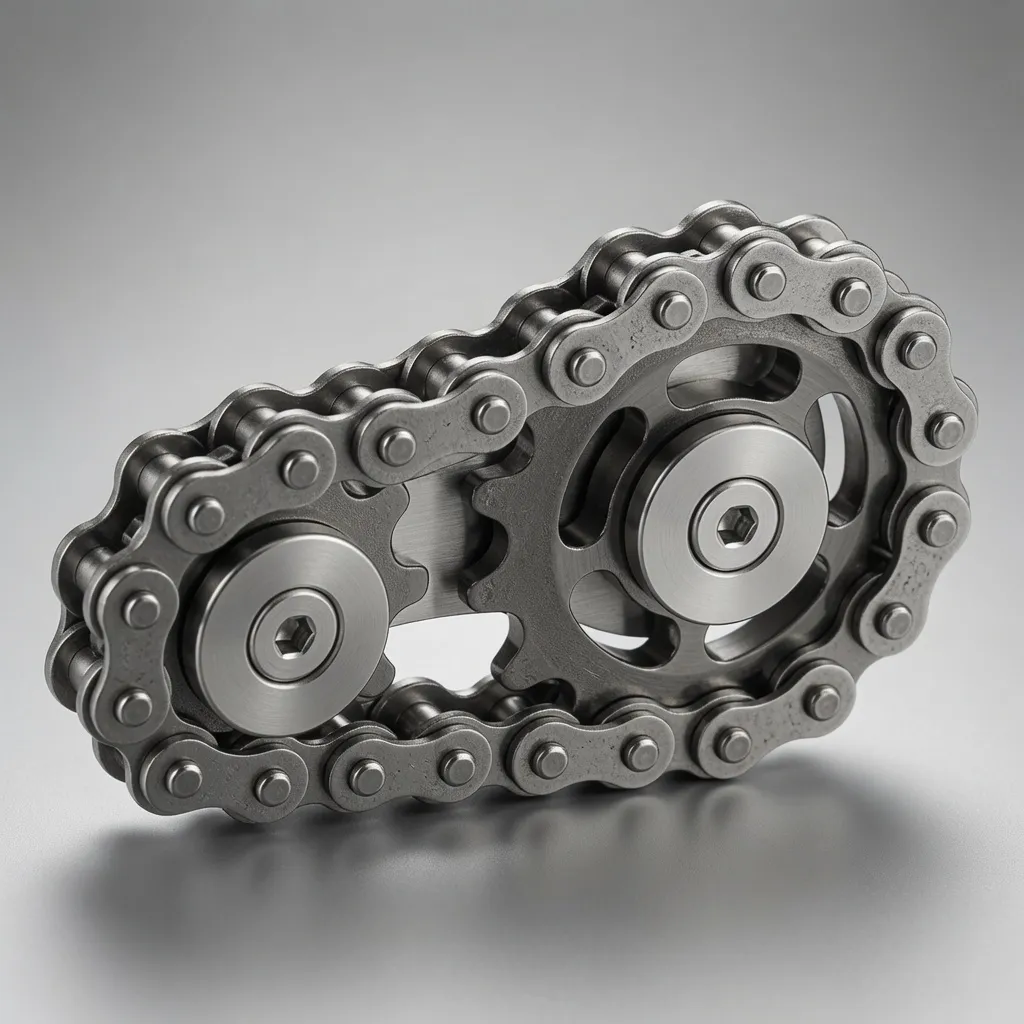
Standard (non-sealed) roller chains are the lightest and cheapest option but require the most frequent lubrication — every 500 km or after every ride in wet conditions. The lack of seals means lubricant washes out quickly and dirt enters the pin-bushing clearance freely. They suit vintage bikes, off-road machines used in extremely muddy conditions (where seals would trap abrasive mud), and budget applications.
O-Ring chains use small rubber O-rings between the inner and outer link plates to retain factory-applied grease inside the pin-bushing area. This extends lubrication intervals to 1,000 km and chain life to 20,000-30,000 km. X-Ring chains replace the O-ring with an X-shaped cross-section that provides two sealing lines instead of one, reducing friction and improving grease retention. X-Ring chains represent the best balance of performance, longevity, and value for most street and sport motorcycles.
Choosing the Correct Chain Size
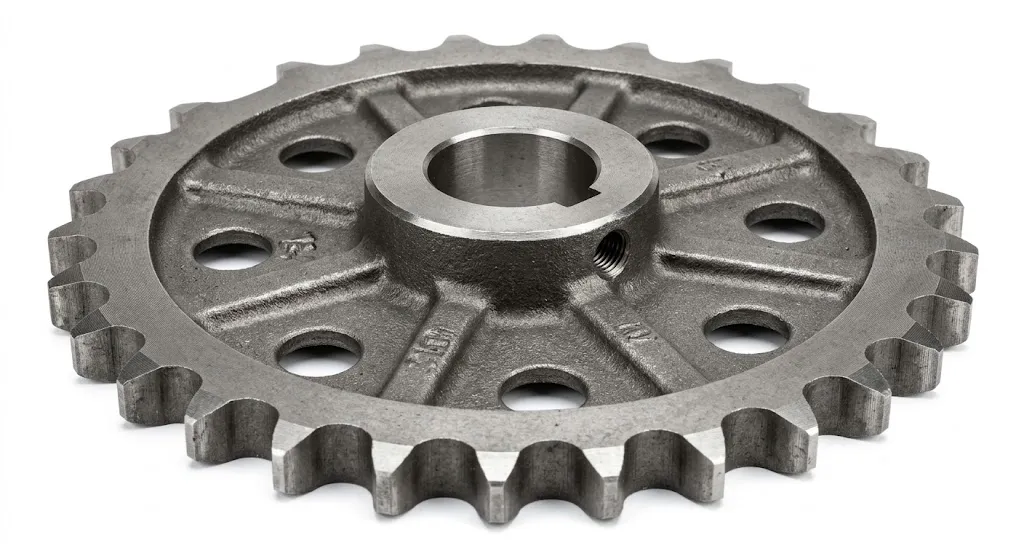
Motorcycle chain size is designated by a three-digit number: 520, 525, 530, 428, 415, etc. The first digit indicates the pitch in eighths of an inch (5 = 5/8 inch = 15.875 mm; 4 = 4/8 inch = 12.7 mm). The second and third digits indicate the inner width in eighths of an inch (20 = 2.0/8 = 6.35 mm; 30 = 3.0/8 = 9.525 mm). The correct chain size is specified by the motorcycle manufacturer in the owner’s manual.
Downsizing from a 530 to a 520 chain (lighter and lower friction) is a popular modification for sport bikes, but it requires replacing both sprockets with 520-compatible versions. The narrower 520 chain has slightly lower tensile strength, so this conversion is appropriate only for motorcycles under approximately 150 HP unless a heavy-duty 520 chain is specified.
Sprocket Tooth Count and Final Drive Ratio
Changing the front or rear sprocket tooth count alters the final drive ratio, affecting acceleration and top speed. Adding one tooth to the rear sprocket (e.g., 42T to 43T) increases acceleration but reduces top speed — the equivalent of a shorter gear. Removing one tooth from the front sprocket has a more pronounced effect than adding one to the rear because the small radius amplifies the ratio change.
For street riding, the stock ratio is optimized for a balance of acceleration and fuel economy. Track-focused riders often add 1-2 teeth to the rear for sharper corner exit acceleration. Adventure and touring riders may reduce the rear count by 1-2 teeth for more relaxed highway cruising RPM and better fuel range. Always replace the chain when changing sprocket ratios, as the old chain will not mesh correctly with the new tooth geometry.
Installation Best Practices for Motorcycle Chain Kits
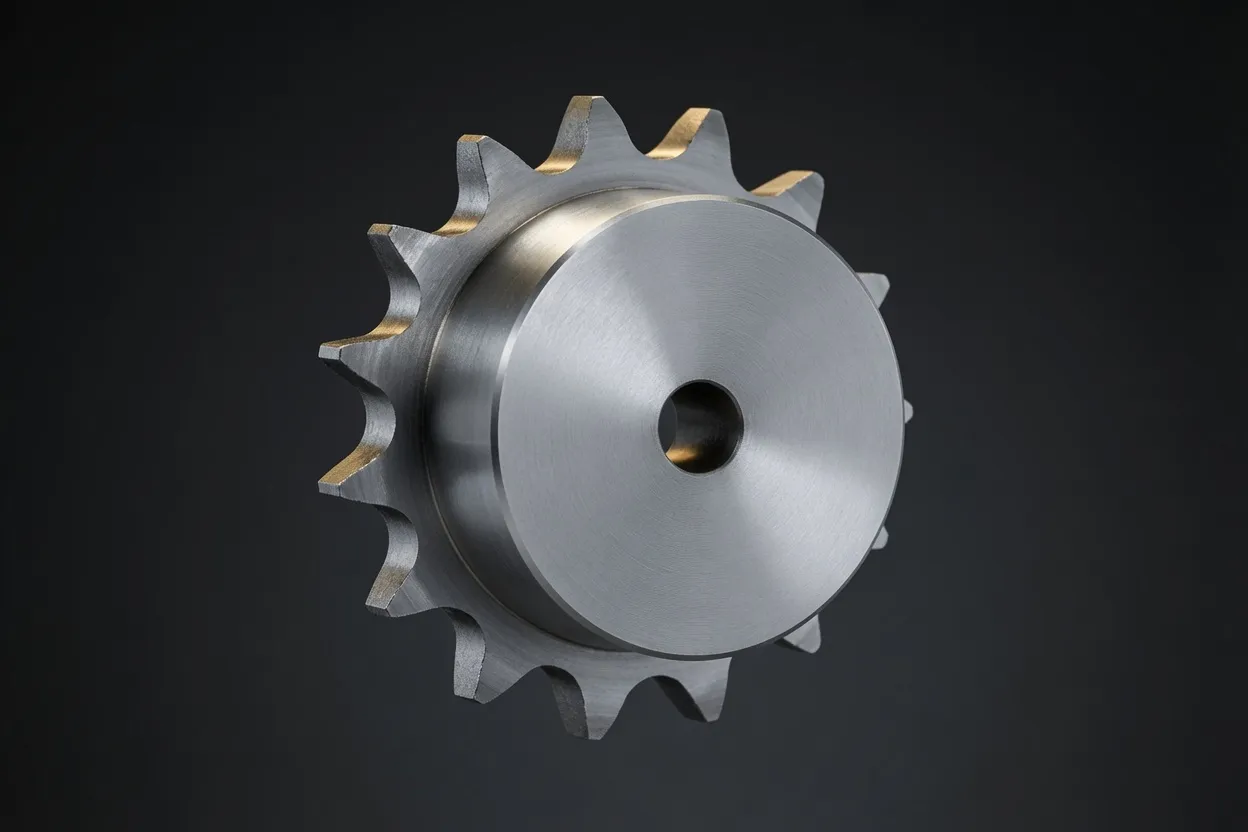
Always replace the chain and both sprockets together as a kit. A new chain on worn sprockets will wear out in half its normal life because the worn tooth profile forces the new chain into incorrect seating. Ensure the rear wheel alignment marks match on both sides of the swingarm — misalignment causes rapid chain and sprocket wear and can affect motorcycle handling stability.
Set the chain slack to the manufacturer’s specification — typically 25-35 mm of vertical play at the midpoint of the lower chain run with the motorcycle on its side stand. Measure with the suspension unloaded. Excessive slack causes the chain to slap the swingarm and can jump the sprocket during hard acceleration. Insufficient slack overloads the output shaft bearing and causes accelerated chain elongation.
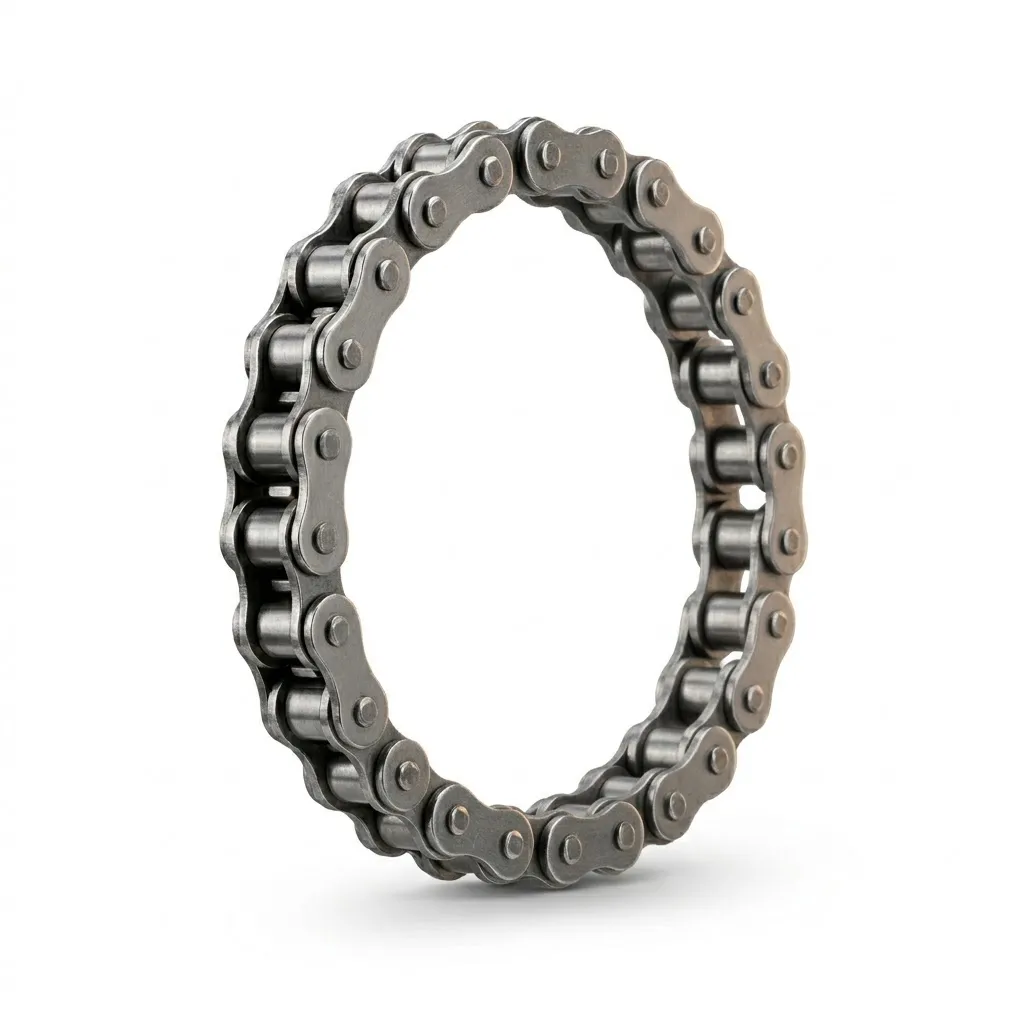
Maintenance: Cleaning, Lubricating, and Adjusting
Clean the chain before lubricating — applying fresh lubricant over dirty chain simply traps abrasive particles against the seals and pins. Use a dedicated chain cleaner spray and a chain brush, working around the entire loop. Allow the cleaner to evaporate completely before applying lubricant. Use chain-specific lubricant (not general-purpose oil or WD-40), spray onto the inner side of the chain while slowly rotating the rear wheel, and allow 10-15 minutes for the lubricant to penetrate the seals before riding.
Check chain slack every 500 km and adjust as needed. Keep a log of adjustments — accelerating adjustment frequency indicates increasing wear rate and approaching end-of-life. When the rear axle adjusters reach their limit of travel, the chain has exhausted its elongation budget and must be replaced.
Why Choose Hangzhou Ever-Power as Your Supplier
Selecting a sprocket chain supplier is a decision that extends far beyond unit price. Delivery reliability, dimensional consistency across production batches, willingness to support OEM customization, and responsive after-sales technical backing all factor into the total cost of ownership. Hangzhou Ever-Power Sprocket Chain Co., Ltd. has built its reputation over decades by treating each of these factors as a baseline expectation rather than a premium add-on.
From raw steel blanking through heat treatment, shot peening, and final assembly, every production stage happens under one roof in Hangzhou — eliminating the quality drift that plagues multi-vendor supply chains.
Non-standard bore sizes, special tooth profiles, proprietary surface coatings, and unique attachment configurations are routine production orders — not special projects that require months of back-and-forth negotiation.
Every batch undergoes tensile testing, Rockwell hardness verification, dimensional inspection with CMM equipment, and pre-shipment elongation checks before products leave the factory floor.
Products ship to over 60 countries with packaging rated for ocean freight and documentation compliant with EU, North American, and Southeast Asian import regulations.
Frequently Asked Questions
Get in Touch with Our Engineering Team
Whether you need a standard catalog chain or a fully custom-engineered solution, our technical sales team is ready to assist with specification, pricing, and logistics.
Company
Hangzhou Ever-Power Sprocket Chain Co., Ltd.
Address
Shenhua Road, Hangzhou, China
Phone
+86-571-88220653