Double Pitch Stainless Steel
Sprockets SUS2050SB
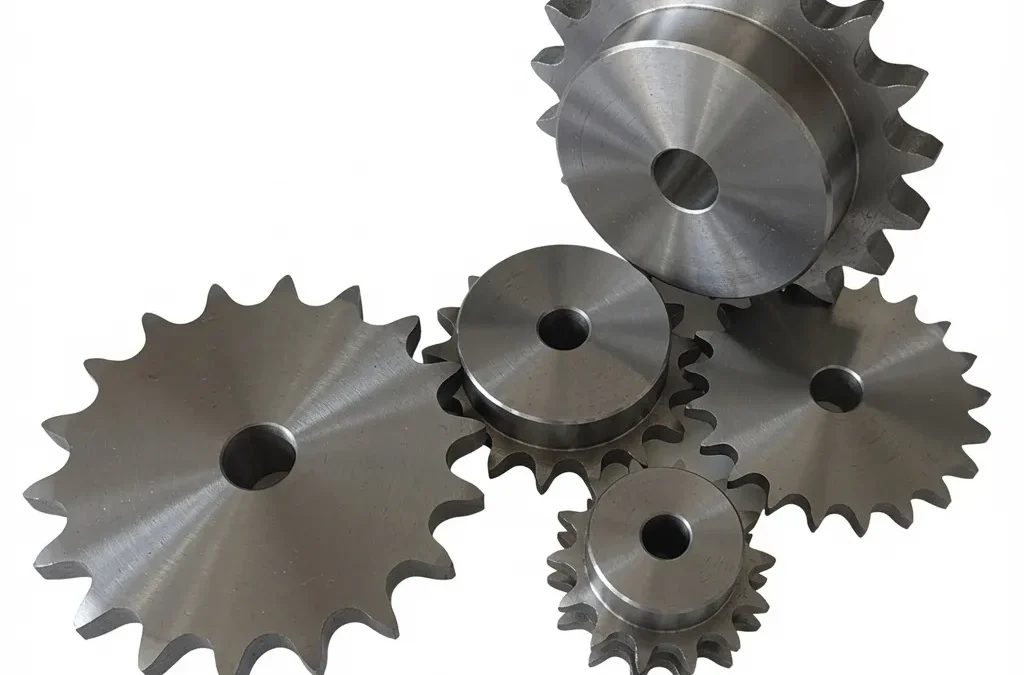
Medium-capacity double-pitch stainless sprockets for No.2050S conveyor chain — delivering a step up in load carrying from the 2040 series while retaining the weight and cost advantages of double-pitch chain design.
SUS2050SB — Medium-Capacity Double-Pitch Stainless Conveyor Sprocket
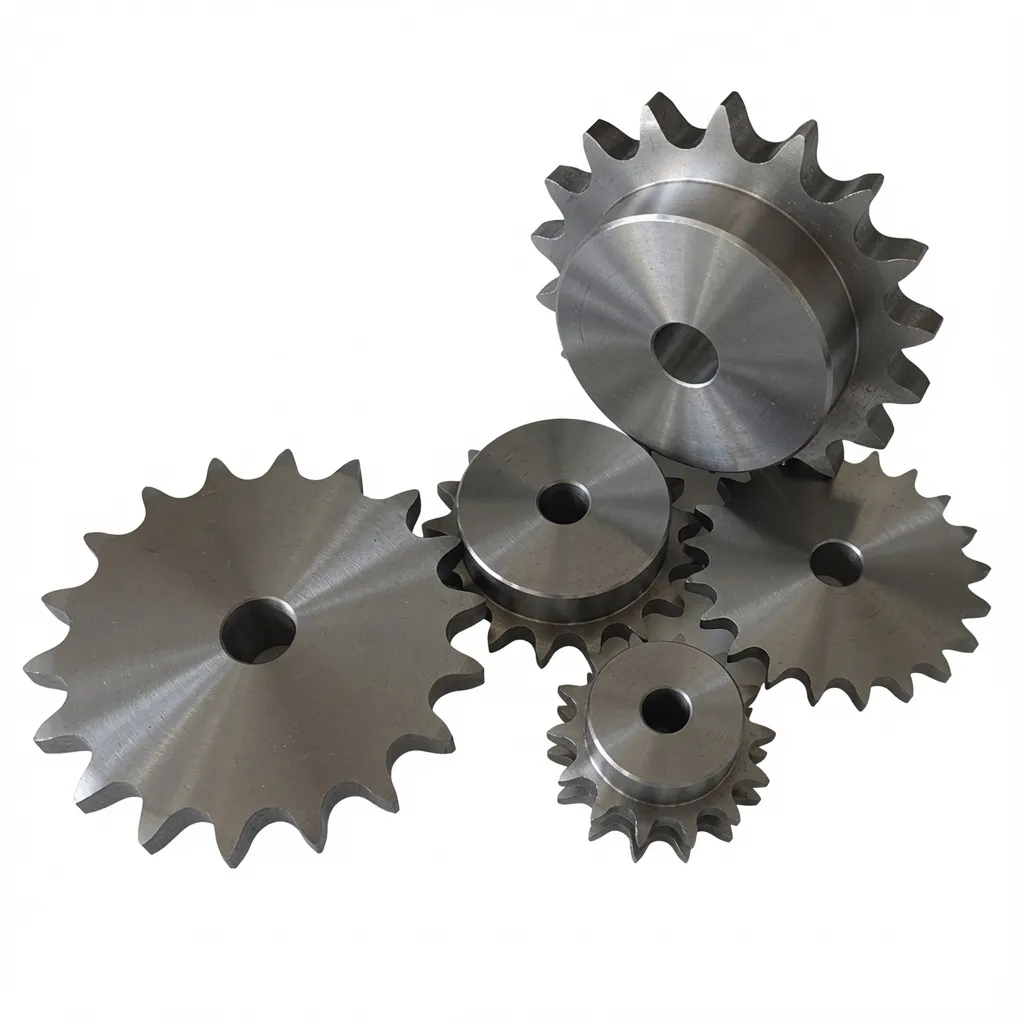
The SUS2050SB occupies the middle tier of the double-pitch stainless sprocket family — one step above the 2040-series in both pitch and load capacity, and one step below the 2060-series in component size and drive weight. Its 31.75 mm pitch is the double-pitch equivalent of the No.50 standard chain pitch (15.875 mm × 2), and the No.2050S chain it drives carries a meaningfully higher rated working load than the No.2040S. For conveyor systems where the 2040-series is approaching its load limit — or where longer unsupported chain spans need the additional structural stiffness that a larger-pitch chain provides — the SUS2050SB is the logical step up, still at double pitch and still in full 304 stainless steel sprocket construction.
Like all SUS20-series SB-type sprockets, the SUS2050SB uses half-integer effective tooth counts (9½, 10½, 11½, 12½) — the standard JIS B1801 designation for small-roller double-pitch sprockets. The tooth profile matches the standard SUS50B geometry (same roller diameter 10.16 mm, same internal width 9.53 mm), only the pitch circle diameter differs because the chain spacing is 31.75 mm rather than the standard 15.875 mm. This design consistency means that assembly teams familiar with the 2040SB series will find the 2050SB behaves identically in terms of engagement feel and installation procedure — the only change is the physical scale.
Hangzhou Ever-Power machines SUS2050SB sprockets from solid 304 stainless bar across all four standard effective tooth counts. All parts carry the same H7 bore tolerance, DIN 6885 keyway option, and 100% CMM dimensional verification applied across the wider stainless sprocket range. Custom bore, non-standard hub length, and OEM marking are available with no minimum order quantity.
Chain Parameters & Dimensional Specifications
One characteristic of the No.2050S chain that distinguishes it from the No.2040S is that the roller diameter (10.16 mm) is slightly larger than the internal chain width (9.53 mm). This asymmetry — opposite to the 2040S where both values are equal at 7.95 mm — produces a slightly different tooth root and flank geometry. The SUS2050SB is hobbed with tooling matched to the 10.16 mm roller diameter; using 2040SB tooling on a 2050SB blank would produce incorrect engagement and is never done in our production. Each pitch class in the double-pitch range has its own dedicated hobbing setup.
SUS2050SB Dimensional Table — 4 Standard Sizes
Effective tooth count expressed as half-integer per JIS B1801 double-pitch convention. All dimensions in millimeters; weight in kilograms.
| Type | Eff. Teeth | OD Do (mm) | PCD Dp (mm) | Stock Bore | Min. Bore | Max. Bore | Hub BD | Hub BL | Wt. (kg) |
|---|---|---|---|---|---|---|---|---|---|
| SUS2050SB | 9½ | 105 | 97.78 | 14.5 | 16.5 | 48 | 73 | 28 | 1.10 |
| SUS2050SB | 10½ | 115 | 107.72 | 14.5 | 16.5 | 48 | 73 | 28 | 1.62 |
| SUS2050SB | 11½ | 125 | 117.68 | 16 | 18 | 48 | 73 | 28 | 1.74 |
| SUS2050SB | 12½ | 135 | 127.67 | 16 | 18 | 48 | 73 | 28 | 1.87 |
Step Up from 2040SB: Capacity and Scale Comparison
Engineers selecting between double-pitch series should understand what the pitch step actually changes. Moving from No.2040S to No.2050S chain — and from SUS2040SB to SUS2050SB sprockets — increases the chain cross-section, rated breaking load, and component weight at the sprocket. The conveyor can carry more per unit of chain length, and each sprocket is physically larger. The trade-off is a modest increase in chain material cost per metre and slightly heavier sprocket components. Whether the step is warranted depends almost entirely on whether the No.2040S chain is being used at a reasonable working load fraction or whether it is already running at or near its rated capacity.
| Parameter | SUS2040SB | SUS2050SB ▶ |
|---|---|---|
| Chain pitch | 25.4 mm | 31.75 mm |
| Roller diameter (Dr) | 7.95 mm | 10.16 mm |
| Tooth width (T) | 7.2 mm | 8.7 mm |
| Max OD at 12½ eff. teeth | 108 mm | 135 mm |
| Max weight at 12½ eff. teeth | 1.06 kg | 1.87 kg |
| Max bore | Up to 51 mm | Up to 48 mm |
| Relative load capacity | Standard | Medium-higher |
Medium-Load Stainless Conveyor Drives — Where SUS2050SB Fits
The SUS2050SB occupies a specific position in the conveyor drive selection matrix: medium load, long centre distance, low speed, and stainless construction required. It is heavier and more expensive per unit than the SUS2040SB, and lighter and cheaper than the SUS2060SB — so the specification decision is essentially about matching chain load capacity to the actual conveyor load without over-specifying material cost or under-specifying structural margin.
The stainless steel roller chain for food industry applications that drive SUS2050SB demand are production-scale conveying systems — not prototype or laboratory equipment. These are factory-floor conveyors that carry actual product loads in continuous multi-shift operation, under hygiene-controlled conditions that require all drive components in the food zone to be 304 stainless or equivalent. At this scale, the 2050-series double-pitch chain provides the load capacity that a 2040-series system cannot sustain over a full production campaign without chain stretching and early replacement.
Protein Processing Lines
Red meat and poultry processing plants use longer conveyor spans at higher product loads than lighter food sectors. The SUS2050SB handles both the mechanical requirements and the full CIP washdown protocol including caustic rinse and acid sanitisation cycles that HACCP-certified processing facilities apply multiple times per shift.
Chemical Industry Transport
Transfer conveyors in specialty chemical and pharmaceutical ingredient production move moderate-weight containers or product carriers through controlled environments where chemical vapour exposure rules out carbon steel. The 2050SB’s larger pitch and moderate load capacity suit these applications’ requirements precisely.
Aquaculture & Seafood Transport
Fish and shellfish processing conveyors operate in permanently wet, saline environments. The higher load capacity of the 2050 series handles the denser product loads of whole-fish and crustacean processing conveyors while full stainless construction resists the aggressive sea-salt and processing chemical exposure throughout the equipment’s working life.
Broader Industrial Applications
Beyond the food processing core market, SUS2050SB sprockets appear wherever a medium-pitch stainless chain drive solution is needed on conveyors with load requirements that exceed the 2040-series capacity. The following industrial environments each present a combination of load and corrosion conditions that the SUS2050SB addresses directly.
Surface Treatment & Electroplating Lines
Hanger chain conveyors transporting metal parts through acid pickling, alkaline degreasing, and electroplating baths require chain drives that tolerate immersion in aggressive process liquids. At the moderate loads typical of hanger conveyor operation, the SUS2050SB provides the necessary acid and alkali resistance while handling the weight of loaded part hangers passing through the treatment sequence.
Greenhouse Automated Cultivation Systems
Commercial greenhouse growing systems use overhead chain conveyors to move hanging plant baskets through irrigation and climate zones. These systems run continuously in high-humidity, fertiliser-mist environments. At the moderate loads of fully loaded basket conveyors, the SUS2050SB handles the mechanical requirements while the stainless construction prevents the rust contamination of growing medium and irrigation water that would occur with unprotected steel drives.
Personal Care & Detergent Manufacturing
Conveyor lines in personal care product filling and packing plants operate in environments with alcohol vapours, surfactant splash, and frequent sanitisation. These conditions attack carbon steel drives rapidly, while 304 stainless at the 2050-series scale handles both the product load of filled containers and the chemical environment of the plant with no service degradation between scheduled maintenance intervals.
Controlled Environment Packaging Lines
Modified-atmosphere packaging machines, aseptic filling systems, and cleanroom packaging lines require all mechanical components within the controlled environment to be constructed from materials that do not generate contaminating particles or react with sterilising agents. SUS2050SB sprockets satisfy these requirements at the conveyor pitch scale appropriate for the typically moderate load levels of packaging line product transport.
Manufacturing Double-Pitch Geometry at the 31.75 mm Scale
At 31.75 mm pitch, the SUS2050SB is physically larger than the SUS2040SB, and the manufacturing process must account for both the fractional-count hobbing requirement (shared with all SB-type double-pitch sprockets) and the specific roller diameter geometry of the 2050S chain (Dr = 10.16 mm, slightly different from 2040S). Both factors demand dedicated setup configurations rather than general-purpose hobbing programs. Our CNC hobbing systems maintain a distinct program for each tooth count in the SUS2050SB range, covering the correct pitch circle diameter for each of the four half-integer effective tooth counts.
Custom Bore & OEM Configurations
Standard SUS2050SB orders require only the effective tooth count, bore diameter, and quantity. The catalogue bore range goes up to 48 mm maximum across all four tooth counts — a generous range that covers the common shaft sizes used for double-pitch conveyor drives at this scale. For shaft diameters outside the catalogue range or for non-standard keyway profiles, custom machining is handled as part of the standard production workflow. As a direct-factory chain sprocket OEM supplier, we have no minimum order quantity restriction on custom bore configurations.
📏 Standard Bore (H7)
Bore finished to H7 tolerance from the stock bore up to 48 mm maximum. DIN 6885 keyway broached on request at no additional tooling charge for standard key sizes. Set-screw tapping available. Lead time: 3–7 business days.
🔧 Non-Standard Keyway
Keyway dimensions outside DIN 6885 standard — wider keys, deeper slots, or Woodruff key profiles — are milled to customer drawing. Specify key width, depth, and angular position when ordering. No additional lead time for most non-standard key profiles.
📐 Custom Hub Length
Hub BL standard is 28 mm across all sizes. Extended hub length for wider bearing span clearance is produced to customer specification. Hub extension does not affect pitch circle diameter or tooth profile — only the axial dimension changes. Produced as standard machining without drawing sign-off for minor modifications.
🏷️ OEM Part Marking
Laser marking with customer part numbers, brand identifiers, or certification marks in place of or in addition to the standard Hangzhou Ever-Power marking. Available on all order sizes. Neutral or custom branded packaging for private-label and OEM programs.
Why Source SUS2050SB from Hangzhou Ever-Power
Double-pitch SB-type sprockets require specific hobbing knowledge that not all sprocket manufacturers hold — the fractional-count setup is a genuine differentiator between suppliers who produce these parts correctly and those who produce close-but-not-correct approximations. Our production team has worked with the full double-pitch SUS range since the product line was established, and the fractional-count programs are part of our permanent CNC library rather than occasional special-run setups.
The No.2050S roller-diameter hob is held in stock, not sourced on demand. This eliminates tooling procurement lead time from the order cycle and ensures the correct geometry is applied to every production run without setup verification delays.
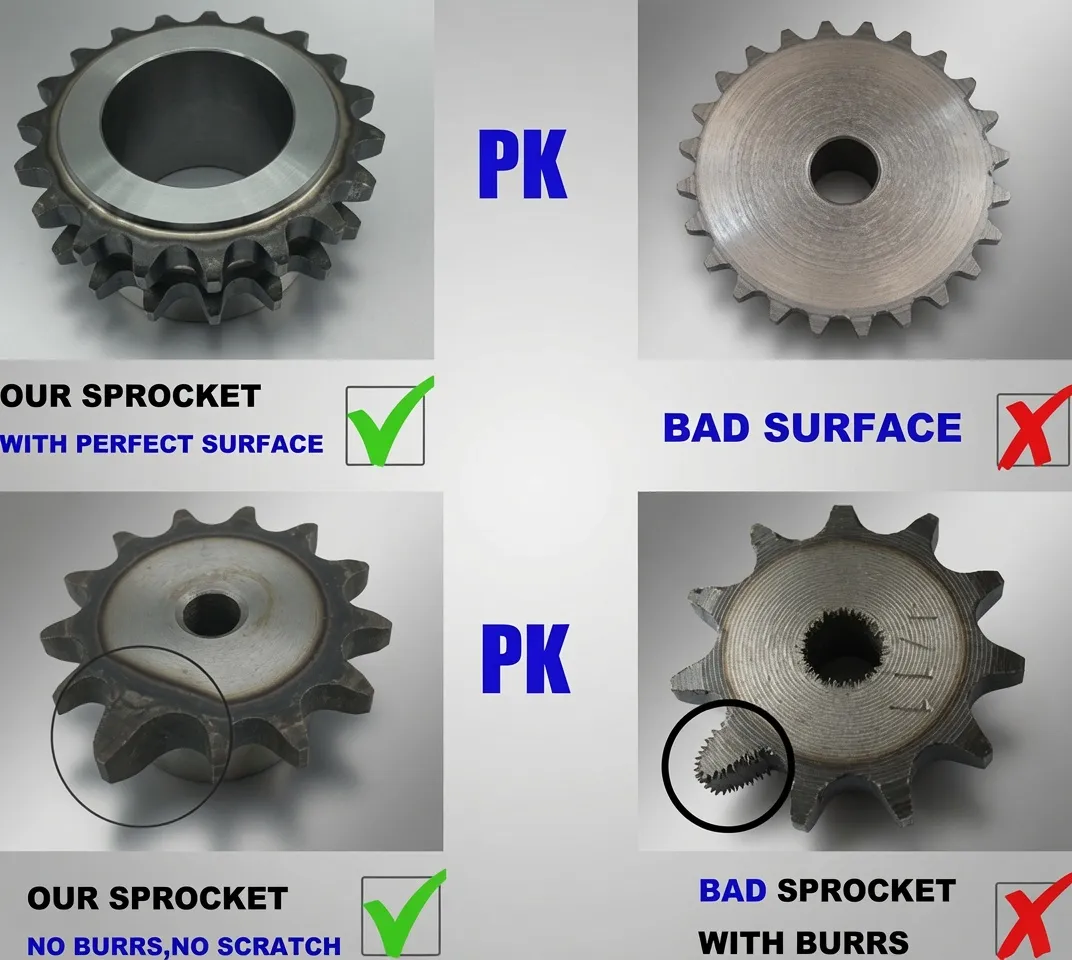
PCD, bore diameter, and hub runout measured on every SUS2050SB part before dispatch. Fractional-count sprockets in particular benefit from 100% dimensional verification because a setup error in the hobbing synchronisation would produce a wrong-PCD part that passes visual inspection but fails on chain engagement.
EN 10204 3.1 mill test certificates linking parts to specific 304 stainless steel heats, confirming chemical composition and mechanical properties. Required for food, pharmaceutical, and chemical industry procurement compliance.
Questions about effective tooth count selection, chain speed limits, bore sizing, or comparison between 2040SB and 2050SB for a specific application are answered by production engineers within one business day, in English.
Frequently Asked Questions
Common questions about SUS2050SB double-pitch stainless sprockets.