Technical guidance on selecting, installing, and maintaining sprocket chain systems for mining and quarrying — covering crushers, bucket elevators, screens, and apron feeders.
Why Mining Is the Most Demanding Environment for Sprocket Chains
Mining and quarrying subject sprocket chains to operating conditions that push every component to its design limit. Crushers reverse loads with every jaw stroke, bucket elevators lift abrasive material hundreds of meters vertically, and vibrating screens transmit high-frequency oscillations directly into the chain drive. Add continuous 24-hour duty cycles, airborne dust that infiltrates every bearing surface, and temperatures that swing from sub-zero night shifts to kiln-adjacent zones above 200 degrees — and the result is an environment where standard industrial chains fail within weeks.
Heavy duty roller chains engineered specifically for mining use thicker side plates, larger-diameter pins, through-hardened bushings, and oversized rollers that absorb shock loads without deformation. Selecting the right chain for each piece of mining equipment requires understanding both the static load and the dynamic amplification factors unique to crushing, screening, and conveying operations.
Chain Selection for Crushers and Primary Breakers
| Equipment | Chain Type | Pitch Range | Service Factor | Key Challenge |
|---|---|---|---|---|
| Jaw Crusher | Heavy Duty Roller | 38.1 – 76.2 mm | 1.5 – 1.7 | Reverse shock loading |
| Cone Crusher | Heavy Duty Roller | 31.75 – 50.8 mm | 1.4 – 1.6 | Continuous high torque |
| Bucket Elevator | Standard/HD Roller | 25.4 – 38.1 mm | 1.3 – 1.5 | Vertical abrasive load |
| Vibrating Screen | Standard Roller | 19.05 – 25.4 mm | 1.4 – 1.7 | High-frequency vibration |
| Apron Feeder | Engineering Steel | 50.8 – 76.2 mm | 1.5 – 1.8 | Heavy impact, abrasion |
| Conveyor Drive | Standard/Duplex | 19.05 – 31.75 mm | 1.2 – 1.5 | Long center distance |
| Service factors per ISO 10823 guidelines for mining applications. Actual values depend on specific ore type, moisture, and feed rate. | ||||
Jaw crushers generate extreme reverse-load shock cycles — the chain tension spikes to maximum as the jaw closes on rock, then drops to near-zero as it opens. This pulsating load profile causes fatigue failures in standard chains long before abrasive wear becomes a factor. Heavy duty chains with 31.75 to 76.2 mm pitch and alloy steel components rated for 1.5 to 1.7 service factor are the minimum specification for primary crusher drives.
Cone crushers impose continuous high-torque loads without the sharp reversals of jaw crushers, but the sustained stress demands chains with high fatigue endurance limits. Triplex configurations at medium pitch often outperform single-strand heavy-duty chains because the load is distributed across three rows of pins and bushings, reducing the stress per component.
Bucket Elevators and Vertical Conveying
Bucket elevator chains carry the combined weight of the chain loop, the attached buckets, and the material load — all under gravitational tension that increases with elevation height. For a 30-meter elevator handling 200 tonnes per hour of crusite ore, the chain pull can exceed 50 kN per strand. The chain must also withstand the abrasive contact of material sliding against chain surfaces during loading and discharge.
Specify chains with case-hardened pins (HRC 55-60) and shot-peened link plates that resist fatigue cracking under sustained gravitational loading. Lubrication is particularly challenging on vertical runs — forced-circulation or drip-feed systems positioned at the head sprocket provide the most reliable coverage. Gravity draws oil downward through the chain, so top-feed application is essential.
Vibrating Screen and Feeder Drives
Vibrating screens transmit high-frequency oscillations (typically 750-1,200 RPM) through the frame and into the chain drive. This vibration accelerates wear at every pin-bushing joint simultaneously and can loosen sprocket mounting bolts, set screws, and tensioner adjustments. Chains for screen drives must have tight pitch tolerance and consistent hardness across all components to prevent localized resonance that amplifies vibration.
Use anti-vibration mounting for the drive motor, spring-loaded or hydraulic tensioners that absorb oscillation without losing tension, and lock washers or thread-locking compounds on all sprocket fasteners. Inspect screen drive chains monthly rather than quarterly — vibration-induced wear progresses faster than in conventional drives and can reach the 3% elongation threshold in half the normal time.
Dust and Contamination Management
Airborne particulate in mining environments — silica dust,ite fines,ite powder — acts as a grinding compound when it enters the chain’s pin-bushing clearance. Without protection, abrasive wear rates can be 5 to 10 times higher than in clean factory environments. The most effective countermeasure is full chain enclosure: sheet metal guards with sealed joints and access panels for inspection and lubrication.
Where full enclosure is impractical (open-pit conveyors, mobile equipment), increase the lubrication frequency to every 50-100 operating hours using a heavy-viscosity oil (ISO VG 220+) that clings to surfaces and resists particulate penetration. Automatic centralized lubrication systems are particularly valuable in mining because they deliver consistent oil volume without requiring personnel to approach operating equipment in hazardous locations.
Lubrication and Maintenance in 24/7 Operations
Mining equipment runs continuously — three shifts, seven days a week — and maintenance windows are narrow. Chain drives must be designed for rapid inspection and service: taper-lock sprockets that can be removed without a press, quick-release chain guards, and pre-positioned lubrication points accessible from safe walkways. Build chain elongation measurement into the routine daily walkthrough checklist so that wear trends are tracked automatically without scheduling dedicated inspection downtime.
Stock at least one complete set of replacement chain and sprockets for every critical drive in the mine or processing plant. The cost of carrying spare inventory is negligible compared to the production loss from waiting 3-4 weeks for an international chain shipment while a primary crusher sits idle.
Why Choose Hangzhou Ever-Power as Your Supplier
Selecting a sprocket chain supplier is a decision that extends far beyond unit price. Delivery reliability, dimensional consistency across production batches, willingness to support OEM customization, and responsive after-sales technical backing all factor into the total cost of ownership. Hangzhou Ever-Power Sprocket Chain Co., Ltd. has built its reputation over decades by treating each of these factors as a baseline expectation rather than a premium add-on.
From raw steel blanking through heat treatment, shot peening, and final assembly, every production stage happens under one roof in Hangzhou — eliminating the quality drift that plagues multi-vendor supply chains.
Non-standard bore sizes, special tooth profiles, proprietary surface coatings, and unique attachment configurations are routine production orders — not special projects that require months of back-and-forth negotiation.
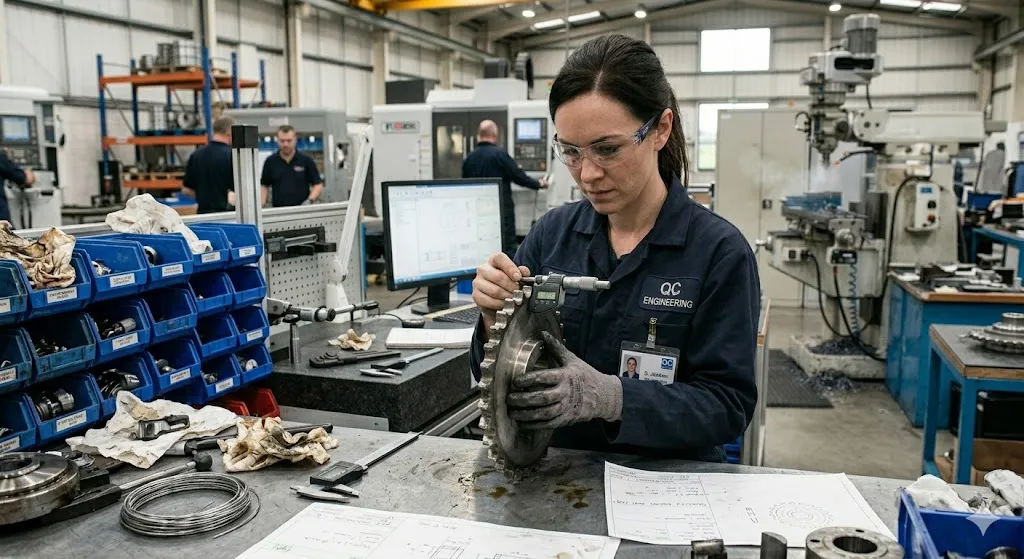
Every batch undergoes tensile testing, Rockwell hardness verification, dimensional inspection with CMM equipment, and pre-shipment elongation checks before products leave the factory floor.
Products ship to over 60 countries with packaging rated for ocean freight and documentation compliant with EU, North American, and Southeast Asian import regulations.
Frequently Asked Questions
Get in Touch with Our Engineering Team
Whether you need a standard catalog chain or a fully custom-engineered solution, our technical sales team is ready to assist with specification, pricing, and logistics.
Company
Hangzhou Ever-Power Sprocket Chain Co., Ltd.
Address
Shenhua Road, Hangzhou, China
Phone
+86-571-88220653