Product Description
|
Our Company
ZheJiang CHINAMFG Machinery Manufacture Co., Ltd.
–Branch of CHINAMFG Industry Ltd.
We specialize in Metal Parts Solution for Vehicle, Agriculture machine, Construction Machine, transportation equipment, Valve and Pump system.
With keeping manufacturing process design, quality plHangZhou, key manufacturing processes and final quality control in house.
We are mastering key competence to supply quality mechanical parts and assembly to our customers for both Chinese and Export Market.
To satisfy different mechanical and functional requirements from our customers we are making a big range of metal products for our clients on base of different blanks solutions and technologies.
These blanks solutions and technologies include processes of Iron Casting, Steel Casting, Stainless Steel Casting, Aluminum Casting and Forging.
During the early involvement of the customer’s design process we are giving professional input to our customers in terms of process feasibility, cost reduction and function approach.
You are welcome to contact us for technical enquiry and business cooperation.
Our Team are a big happy family, we not only supplying products to our customers , but also trying to build more values to our customers’ business by introducing suitable solution or technology to our customers with compromising parts’ function, technologies’ advantage, realization feasibility, cost control and quality reliability.
With many years experience in this line,we will be trusted by our advantages in competitive price,one-time delivery,prompt response,on-hand engineering support and good after-sales services.
FAQ:
1. Are you a manufacturer or a trading company?
We are a professional manufacturer with over 15 years’ export experience for designing and producing vehicle machinery parts.
2. How can I get some samples?
If you need, we are glad to offer you samples for free, but the new clients are expected to pay the courier cost,
and the charge will be deducted from the payment for formal order.
3. Can you make casting according to our drawing?
Yes, we can make casting according to your drawing, 2D drawing, or 3D cad model. If the 3D cad model can be supplied,
the development of the tooling can be more efficient. But without 3D, based on 2D drawing we can still make the samples properly approved.
4. Can you make casting based on our samples?
Yes, we can make measurement based on your samples to make drawings for tooling making.
5. What’s your quality control device in house?
We have spectrometer in house to monitor the chemical property, tensile test machine to control the mechanical property and UT Sonic as NDT checking method to control the casting detect under the surface of casting
If you have demand, please send us an inquiry.
|
Shipping Cost:
Estimated freight per unit. |
To be negotiated |
|---|
| Die Casting Machine Type: | Hot Chamber Die Casting Machine |
|---|---|
| Die Casting Method: | Precision Die Casting |
| Application: | Auto Parts |
| Samples: |
US$ 4.59/kg
1 kg(Min.Order) | Order Sample As customer required
|
|---|
| Customization: |
Available
| Customized Request |
|---|
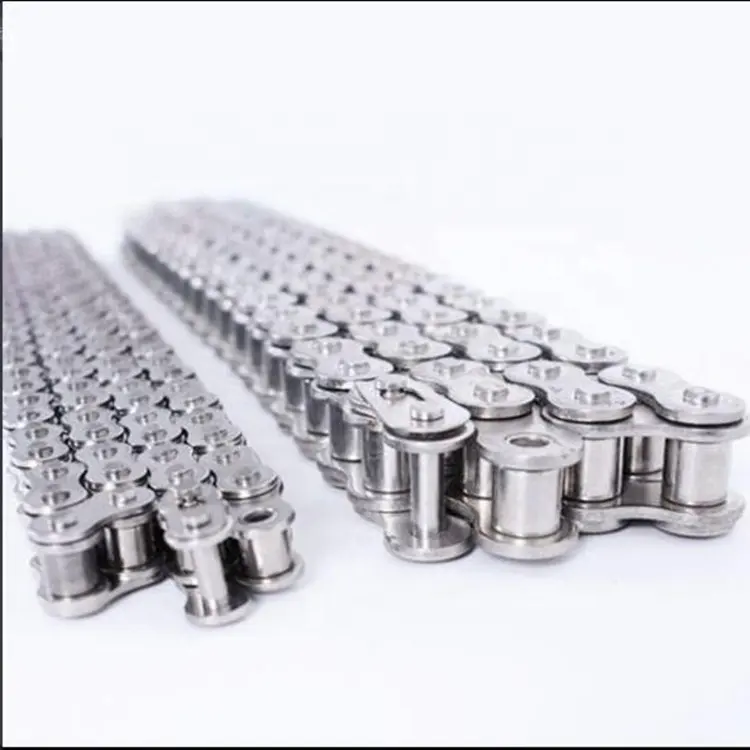
How does the choice of chain lubricant affect the maintenance requirements?
The choice of chain lubricant has a significant impact on the maintenance requirements of a transmission chain. Here’s a detailed answer to the question:
1. Lubrication Interval: Different chain lubricants have varying properties, including their ability to withstand high temperatures, resist contamination, and provide long-lasting lubrication. The right choice of lubricant can extend the lubrication interval, reducing the frequency of lubrication and, consequently, the maintenance requirements.
2. Wear Protection: The primary function of chain lubrication is to reduce friction and wear between the chain components. The selection of a high-quality lubricant with excellent wear protection properties can significantly extend the chain’s lifespan and reduce the need for frequent replacements or repairs.
3. Contamination Resistance: Some chain lubricants are specifically formulated to resist contaminants such as dust, dirt, or water. Using a lubricant with superior contamination resistance can help maintain optimal chain performance and reduce the risk of premature wear or failure due to the presence of contaminants. This, in turn, reduces the maintenance requirements associated with cleaning and removing contaminants from the chain.
4. Corrosion Prevention: In applications where the chain is exposed to corrosive environments, selecting a chain lubricant with corrosion prevention properties is crucial. Such lubricants form a protective film that helps shield the chain from moisture, chemicals, and other corrosive agents. By using a corrosion-resistant lubricant, the maintenance requirements related to combating corrosion are minimized.
5. Temperature Stability: The operating temperature of a transmission chain can significantly impact its performance and maintenance requirements. Choosing a chain lubricant with excellent temperature stability ensures that the lubricant maintains its viscosity and protective properties even under high temperatures. This reduces the need for frequent lubricant replacements due to thermal degradation.
6. Environmental Considerations: Some applications may have specific environmental regulations or requirements. Choosing a chain lubricant that is environmentally friendly, biodegradable, or compliant with certain standards can simplify maintenance procedures and ensure compliance with regulations.
It’s essential to consult the manufacturer’s recommendations and guidelines when selecting the appropriate chain lubricant for a specific application. Consideration should be given to factors such as operating conditions, load, speed, temperature range, and environmental factors to ensure optimal lubrication and minimize maintenance requirements.
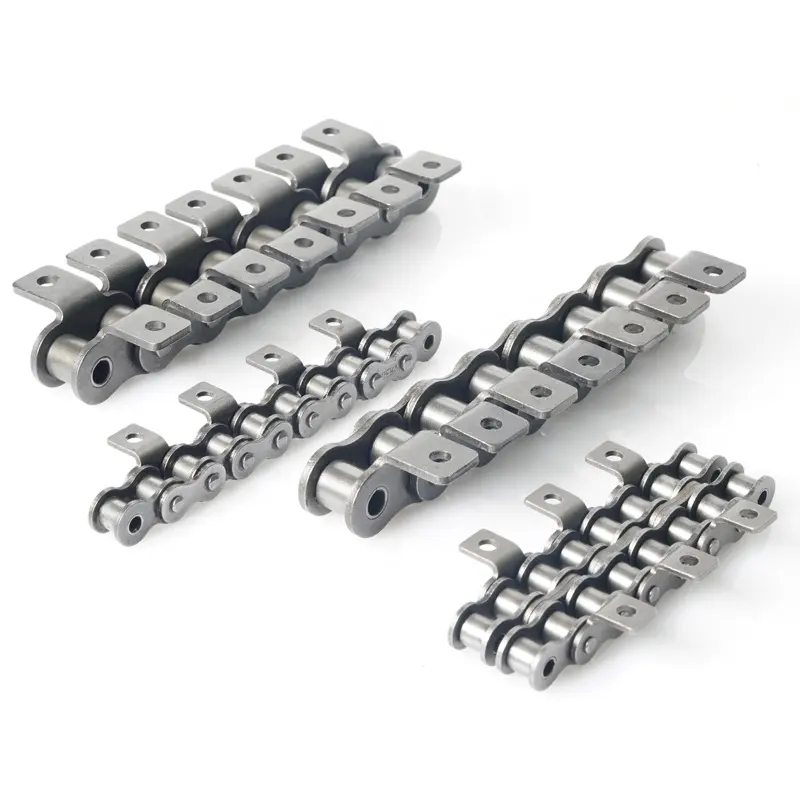
Can transmission chains be used in renewable energy systems?
Yes, transmission chains can be used in renewable energy systems. Here’s a detailed answer to the question:
Renewable energy systems, such as wind turbines and solar power plants, often require the efficient transfer of mechanical power from the energy source to the generator or other components. Transmission chains play a vital role in this power transmission process.
In wind turbines, transmission chains are commonly used in the pitch control system. The pitch control mechanism adjusts the angle of the turbine blades to optimize their performance based on wind conditions. Transmission chains provide a reliable and robust method for transmitting the necessary power from the pitch motor to the blade adjustment mechanism.
In solar power plants, transmission chains are used in solar tracking systems. These systems allow solar panels or mirrors to track the sun’s movement throughout the day, maximizing the amount of sunlight captured and improving the overall efficiency of the solar power generation. Transmission chains facilitate the precise movement required for solar tracking, ensuring accurate alignment and optimal energy capture.
Transmission chains used in renewable energy systems need to be durable, reliable, and capable of withstanding the environmental conditions typically encountered in these applications. They may require specific features such as corrosion resistance, high strength, and the ability to operate in a wide range of temperatures.
Overall, transmission chains offer an efficient and effective solution for power transmission in renewable energy systems. Their versatility, reliability, and ability to handle various loads and speeds make them suitable for use in wind turbines, solar tracking systems, and other renewable energy applications.
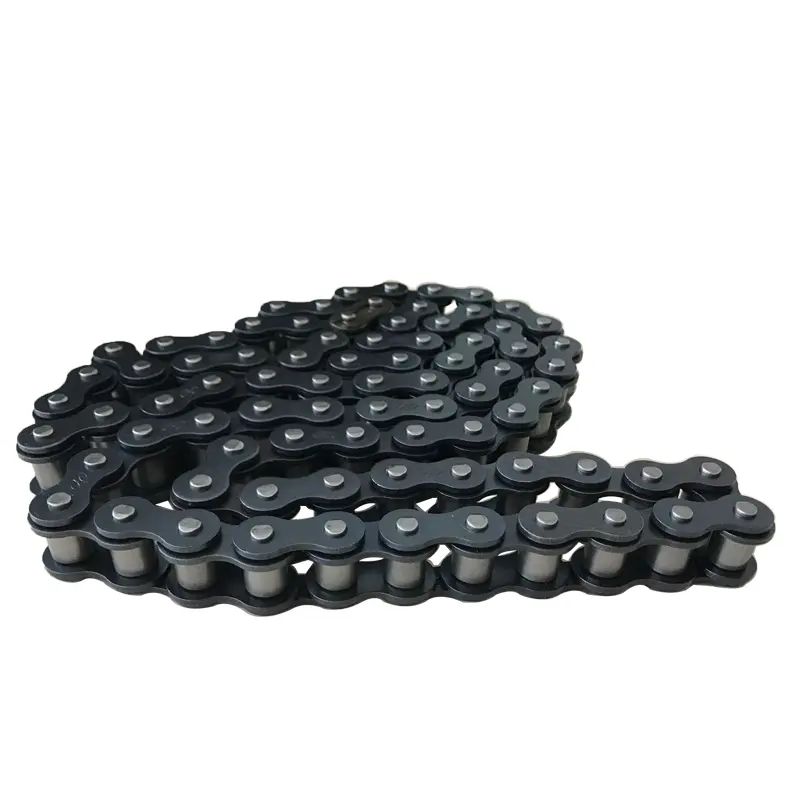
What is a transmission chain and how does it work?
A transmission chain is a type of mechanical chain used to transmit power between two or more rotating shafts. It consists of a series of interconnected links that engage with toothed sprockets to transfer motion and torque.
In a typical transmission chain system, the chain wraps around two or more sprockets, with one sprocket connected to the input shaft and the other(s) connected to the output shaft(s). As the input shaft rotates, the chain moves along the sprockets, causing the output shaft(s) to rotate at the same speed or different speeds depending on the sprocket sizes.
The functioning of a transmission chain relies on the principle of mechanical power transmission through interlocking links and the engagement between the chain and the sprocket teeth. The chain’s links are designed to fit precisely with the sprocket teeth, ensuring a positive and reliable transfer of power.
As the chain engages with the sprockets, the teeth on the sprockets push against the chain’s rollers or pins, causing the chain to move. This movement transfers rotational motion and torque from the input shaft to the output shaft(s), enabling the transmission of power and facilitating various mechanical operations.
Transmission chains are widely used in various applications such as automotive engines, motorcycles, bicycles, industrial machinery, and power transmission systems. They are valued for their durability, efficiency, and ability to handle high loads and speeds.


editor by CX 2023-09-18