Product Description
For more models of conveyor, please click here or click the following picture
Introduction of Pallet Roller Conveyor
YUPACK Pallet Conveyor System, Automatic Pallet Transfer / Chain / Turntable / Roller Conveyor is a common piece of mechanical handing equipment that moves material from 1 location to another .Conveyors are especialy useful in application involving the transportation of heavy pallets or goods .It is widely used in various areas.
Application of Pallet Roller Conveyor
High Quality Cheap Price Pallet Roller Conveyor. Roller conveyor is suitable for conveying the material which has a flat bottom. It has advantages of large conveying capacity,high speed , strong load capacity. It is easy to connect roller conveyors. Several roller lines and other conveying devices can be assembled into complicated logistics transport system to meet the technical requirements in many fields. The roller conveyor is classified by form of layout: horizontal conveying, turning conveying, incline conveying.
Services
Our Service
1, Our Quality Guarantee Period is for 1 year;
2, Oversea Engineer service is available;
3, We can supply Technical Support by phone, email or video all the time.
4. We promise our customers that if there is something wrong with the product within the Guarantee Period, we will repair the products within 10 days or return money or re-produce the products with no charge.
Feedback
World Market Our products are sold all over the world, including North and South America, Brazil, Pakistan, Kyrghyzstan, Australia, Turkey, Canada, Russia etc.
FAQ (Frequently Asked Questions)
Q1: May I know how soon I can get the machine after I transfer the deposit?
A1: Usually,If the machine you required is standard type, we can ship it immediately. Welcome customized type,the which leading time is about 20-25workingdays .
Q2: Could you help me load other goods into container together?
A2:Yes ,of course. If most products buy from us ,and also buy other products from other supplier ,you can ask other supplier send products to our factory (HangZhou city ,ZheJiang province). we help you load all products into one
container. and arrange everything.
Q3: How do I inspect machine’s quality once the machine finished?
A3: We did video call at our workshop with our customer to do site inspection by zoom,Microsoft ,Teamviewer,whatspp , and .
Company profile
HangZhou CZPT has been established in 2008, which specialized in plHangZhou, R&D and manufacturing of automatic packaging production line. Such as automatic carton packing line,shrinking wrapping line, fully automatic pallet strapping line,conveyor system,robot palletizer and so on……
Ausense main brand is YUPACK. All products have passed the CE certification of the European Union; Our productions have beening exported to Europe, North America, the Middle East, Southeast Asia and more than 100 other Countries.
Since 2017, HangZhou CZPT had successfully introduced robots into our end of packaging production line which can effectively integrat
| After-sales Service: | Online Support |
|---|---|
| Warranty: | 1 Year |
| Structure: | Roller Conveyor |
| Customization: |
Available
| Customized Request |
|---|
.shipping-cost-tm .tm-status-off{background: none;padding:0;color: #1470cc}
|
Shipping Cost:
Estimated freight per unit. |
about shipping cost and estimated delivery time. |
|---|
| Payment Method: |
|
|---|---|
|
Initial Payment Full Payment |
| Currency: | US$ |
|---|
| Return&refunds: | You can apply for a refund up to 30 days after receipt of the products. |
|---|

Factors Affecting the Efficiency of a wheel sprocket Setup
Several factors can influence the efficiency of a wheel sprocket system in power transmission and motion control applications. These factors should be carefully considered and optimized to ensure the system’s overall effectiveness and performance:
- 1. Friction: Friction between the wheel, sprocket, and the chain or belt can lead to energy losses. Using high-quality materials and lubrication can help reduce friction and improve efficiency.
- 2. Alignment: Proper alignment between the wheel and the sprocket is critical. Misalignment can cause increased wear, noise, and reduced efficiency. Regular maintenance and alignment checks are essential.
- 3. Tension: The correct tension in the chain or belt is crucial for efficient power transmission. Too loose or too tight tension can lead to performance issues and premature wear.
- 4. Material and Design: The choice of materials for the wheel sprocket, as well as their design, can impact efficiency. High-quality materials and well-engineered components reduce wear and improve overall system performance.
- 5. Load Distribution: Uneven load distribution across the wheel sprocket can lead to localized wear and decreased efficiency. Ensuring proper load distribution helps maintain uniform wear and power transmission.
- 6. Environmental Factors: Harsh environmental conditions, such as dust, moisture, and extreme temperatures, can affect the efficiency of the system. Choosing suitable materials and implementing protective measures can mitigate these effects.
- 7. Maintenance: Regular maintenance, including lubrication, inspection, and timely replacement of worn components, is vital for the long-term efficiency of the system.
- 8. Speed and Torque: The operating speed and torque requirements of the application should be considered when selecting the appropriate wheel sprocket size and specifications.
- 9. Chain or Belt Type: Different types of chains or belts, such as roller chains, silent chains, or toothed belts, have varying efficiencies. Choosing the right type for the specific application is crucial.
- 10. System Integration: The wheel sprocket system should be integrated correctly with other components in the machinery to ensure smooth operation and minimal energy losses.
By carefully considering and optimizing these factors, it is possible to improve the efficiency of the wheel sprocket system, leading to reduced energy consumption, less wear and tear, and overall better performance.
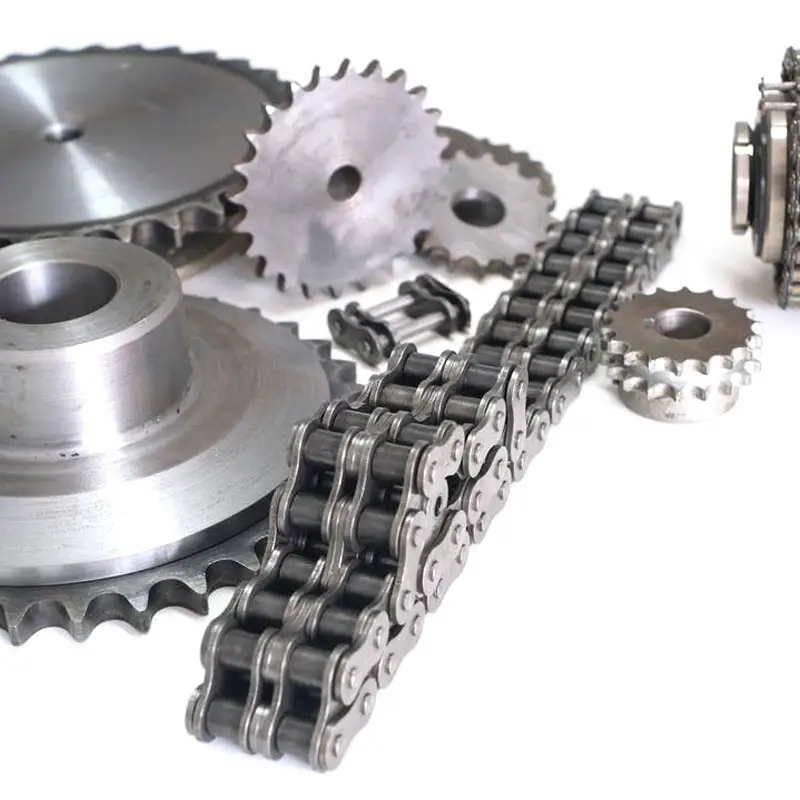
Using a Belt Sprocket in Place of a Chain Sprocket with a Wheel
Yes, in many cases, a belt sprocket can be used in place of a chain sprocket with a wheel, provided that the system is designed to accommodate the change.
Both chain sprockets and belt sprockets serve the same fundamental purpose of transferring rotational motion and power between the wheel and the driven component. However, there are some important considerations to keep in mind when replacing a chain sprocket with a belt sprocket:
- Alignment: Belt sprockets and chain sprockets must be aligned properly with the wheel to ensure smooth and efficient power transmission. Any misalignment can cause premature wear and reduce the system’s overall performance.
- Tension: Chain-driven systems require specific tension to prevent slack and maintain proper engagement between the sprockets and the chain. Belt-driven systems, on the other hand, require appropriate tension to prevent slippage. Ensuring the correct tension for the specific type of sprocket is crucial for reliable operation.
- Load Capacity: Consider the load capacity and torque requirements of the system when selecting a belt sprocket. Belt sprockets may have different load-carrying capabilities compared to chain sprockets, and using the wrong type can lead to premature wear or failure.
- Speed and RPM: Belt-driven systems may have different operating speeds and RPM limits compared to chain-driven systems. Ensure that the selected belt sprocket can handle the desired rotational speed without exceeding its design limitations.
- System Design: Changing from a chain-driven system to a belt-driven system (or vice versa) may require modifications to the overall system design, including the size of the sprockets and the layout of the system. Consult with an engineer or a qualified professional to ensure that the replacement is appropriate and safe.
Overall, replacing a chain sprocket with a belt sprocket can be a viable option in certain applications. However, it’s essential to consider the factors mentioned above and evaluate the compatibility of the new sprocket with the existing system to achieve optimal performance and longevity.
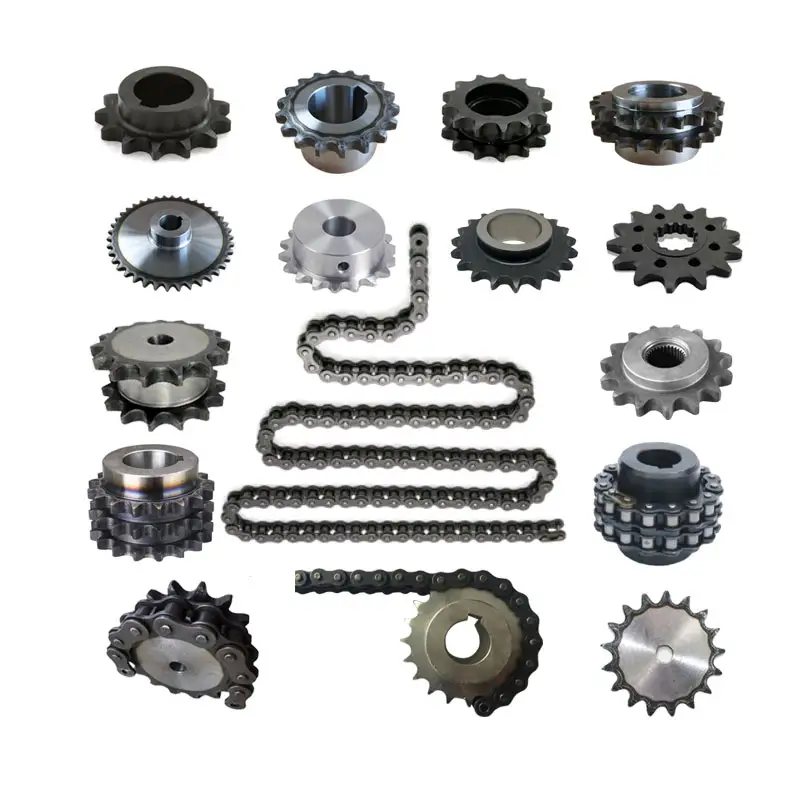
Calculating Gear Ratio for a wheel sprocket Setup
In a wheel sprocket system, the gear ratio represents the relationship between the number of teeth on the sprocket and the number of teeth on the wheel. The gear ratio determines the speed and torque relationship between the two components. To calculate the gear ratio, use the following formula:
Gear Ratio = Number of Teeth on Sprocket ÷ Number of Teeth on Wheel
For example, if the sprocket has 20 teeth and the wheel has 60 teeth, the gear ratio would be:
Gear Ratio = 20 ÷ 60 = 1/3
The gear ratio can also be expressed as a decimal or percentage. In the above example, the gear ratio can be expressed as 0.3333 or 33.33%.
It’s important to note that the gear ratio affects the rotational speed and torque of the wheel sprocket. A gear ratio greater than 1 indicates that the sprocket’s speed is higher than the wheel’s speed, resulting in increased rotational speed and reduced torque at the wheel. Conversely, a gear ratio less than 1 indicates that the sprocket’s speed is lower than the wheel’s speed, resulting in decreased rotational speed and increased torque at the wheel.
The gear ratio is crucial in various applications where precise control of speed and torque is required, such as bicycles, automobiles, and industrial machinery.


editor by CX 2023-11-03