
Product Description
ISO16949: 2009 Approved Industrial Chain
Why Choose Us?
1. HangZhou Xihu (West Lake) Dis.hua Chain Group Co., Ltd established in 1991, we have 5 subsidiaries in china and have 6 subsidiaries abroad;
2. we covering a production area of 200,100 square meters, have more than 1,800 sets of advanced equipment and over 3,100 highly skilled employees, the annual production capacity has exceeded 20,000,000meters;
3. we specialized in producing all kinds of standard chains and special chains, such as A or B series chains, driving chains, conveyor chains, hoisting chains, agricultural chains, sprockets, industrial chains, sprockets, gears, wheels and so on;
4. we have obtained ISO9001, ISO14001, ISO16969, AAA and API certificates.
5. Our partners among world top enterprises, such as JOHNDEERE, NEW HOLLAND, CLAAS, HONDA, KUBOTA, YANMAR, etc.
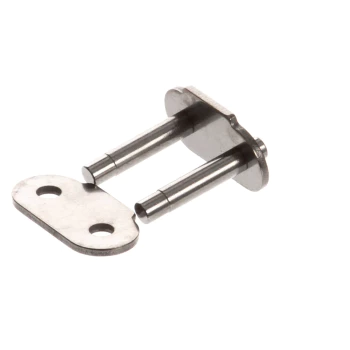
1. Industrial Chain Parts
2. Production flow chart
1. Incoming material
2. Inspection
3. Production of chain board (cold roll steel/punch/heat treatment/shot blasting/cleaning)
4. Production of roller(burr wiping & smear/heat treatment/wiping grinding/cleaning)
5. Production of quill(burr wiping & smear/centerless cylindrical grinding/heat treatment/shining)
6. Production of shaft(cutting/chamfering/heat treatment/ centerless cylindrical grinding/cleaning)
7. Assembling
8. Final inspection
9. Packing
3. Certificate
4. Company Information
HangZhou Xihu (West Lake) Dis.hua Chain Group Co., Ltd was founded in 1 9 9 1, and now it has five wholly owned subsidiaries, one in ZheJiang province, other four in HangZhou, ZHangZhoug province, it is a professional manufacturer of chains, sprockets, tooth gears and various power transmission products.
The group has XIHU (WEST LAKE) DIS.HUA, ZIQIANG brands, is focused on producing all variety of standard roller chains and special chains, such as conveyor chain, stainless steel chain, agricultural chain. With Xihu (West Lake) Dis.hua brand registered in more than 70 countries like America, Europe, Japan, it is building long term cooperation with these world top enterprises, such as JOHNDEERE, NEW HOLLAND, CLAAS, HONDA, KUBOTA, YANMAR.
There is a technical center of province level, Xihu (West Lake) Dis.hua academician working station, experiment station for Xihu (West Lake) Dis.hua post doctors, and national hundreds of program set up in Xihu (West Lake) Dis.hua group. With these platforms and strong technical ability, the more than hundreds of Engineers and technicians have developed all variety of special high precise and high strength products, conducted mold programs for key components in the car and national industry revitalizing program.
Great attention has been paid on environmental protection and energy saving. The product well displays environmental protection and energy saving. In the year of 2 0 0 0, Xihu (West Lake) Dis.hua took the lead in gaining I S O 1 4 0 0 1 environment management certificate and thereafter passed the inspection of clean production and recycling economy, winning the title of “ZHangZhoug Green Enterprise”.
“We are always serving our customers with our best products.”
| Usage: | Conveyor Chain |
|---|---|
| Material: | Alloy/Carbon Steel |
| Surface Treatment: | Electroplating |
| Feature: | Heat Resistant |
| Chain Size: | 1/2"*11/128" |
| Structure: | Roller Chain |
| Customization: |
Available
| Customized Request |
|---|
What are the benefits of using a drive chain with low maintenance requirements?
Using a drive chain with low maintenance requirements offers several benefits in industrial applications. Here is a detailed explanation:
- Reduced Downtime: A drive chain with low maintenance requirements minimizes the need for frequent inspections, lubrication, and adjustments. This reduces the downtime associated with maintenance activities, allowing for longer periods of uninterrupted operation and increased productivity.
- Cost Savings: With low maintenance requirements, there is a reduction in the labor, time, and cost associated with regular maintenance tasks such as lubrication, cleaning, and tension adjustments. Additionally, the longer intervals between maintenance cycles result in lower overall maintenance expenses.
- Increased Reliability: Drive chains with low maintenance requirements are designed to be highly reliable and durable. They are engineered to withstand the demands of continuous operation without frequent maintenance interventions. This enhances the reliability of the chain, reducing the risk of unexpected failures or breakdowns that can disrupt production processes.
- Extended Chain Life: Drive chains with low maintenance requirements often incorporate features such as self-lubricating capabilities, corrosion-resistant coatings, or sealed designs. These features help to protect the chain from wear, corrosion, and contaminants, extending its service life and reducing the frequency of chain replacements.
- Improved Safety: Low maintenance drive chains contribute to improved safety in the workplace. With reduced maintenance requirements, there is a decreased need for personnel to access or interact with the chain system, minimizing the risk of accidents or injuries associated with maintenance activities. Additionally, reliable chain performance resulting from low maintenance helps ensure the safe operation of machinery and equipment.
- Simplified Maintenance Routine: Drive chains with low maintenance requirements often have simplified maintenance routines. They may incorporate features such as easy-to-access lubrication points, quick-release pins, or self-adjusting mechanisms. These features simplify the maintenance process, making it more efficient and less time-consuming.
- Enhanced Operational Efficiency: A drive chain with low maintenance requirements allows for continuous operation with minimal interruptions for maintenance. This enhances overall operational efficiency, as production processes can run for longer periods without the need for frequent stops or maintenance-related downtime.
It is important to note that even drive chains with low maintenance requirements still require periodic inspections to ensure proper functioning and detect any signs of wear or damage. However, the intervals between maintenance tasks are extended compared to traditional drive chains, resulting in improved operational efficiency and cost savings.
By utilizing drive chains with low maintenance requirements, industrial operators can benefit from reduced downtime, cost savings, increased reliability, extended chain life, improved safety, simplified maintenance routines, and enhanced operational efficiency in their applications.
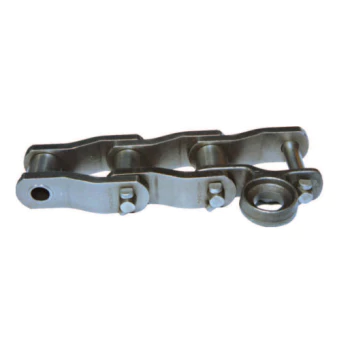
Can a drive chain be used in a mining or construction application?
Yes, a drive chain can be used in mining and construction applications, where reliable power transmission and durability are essential. Here is a detailed explanation:
In mining and construction, heavy machinery and equipment are commonly used to perform tasks such as excavating, hauling, and material handling. Drive chains offer several advantages in these demanding applications:
- High Load Capacity: Drive chains are known for their high load-carrying capacity, making them suitable for heavy-duty applications commonly found in mining and construction. They can handle the significant forces and loads associated with excavators, cranes, bulldozers, and other machinery.
- Durability and Reliability: Mining and construction environments are challenging, with conditions such as dust, dirt, vibrations, and extreme temperatures. Drive chains are designed to withstand these harsh conditions and provide reliable and durable power transmission even in rugged and demanding operating environments.
- Resistance to Wear and Fatigue: Drive chains are manufactured from materials and coatings that offer excellent resistance to wear, fatigue, and corrosion. This ensures a longer service life, reducing the frequency of replacements and minimizing downtime for maintenance.
- Flexibility and Adaptability: Drive chains can be customized to fit specific mining and construction applications. They are available in various sizes, pitches, and materials to accommodate different loads, speeds, and environmental conditions.
- Suitable for Variable Speeds and Torques: Drive chains can handle variable speeds and torques, allowing them to adapt to different operational requirements in mining and construction equipment. They can efficiently transmit power and withstand sudden changes in loads and torque.
- Compatibility with Attachments: Drive chains can be equipped with attachments or customized to accommodate specific attachments used in mining and construction machinery. These attachments, such as buckets, rippers, or lifting arms, can be securely connected to the chain, enabling efficient material handling or specialized tasks.
It is important to select the appropriate drive chain type, size, and material based on the specific requirements of the mining or construction application. Regular maintenance, including inspection, lubrication, and tension adjustment, is crucial to ensure optimal performance and longevity of the drive chain in these demanding environments.
By utilizing drive chains in mining and construction applications, operators can benefit from reliable power transmission, durability, and the ability to withstand the challenging conditions encountered in these industries.
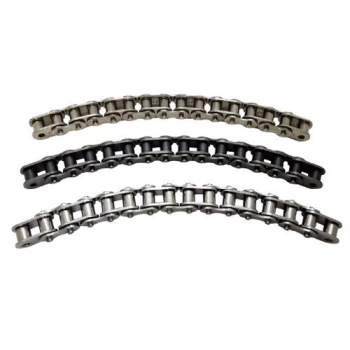
Are there different standards or certifications for drive chains?
Yes, there are different standards and certifications that apply to drive chains to ensure their quality, performance, and compatibility with specific industries or applications. Here’s an explanation:
Drive chains may adhere to various standards and certifications, depending on the region and specific requirements. Some common standards and certifications for drive chains include:
- 1. ISO Standards: The International Organization for Standardization (ISO) has developed several standards related to drive chains. ISO 606 specifies the dimensions and mechanical requirements for roller chains, while ISO 10823 provides guidelines for determining the fatigue strength of roller chains.
- 2. ANSI Standards: The American National Standards Institute (ANSI) has established standards for drive chains, such as ANSI B29.1 for roller chains and ANSI B29.2 for double pitch roller chains. These standards cover dimensions, design, and performance requirements for various types and sizes of chains.
- 3. DIN Standards: The Deutsches Institut für Normung (DIN) has developed standards for drive chains commonly used in Germany and European markets. DIN 8187 covers roller chains, while DIN 8181 specifies leaf chains.
- 4. JIS Standards: The Japanese Industrial Standards (JIS) have their own set of standards for drive chains. JIS B1801 covers roller chains, JIS B1802 specifies leaf chains, and JIS B1803 provides guidelines for silent chains.
- 5. Industry-Specific Standards: Certain industries, such as automotive or agricultural, may have specific standards or certifications for drive chains. For example, the Automotive Industry Action Group (AIAG) in the automotive sector may have guidelines or requirements for drive chains used in automobiles.
When selecting a drive chain, it is important to consider the relevant standards and certifications that apply to your industry or application. Adhering to these standards ensures that the drive chain meets the required quality, performance, and safety standards for the intended use.


editor by CX 2023-12-11