Product Description
|
Product |
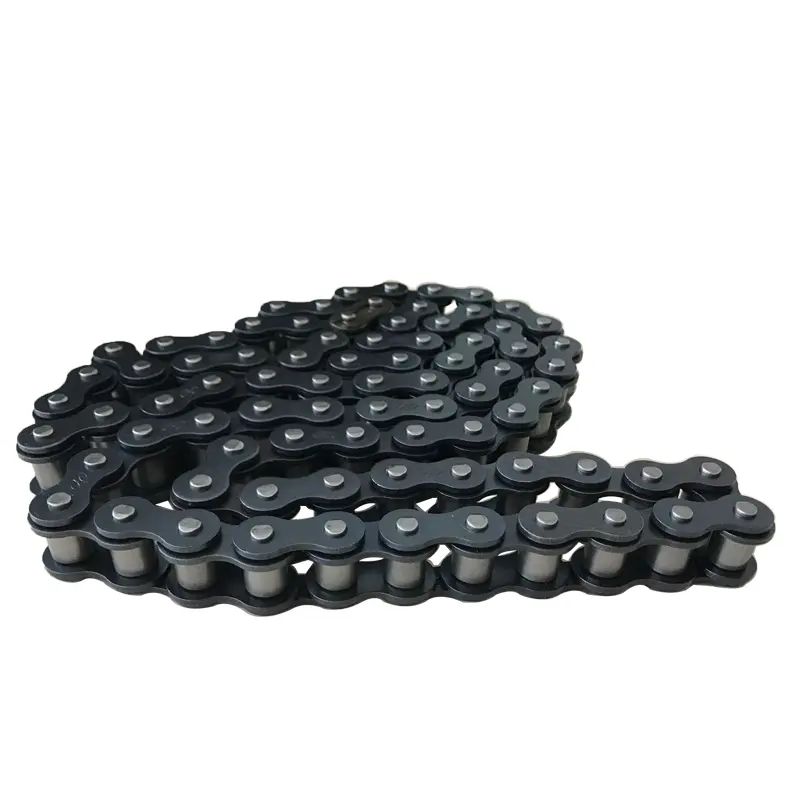
Standard Double Pitch Roller chain |
||
|
Material |
40Mn steel,304 stainless steel, 316 stainless steel and 201 stainless steel. |
||
|
Types |
Standard chains and special chains, such as A or B series chains, roller chains, driving chains, conveyor chains, hoisting chains, agricultural chains, sprockets, gears, wheels and so on. |
||
|
Series |
A series(12.7-50.8mm pitches),B series (9.525-50.8mm pitches)and the heavy series. |
||
|
Short pitch precision roller chain |
Simplex Roller Chains&Bushing Chains: 04C-1,06C-1,085-1,08A-1,10A-1,12A-1,16A-1,20A-1,24A-1,28A-1,32A-1,36A-1,40A-1,48A-1 04C-2,06C-2,085-2,08A-2,10A-2,12A-2,16A-2,20A-2,24A-2,28A-2,32A-2,36A-2,40A-2,48A-2 04C-3,06C-2,085-3,08A-3,10A-3,12A-3,16A-3,20A-3,24A-3,28A-3,32A-3,36A-3,40A-3,48A-3 |
||
|
Chain link type |
Standard links (without attachment) and non-standard links (with attachment).
A1: One-side,one hole cranked attachments. |
||
|
Our Products Advantage |
1. Every step from production order to the packing process has a strict quality inspection. |
||
1.Fast delivery: Standard products can be delivered in as fast as 20 days
2.Good service: timely reply, prompt quotation, responsible for the product
3.High cost performance: can maintain price stability for a certain period of time, bringing greater profits to customers
4.Good quality: production and testing have corresponding supervision to ensure product quality and get high praise from customers
5.OEM service: products can be customized according to drawings and requirements
We are responsible for the ordered products. We are very confident in the products we produce. Of course, if you have any problems after receiving the goods, you can contact us directly. We will confirm and negotiate in time to solve your difficulties.
/* March 10, 2571 17:59:20 */!function(){function s(e,r){var a,o={};try{e&&e.split(“,”).forEach(function(e,t){e&&(a=e.match(/(.*?):(.*)$/))&&1
| Standard or Nonstandard: | Standard |
|---|---|
| Application: | Textile Machinery, Garment Machinery, Conveyer Equipment, Packaging Machinery, Food Machinery, Mining Equipment, Agricultural Machinery |
| Surface Treatment: | Oil Blooming |
| Structure: | Roller Chain |
| Material: | Alloy |
| Type: | Double Pitch Chain |
| Samples: |
US$ 35/kg
1 kg(Min.Order) | |
|---|
| Customization: |
Available
| Customized Request |
|---|
How does the design of a transmission chain impact its efficiency?
The design of a transmission chain plays a crucial role in determining its efficiency and overall performance. Here’s a detailed explanation:
1. Link Shape and Geometry: The shape and geometry of the chain links directly affect the efficiency of power transmission. Chains with optimized link designs, such as streamlined or curved profiles, reduce friction and minimize energy losses during operation. These design features enhance the chain’s efficiency and contribute to smoother power transfer.
2. Bearing Surfaces: The design and quality of bearing surfaces in a transmission chain significantly impact its efficiency. Well-designed chains incorporate precision-machined bearing surfaces that minimize friction and wear. Smooth and accurately machined surfaces reduce energy losses caused by friction, resulting in higher efficiency and improved overall performance.
3. Roller and Bushing Design: The design of the rollers and bushings in a transmission chain can greatly influence its efficiency. Chains with properly designed rollers and bushings reduce friction and enable smooth rotation. Low-friction contact surfaces between the rollers and sprockets ensure efficient power transmission, reducing energy waste and improving the overall efficiency of the chain.
4. Lubrication System: The design of the lubrication system within the chain also affects its efficiency. Proper lubrication reduces friction and wear, allowing the chain to operate more efficiently. Some transmission chains incorporate self-lubricating features or advanced lubrication mechanisms to ensure optimal lubrication throughout the chain, further improving efficiency.
5. Material Selection: The choice of materials for the chain’s components, such as links, rollers, and bushings, impacts its efficiency. High-quality materials with excellent wear resistance and low friction coefficients contribute to higher efficiency. Additionally, lightweight materials can reduce the overall weight of the chain, resulting in lower inertia and improved efficiency.
6. Precision Manufacturing: The precision and accuracy with which a transmission chain is manufactured can directly affect its efficiency. Chains produced with tight tolerances and high-quality manufacturing processes ensure proper fit, reduced friction, and optimal power transfer, resulting in improved efficiency.
It is important to note that the design considerations and features mentioned above can vary depending on the specific type and application of the transmission chain. Consulting with experts or manufacturers can provide further insights into the design features that optimize efficiency for a particular transmission chain.
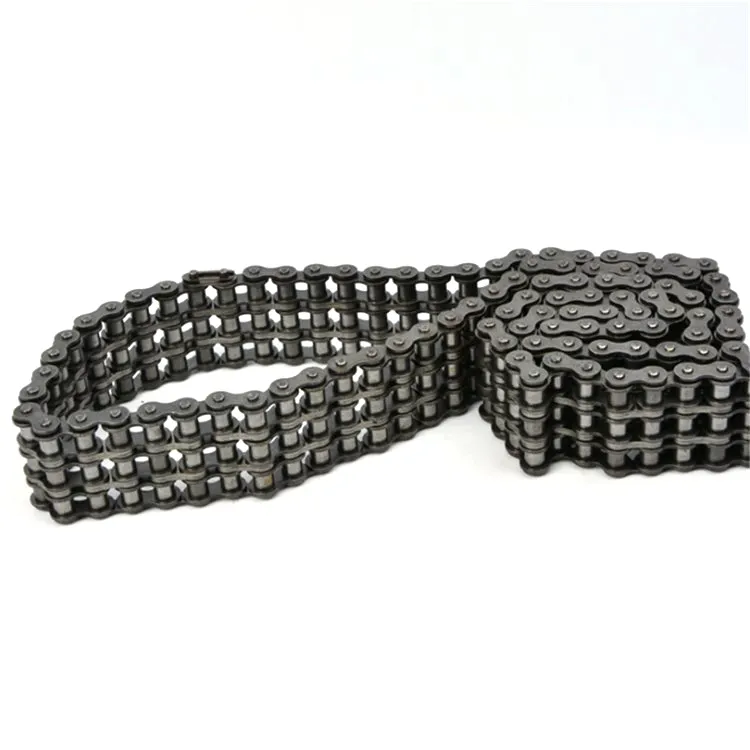
What are the advantages of using a flame-retardant transmission chain?
Flame-retardant transmission chains offer specific benefits in certain applications where fire safety is a concern. Here’s a detailed answer to the question:
1. Fire Protection: The primary advantage of using a flame-retardant transmission chain is enhanced fire protection. These chains are designed with materials and coatings that have high resistance to ignition and flame spread. In the event of a fire, they help to minimize the risk of the chain contributing to the spread of flames.
2. Safety: Flame-retardant transmission chains contribute to overall safety in environments where fire hazards are present. By reducing the flammability of the chain, they help prevent the chain from igniting or sustaining a fire, protecting personnel and property.
3. Compliance with Fire Regulations: In industries or applications where fire safety regulations are stringent, using flame-retardant transmission chains ensures compliance with these requirements. It helps to meet the necessary standards and regulations for fire prevention and protection.
4. Extended Escape Time: In situations where personnel may need to evacuate quickly during a fire, flame-retardant transmission chains can provide valuable additional time for safe evacuation. By resisting ignition and flame propagation, they help maintain structural integrity and delay the spread of fire.
5. Property Protection: Flame-retardant transmission chains help protect valuable equipment, machinery, and assets from fire damage. By reducing the risk of the chain catching fire, they minimize the potential for equipment failure and subsequent loss or damage.
It’s important to note that flame-retardant transmission chains may have specific design considerations and limitations. They are typically used in applications where fire safety is critical, such as in transportation systems, aerospace, mining, and other industries where the risk of fire is high. Selecting the appropriate flame-retardant chain requires considering the specific requirements of the application and ensuring compliance with relevant fire safety standards and regulations.

What are the key components of a transmission chain?
A transmission chain consists of several key components that work together to transmit power and motion efficiently. The main components of a transmission chain include:
- Inner Plates: These are flat metal plates with holes or slots for connecting the other components of the chain.
- Outer Plates: Similar to inner plates, outer plates provide additional strength and support to the chain.
- Pins: The pins hold the inner and outer plates together, creating a flexible link between them. They play a crucial role in maintaining the integrity and functionality of the chain.
- Bushings: Bushings are cylindrical components that fit into the holes of the inner and outer plates. They provide a smooth surface for the chain to rotate around the pins.
- Rollers: Rollers are cylindrical elements that fit between the inner plates and the bushings. They reduce friction and enable smooth movement as the chain engages with the sprockets.
- Solid Bushings (optional): In some transmission chains, solid bushings may be used instead of bushings with holes. Solid bushings provide additional strength and stability to the chain.
- Sprockets: Sprockets are toothed wheels that engage with the rollers of the transmission chain. They transfer power and motion to the chain, enabling it to drive various machinery and equipment.
These components work together to form a continuous loop that transmits power from the driving sprocket to the driven sprocket, allowing the chain to transfer rotational motion and drive various mechanical systems.


editor by CX 2023-12-21