
Product Description
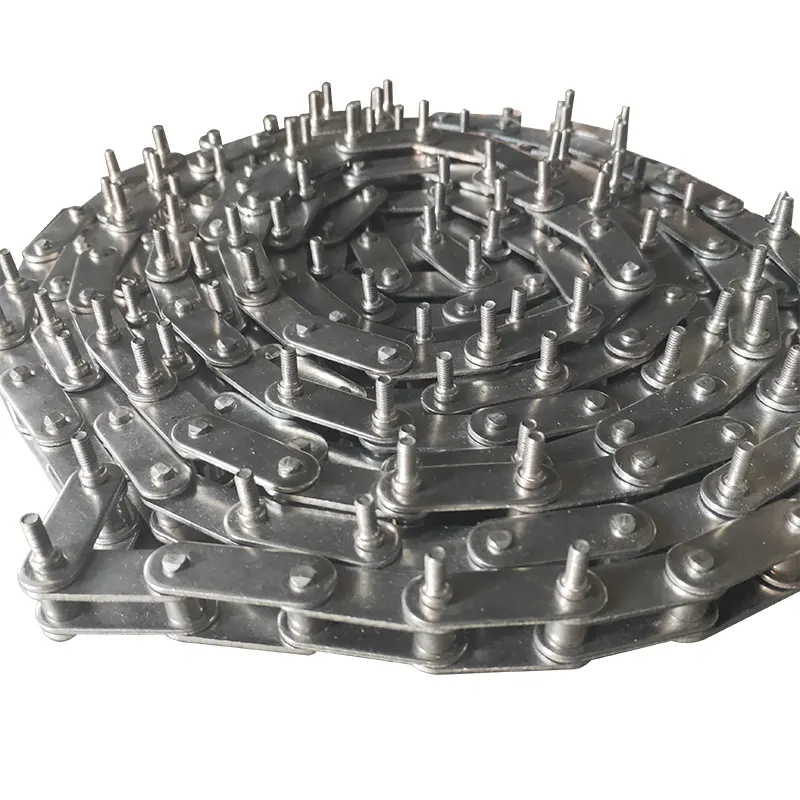
Harvester Chains of Carton Steel (415S)
PRODUCT SHOW
PRODUCT DETAILS
Product Parameters
| Standard | GB, ISO, ANSI, DIN |
| Type | Standard A and standard B precision roller chain, conveyor chain; |
| special chain with accessories, welding chain, leaf chain and sprocket | |
| ANSI chain No. | 40,50,60,80,100,120,140,160,180,200,240; |
| C40,C50,C60,C80,C100,C120,C140,C160; | |
| DIN/ISO chain No. | 08A,10A,12A,16A,20A,24A,28A,32A,36A,40A,48A; |
| C08A,C10A,C12A,C16A,C20A,C24A,C28A,C32A; | |
| Application | Food processing, pharmaceutical and chemical industries, electronics, machinery; |
| household appliances, automotive manufacturing, metallurgy, sewage treatment | |
| Series | A series, B series |
More Products
Advantage
Certifications
DETAILS ABOUT CHINAMFG CHAIN
Exhibition
Workshop
Application
Packaging Details
Shipping
FAQ
1. Are you a manufacturer or trade Company?
We are a factory founded in 1997 with a trade team for international service.
2. What terms of payment do you usually use?
T/T 30% deposit and 70% against document, Western Union, L/C at sight
3. What is your lead time for your goods?
Normally 35 days after confirmed order. 30 days could be available in the low season for some items (during May to July), and 45 days during the new year and hot season ( Jan to March).
4. Samples
For customers who need sample confirmation before ordering, please bear in mind that the following policy will be adopted:
1) All samples are free of charge with a maximum value not exceeding USD 100.
2) The courier cost for the first-time sample sending will be charged by the consignee. We will send the samples with freight to be collected. So please inform your account with FedEx, UPS, DHL, or TNT so that we can proceed promptly.
3) The first-time courier cost will be totally deducted from the contract value of the trial cooperation.
/* March 10, 2571 17:59:20 */!function(){function s(e,r){var a,o={};try{e&&e.split(“,”).forEach(function(e,t){e&&(a=e.match(/(.*?):(.*)$/))&&1
| Usage: | Transmission Chain, Conveyor Chain, Agricultural Machine |
|---|---|
| Material: | Alloy/Carbon Steel |
| Surface Treatment: | Polishing |
| Feature: | Heat Resistant |
| Chain Size: | All Sizes |
| Structure: | Agricultural Machine |
| Customization: |
Available
| Customized Request |
|---|
Can transmission chains be used in heavy-duty or high-load applications?
Transmission chains are commonly used in heavy-duty or high-load applications due to their robust construction and ability to handle substantial power transmission requirements. Here’s a detailed explanation:
1. Strength and Durability: Transmission chains are designed to withstand high loads and heavy-duty applications. They are constructed using high-quality materials such as alloy steel, ensuring exceptional strength, toughness, and resistance to fatigue. These chains are engineered to handle the demanding forces and loads encountered in heavy machinery, industrial equipment, and automotive applications.
2. Load Capacity: Transmission chains are available in various sizes and configurations to accommodate different load capacities. Manufacturers provide load ratings and specifications for their chains, allowing users to select the appropriate chain based on the anticipated loads. The load capacity of a transmission chain depends on factors such as chain size, material, design, and heat treatment. It is essential to choose a chain that can handle the specific load requirements of the application.
3. Power Transmission Efficiency: Transmission chains offer high power transmission efficiency, making them suitable for heavy-duty applications. The precision engineering of the chain links and sprockets ensures minimal energy loss during power transfer, maximizing the efficiency of the system. This efficiency is crucial in applications where large amounts of power need to be transmitted reliably and consistently.
4. Adaptability to High Loads: Transmission chains can adapt to various load conditions, including shock loads and dynamic forces. Their design allows them to accommodate sudden changes in loads without compromising performance or integrity. Additionally, heavy-duty transmission chains often incorporate features such as hardened pins, solid rollers, and specialized coatings to enhance their load-bearing capacity and resistance to wear.
5. Wide Range of Applications: Transmission chains find extensive use in industries such as construction, mining, agriculture, material handling, and power transmission. They are employed in heavy machinery, conveyor systems, lifting equipment, industrial drives, and many other applications that involve significant loads. Their versatility and ability to handle high loads make them a reliable choice for demanding environments.
When selecting a transmission chain for heavy-duty or high-load applications, it is essential to consider the specific requirements, including anticipated loads, operating conditions, and environmental factors. Consulting with chain manufacturers or industry experts can provide valuable guidance in choosing the most suitable chain to ensure safe and efficient power transmission in heavy-duty applications.
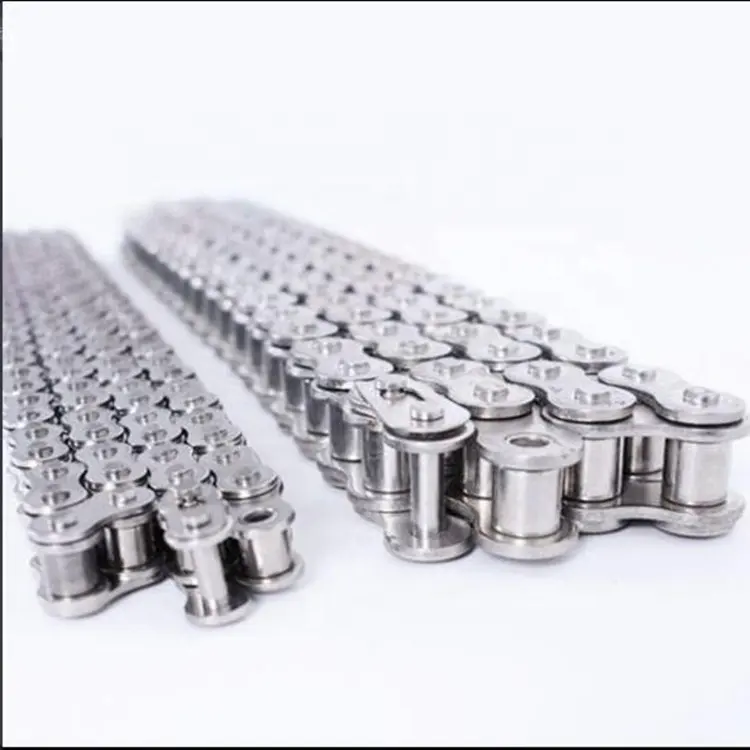
Can transmission chains be used in mining or heavy-duty industrial applications?
Transmission chains are commonly used in mining and heavy-duty industrial applications due to their durability and strength. Here’s a detailed answer to the question:
1. Robust Construction: Transmission chains designed for mining and heavy-duty industrial applications are built to withstand extreme conditions and heavy loads. They are constructed using high-quality materials and undergo rigorous testing to ensure they can handle the demanding environments and intense operating conditions.
2. High Load Capacity: Mining and heavy-duty industrial applications often involve transporting heavy loads or operating equipment under significant stress. Transmission chains used in these applications are engineered to have high load capacity, allowing them to reliably transmit power and handle the substantial forces encountered in such operations.
3. Resistance to Wear and Abrasion: Mining and heavy-duty industrial environments can be abrasive and cause rapid wear on components. Transmission chains used in these applications are designed with excellent wear resistance to withstand the abrasive nature of the materials being handled. They are often treated with specialized coatings or surface treatments to enhance their resistance to wear and extend their lifespan.
4. Corrosion Resistance: Mining operations and heavy-duty industrial settings may expose transmission chains to corrosive substances or environments. To combat corrosion, transmission chains used in these applications are often made from materials such as stainless steel or treated with anti-corrosion coatings. This ensures the chains can maintain their integrity and performance over time, even in harsh conditions.
5. Reliability and Durability: Mining and heavy-duty industrial applications require reliable and durable equipment to minimize downtime and maximize productivity. Transmission chains are known for their reliability and ability to operate in challenging conditions, making them well-suited for these demanding applications. Proper maintenance and regular inspections are necessary to ensure optimal performance and maximize the lifespan of the chains.
When selecting transmission chains for mining or heavy-duty industrial applications, it’s essential to consider factors such as load capacity, speed, environmental conditions, and compatibility with other equipment. Consulting with experts or manufacturers specializing in chains for these specific applications can help ensure the best chain selection for optimal performance and longevity.
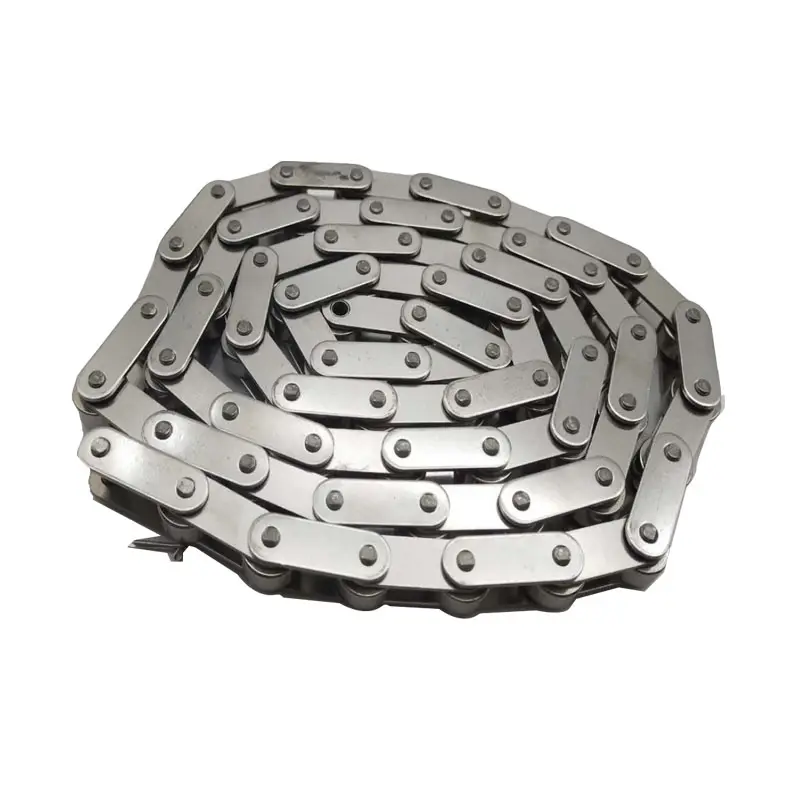
How do roller chains differ from other types of transmission chains?
Roller chains, also known as roller link chains, are a commonly used type of transmission chain that distinguishes itself from other chains in several ways:
- Design: Roller chains consist of inner and outer plates, pins, bushings, and rollers. The rollers, which are free to rotate, help reduce friction and wear, resulting in smoother and more efficient power transmission.
- Wide Application: Roller chains are versatile and widely used in various industries, including automotive, industrial machinery, agricultural equipment, and conveyor systems.
- High Load Capacity: Roller chains are designed to withstand high loads and offer excellent tensile strength, making them suitable for applications that require heavy-duty performance.
- Efficiency: Roller chains are known for their high efficiency in transmitting power. The roller design minimizes friction, resulting in less energy loss and improved overall efficiency.
- Cost-Effectiveness: Roller chains are relatively cost-effective compared to some other specialized transmission chains, making them a popular choice in many applications.
While roller chains have their advantages, it’s important to note that different types of transmission chains may be more suitable for specific applications. Factors such as load capacity, speed, noise level, and environmental conditions should be considered when selecting the appropriate transmission chain for a particular application.


editor by CX 2024-01-11