Product Description
About Factory
With more than 18 years’ histiory, we are a professinal manufacturer for drop forged products such as forged chain (X348 X458 X658 X678 X698 F100 F160), scraper chain (10160, 14218, 14226, 142N), conveyor trolley (X348, X458, X678, XT160), and drive chain (X348, X458, X678), and so forth standard moulds of chain.
Besides, we can also produce as per your drawing or sample, special link chain, pusher, pin and plate, according to customers’ unique requirements.
Product Description
1) Material: Alloy steel, 40Cr, 42CrMo and so on.
2) Types: Standard types, X348 X458 X678, and so on. (Or as per your drawing)
3) Process: Moulding→Forging→Polishing & Blasting→Fine machining→Heat treatment→Blasting→Inspecting & testing→Packing
Product Show
Technical Data
| Model | Dimension | Weight (Kg) | Material | Hardness | Working Load (KN) | Limit Load (KN) | ||||||
| P | T | C | S | F | R | D | ||||||
| 10160B | 101.6 | 24 | 36 | 13 | 14 | 6 | 14 | 0.32 | 20CrMnTi | Surface HRC56-64° Depth 0.6-1.2mm |
18 | 100 |
| 10160 | 101.6 | 30 | 36 | 13 | 14.5 | 9 | 14 | 0.36 | 20CrMnTi | Surface HRC56-64° Depth 0.6-1.2mm | 21.6 | 120 |
| 14218 | 142 | 42 | 50 | 19 | 20.5 | 11 | 25 | 1.15 | 20CrMnTi | Surface HRC56-64° Depth 0.6-1.2mm | 48.6 | 270 |
| 14226 | 142 | 62 | 50 | 28 | 30 | 15 | 25 | 1.75 | 20CrMnTi | Surface HRC56-64° Depth 0.6-1.2mm | 61.2 | 340 |
| 2571 | 200 | 66 | 60 | 30 | 32 | 18 | 30 | 2.8 | 20CrMnTi | Surface HRC56-64° Depth 0.6-1.2mm | 72 | 400 |
| 26014 | 260 | 70 | 75 | 31 | 33 | 20 | 34 | 5.2 | 20CrMnTi | Surface HRC56-64° Depth 0.6-1.2mm | 135 | 750 |
| 142N | 142 | 43 | 50 | 19 | 22 | 12.5 | 25 | 1.2 | 40Cr | Quench HRC36-44° | 75.6 | 420 |
| 150D | 142 | 42 | 50 | 19 | 20.5 | 11 | 25 | 1.15 | 40Cr | Quench HRC36-44° | 75.6 | 420 |
| MG20 | 200 | 70 | 50 | 27 | 29 | 17 | 35 | 3.78 | 40Cr | Quench HRC36-44° | 144 | 800 |
| MG20B | 200 | 70 | 50 | 27 | 29 | 17 | 30 | 3.82 | 40Cr | Quench HRC36-44° | 140.4 | 780 |
| MG20C | 200 | 70 | 50 | 27 | 29 | 17 | 28 | 3.85 | 40Cr | Quench HRC36-44° | 122.4 | 680 |
| MS32 | 200 | 42 | 50 | 20 | 22 | 12 | 25 | 1.4 | 40Cr | Quench HRC36-44° | 75.6 | 420 |
| MS55 | 200 | 80 | 70 | 35 | 38 | 25 | 28 | 4.36 | 40Cr | Quench HRC36-44° | 138.6 | 770 |
| 3006 | 200 | 65 | 70 | 30 | 33 | 24 | 32 | 3.6 | 40Cr | Quench HRC36-44° | 160.2 | 890 |
| MS63 | 250 | 70 | 80 | 30 | 33 | 20 | 32 | 4.93 | 40Cr | Quench HRC36-44° | 147.6 | 820 |
| S16 | 100 | 30 | 27 | 15 | 16 | 8 | 14 | 0.3 | 40Cr | Quench HRC36-44° | 16 | 88 |
| S20 | 125 | 34 | 33 | 17 | 18 | 8 | 17 | 0.37 | 40Cr | Quench HRC36-44° | 19.4 | 108 |
| S25 | 160 | 48 | 39 | 23 | 25 | 13 | 20 | 1.28 | 40Cr | Quench HRC36-44° | 55.8 | 310 |
| S30 | 142 | 46 | 49 | 22 | 23.5 | 14 | 25 | 1.3 | 40Cr | Quench HRC36-44° | 91.8 | 510 |
| Z16 | 100 | 40 | 35 | 18 | 20 | 12 | 17 | 0.4 | 40Cr | Quench HRC36-44° | 32.4 | 180 |
| Z20 | 125 | 50 | 46 | 24 | 26 | 15 | 20 | 0.67 | 40Cr | Quench HRC36-44° | 59.4 | 330 |
| Z20D | 125 | 52 | 60 | 24 | 26 | 16 | 26 | 1.15 | 40Cr | Quench HRC36-44° | 82.8 | 460 |
| Z25 | 160 | 58 | 55 | 28 | 30 | 18 | 25 | 2.25 | 40Cr | Quench HRC36-44° | 82.8 | 460 |
| Z25D | 160 | 66 | 64 | 29 | 31 | 22 | 28 | 2.6 | 40Cr | Quench HRC36-44° | 120.6 | 670 |
| Z30 | 142 | 64 | 50 | 29 | 30.5 | 18 | 25 | 1.8 | 40Cr | Quench HRC36-44° | 111.6 | 620 |
Products & Testing Equipments
Products Application
Packing & Delivery
Why Choose Us?
1. We are engaged in chain industry over 15 years with rich market experience. We keep improving production techniques. All the products have longer working life and have passed the market test.
2. We can design the correct chains with high quality material, good abrasion resistance, good corrosion, high strengthen and etc as per your request or the chain application.
3. We are the chain manufacturer; you can directly purchase the product from us with low price and high quality.
4. We have a professional team for international trade, they have abundant experiences and are always ready to solve problems for customers. So you have nothing to worry about.
5. We have the long-term cooperative forwarder who can give us the lowest freight. And it can help you to save the freight. What’s more, for the FCL, we will design the packages as per the container sizes with the largest capacity to save the shipping cost for both of us.
/* January 22, 2571 19:08:37 */!function(){function s(e,r){var a,o={};try{e&&e.split(“,”).forEach(function(e,t){e&&(a=e.match(/(.*?):(.*)$/))&&1
| Standard or Nonstandard: | Standard |
|---|---|
| Application: | Textile Machinery, Garment Machinery, Conveyer Equipment, Packaging Machinery, Electric Cars, Motorcycle, Food Machinery, Mining Equipment, Agricultural Machinery, Coating, Spraying, Mining, Slaughtering, Assembly |
| Surface Treatment: | Polishing |
| Structure: | Combined Chain |
| Material: | Alloy |
| Type: | Cranked Link Chain |
| Samples: |
US$ 5/Piece
1 Piece(Min.Order) | |
|---|
| Customization: |
Available
| Customized Request |
|---|
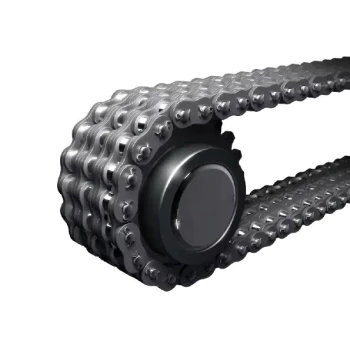
How does the material hardness of a drive chain affect its durability?
The material hardness of a drive chain plays a significant role in determining its durability and resistance to wear. Here is a detailed explanation:
Material hardness refers to the ability of a material to resist indentation, abrasion, and penetration by external forces. In the context of drive chains, the hardness of the chain’s components, such as pins, bushings, and rollers, directly affects the chain’s durability and lifespan.
When it comes to drive chain durability, the following factors come into play:
- Resistance to Wear: A higher material hardness typically results in better resistance to wear. Drive chains with harder materials can withstand the friction and contact forces encountered during operation, minimizing the wear on critical components. This translates to extended chain life and reduced maintenance requirements.
- Impact Resistance: The material hardness of a drive chain also affects its ability to resist impact forces. Chains operating in environments with frequent impacts or shock loads, such as in mining or heavy-duty applications, require high hardness materials to withstand the sudden stresses without deformation or failure.
- Resistance to Deformation: Harder materials exhibit greater resistance to deformation under load. This is particularly important in drive chains where precise interlocking of chain components is necessary for efficient power transmission. Chains with higher material hardness maintain their shape and dimensional integrity, ensuring consistent performance and minimizing the risk of chain elongation or misalignment.
- Corrosion Resistance: While material hardness primarily affects wear resistance, it can indirectly impact the chain’s resistance to corrosion. Certain high-hardness materials, such as stainless steel or specific alloys, offer improved corrosion resistance compared to softer materials. This is especially relevant in applications where the chain is exposed to corrosive environments, such as marine or chemical industries.
It is important to note that while higher hardness generally leads to improved durability, excessive hardness can also result in brittleness and reduced impact resistance. Therefore, a balance must be struck between hardness and other mechanical properties to ensure optimal performance and durability of the drive chain.
Manufacturers typically specify the appropriate hardness level for drive chain components based on the specific application requirements. These specifications take into account factors such as load capacity, operating conditions, anticipated wear rates, and desired service life.
Regular maintenance practices, such as proper lubrication, periodic inspection, and tension adjustment, are essential for maximizing the durability and performance of the drive chain, regardless of its material hardness.
By selecting a drive chain with the appropriate material hardness and implementing proper maintenance practices, operators can ensure optimal durability, extended chain life, and reliable power transmission in various industrial applications.
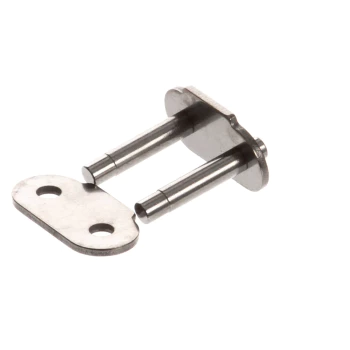
Can a drive chain be used in a hydraulic or pneumatic system?
A drive chain is not typically used as a primary power transmission method in hydraulic or pneumatic systems. Hydraulic and pneumatic systems rely on fluid power to transmit force and motion. However, drive chains can still be used in certain auxiliary or secondary applications within these systems. Here is a detailed explanation:
In hydraulic or pneumatic systems, the primary power transmission is achieved through the use of hydraulic fluid or compressed air. The fluid or air is pressurized and controlled to generate force and motion in actuators or motors. Drive chains, on the other hand, are commonly used in mechanical power transmission applications where direct force is required, such as in mechanical drives or conveyors.
While drive chains may not be used as the main power transmission method, they can be employed in auxiliary or secondary applications within hydraulic or pneumatic systems, including:
- Tensioning and Positioning: Drive chains can be used to tension belts or other components in a system that is driven by hydraulic or pneumatic power. They can provide accurate positioning and tension control in certain applications.
- Linkage Mechanisms: Drive chains can be utilized as part of mechanical linkage mechanisms in hydraulic or pneumatic systems to transmit motion or force between different components.
- Drive Chain Actuators: In some cases, specialized drive chain actuators can be used in combination with hydraulic or pneumatic power to provide linear or rotary motion for specific applications.
- Accessories and Ancillary Devices: Drive chains can be employed in various accessories or ancillary devices within hydraulic or pneumatic systems, such as tensioners, clutches, or braking mechanisms.
It is important to note that the selection and application of drive chains in hydraulic or pneumatic systems require careful consideration of the specific requirements, load conditions, and compatibility with the fluid power components. Consulting with experts or manufacturers is recommended to ensure the proper integration and performance of the drive chain in such applications.
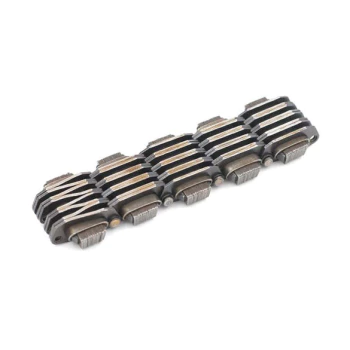
Can a drive chain be used in environments with high temperatures?
Yes, a drive chain can be used in environments with high temperatures, but there are certain considerations to keep in mind. Here’s an explanation:
Drive chains can operate in high-temperature environments, but the selection of the appropriate chain and proper maintenance practices are crucial for ensuring their performance and longevity:
- 1. Heat-Resistant Materials: When operating in high-temperature environments, it is important to choose a drive chain made from heat-resistant materials. High-grade steel alloys or specialized heat-resistant materials may be used to ensure the chain can withstand the elevated temperatures without significant degradation.
- 2. Lubrication: Proper lubrication is essential to reduce friction and wear, particularly in high-temperature environments. It is crucial to select lubricants specifically designed for high-temperature applications that can withstand the heat without breaking down or evaporating too quickly. Regular lubrication and inspection are necessary to maintain the lubricant’s effectiveness.
- 3. Heat Dissipation: Ensuring proper heat dissipation is important to prevent overheating of the chain. Adequate ventilation or cooling measures should be implemented, if necessary, to keep the chain operating within a safe temperature range.
- 4. Maintenance: Regular inspection and maintenance are crucial in high-temperature environments. Periodic checks for signs of wear, elongation, or damage should be performed. Proper tension adjustment and alignment should be maintained to prevent excessive stress and wear on the chain.
- 5. Operating Conditions: Consider other factors associated with high-temperature environments, such as exposure to chemicals, contaminants, or extreme temperature fluctuations. These factors may affect the chain’s performance and longevity, and additional measures may be required to ensure optimal operation.
It is important to consult the manufacturer’s guidelines and specifications to ensure that the selected drive chain is suitable for the specific high-temperature environment. By selecting the appropriate chain and implementing proper maintenance practices, a drive chain can effectively operate in high-temperature environments while maintaining performance and durability.


editor by CX 2024-03-26