
Product Description
Product Description
| Item Name | Agricultural Roller Chains | Model | Standard |
| Row | / | Application | Machinery Parts |
| Suiface Treament | netural/sand-blasted/shot-peening | Certification | ISO, ANSI, DIN, BS |
| Packing | Packaged in boxes and wooden cases, or packaged in reels and then on pallets | Port | Any sea port or airport in china |
Agricultural chains, also known as farm machinery chains, are specifically designed for use in
agricultural equipment and machinery. These chains are used to transmit power from the tractor
to various attachments, such as plows, cultivators, and harvesters.
Agricultural chains are made from high-quality materials that are resistant to wear and corrosion.
They are designed to withstand the harsh conditions of the farm, including exposure to dirt, dust,
and debris. These chains are available in a variety of sizes and configurations to fit different
types of farm machinery.
In addition to their strength and durability, agricultural chains are also designed to provide smooth
and efficient power transmission. This helps to increase the productivity of the equipment and
reduce downtime for maintenance and repairs.
Overall, agricultural chains play a critical role in the operation of farm machinery, ensuring that
farmers can efficiently and effectively carry out their work.
Other Products
Company Profile
Packaging & Shipping
After Sales Service
Contact us
/* January 22, 2571 19:08:37 */!function(){function s(e,r){var a,o={};try{e&&e.split(“,”).forEach(function(e,t){e&&(a=e.match(/(.*?):(.*)$/))&&1
| Standard or Nonstandard: | Standard |
|---|---|
| Application: | Textile Machinery, Garment Machinery, Conveyer Equipment, Packaging Machinery, Electric Cars, Motorcycle |
| Surface Treatment: | Netural/Sand-Blasted/Shot-Peening |
| Structure: | Roller Chain |
| Material: | Carbon Steel |
| Type: | Short Pitch Chain |
| Samples: |
US$ 3.45/Meter
1 Meter(Min.Order) | |
|---|
| Customization: |
Available
| Customized Request |
|---|
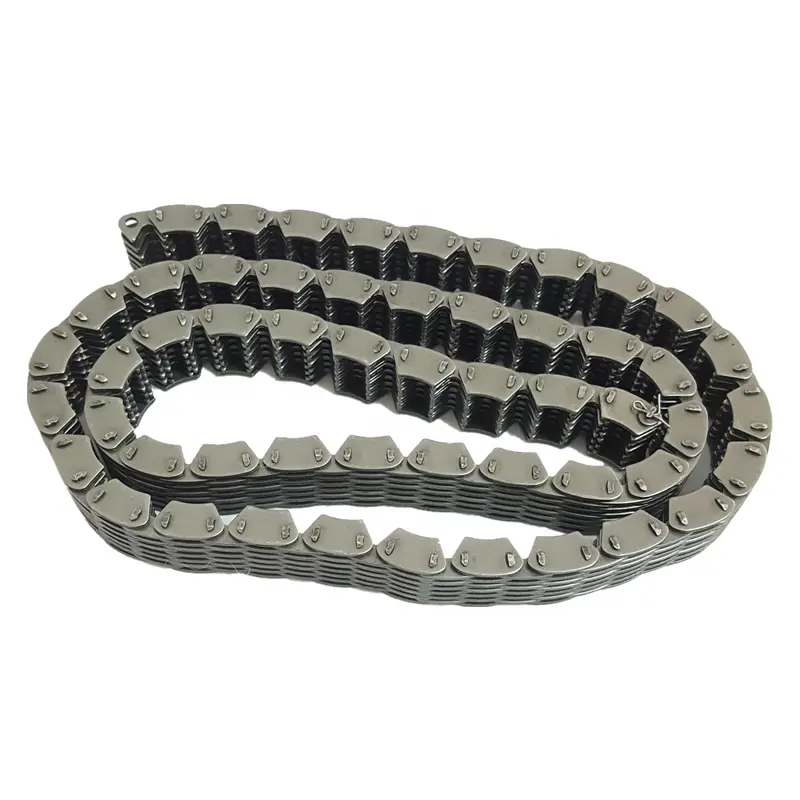
Can transmission chains be used in marine or offshore applications?
Yes, transmission chains can be used in marine or offshore applications. Here’s a detailed answer to the question:
1. Corrosion Resistance: Transmission chains used in marine or offshore applications are typically made from materials that offer high corrosion resistance, such as stainless steel or specially coated chains. These chains are designed to withstand the corrosive effects of s altwater, moisture, and other harsh environmental conditions.
2. Sealing and Protection: In marine or offshore environments, transmission chains are often equipped with additional sealing and protection measures. This can include seals, covers, or special coatings that provide an extra layer of defense against water, debris, and contaminants.
3. High Load Capacity: Marine and offshore applications often involve heavy-duty operations, such as lifting or pulling heavy loads. Transmission chains used in these applications are designed to handle high loads and provide reliable power transmission.
4. Resistance to Harsh Conditions: Marine and offshore environments can be challenging, with factors like high humidity, extreme temperatures, and exposure to s altwater and abrasive substances. Transmission chains for these applications are engineered to withstand these harsh conditions and maintain their performance and durability.
5. Compliance with Industry Standards: Transmission chains used in marine or offshore applications may need to meet specific industry standards and regulations. These standards ensure that the chains are suitable for the demanding conditions and safety requirements of the marine and offshore industries.
It’s important to select transmission chains specifically designed for marine or offshore applications to ensure reliable and long-lasting performance. Consulting with experts in the field and following manufacturer guidelines for installation, maintenance, and inspection is essential to maximize the effectiveness and lifespan of the transmission chains in these environments.
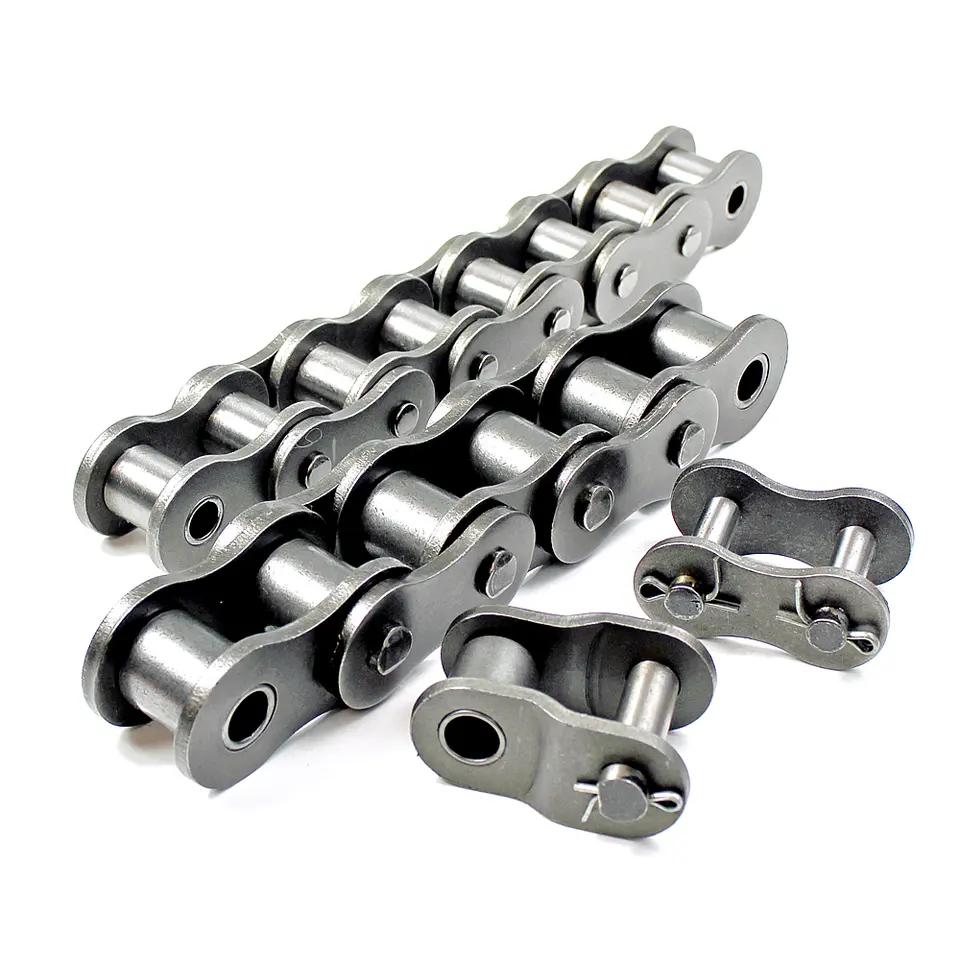
Can transmission chains be used in conveyor systems?
Yes, transmission chains can be used in conveyor systems. Here’s a detailed answer to the question:
Conveyor systems are widely used in various industries for efficient material handling and transportation. Transmission chains are one of the key components used to drive and support the movement of conveyor belts or rollers.
Transmission chains offer several advantages in conveyor systems:
1. Power Transmission: Transmission chains are designed to transmit power effectively, allowing them to drive the movement of the conveyor belt or rollers. They can handle high loads and provide reliable power transfer, ensuring smooth and consistent operation of the conveyor system.
2. Versatility: Transmission chains are available in various sizes, types, and configurations, making them suitable for a wide range of conveyor applications. They can be customized to fit different conveyor system designs and requirements, including straight conveyors, curved conveyors, inclined conveyors, and more.
3. Durability: Transmission chains are built to withstand rigorous operating conditions in conveyor systems. They are made from high-quality materials such as steel, which offers excellent strength and durability. This ensures that the chains can withstand heavy loads, frequent starts and stops, and abrasive environments commonly encountered in conveyor applications.
4. Flexibility: Transmission chains allow for flexibility in conveyor system layout and configuration. They can accommodate different conveyor lengths, widths, and angles, enabling the system to adapt to space constraints and specific material handling needs. Additionally, they can be easily modified or extended as the conveyor system requirements evolve.
5. Low Maintenance: Transmission chains require regular maintenance to ensure optimal performance and longevity. However, compared to other types of power transmission systems, such as belts or gears, transmission chains generally have lower maintenance requirements. Proper lubrication, tensioning, and periodic inspections are essential to minimize wear and ensure reliable operation of the conveyor system.
Overall, transmission chains are a reliable and efficient solution for powering conveyor systems. They provide robust power transmission, versatility in system design, durability in demanding environments, flexibility in layout, and relatively low maintenance requirements. When properly selected and maintained, transmission chains can contribute to the smooth and efficient operation of conveyor systems in various industries.
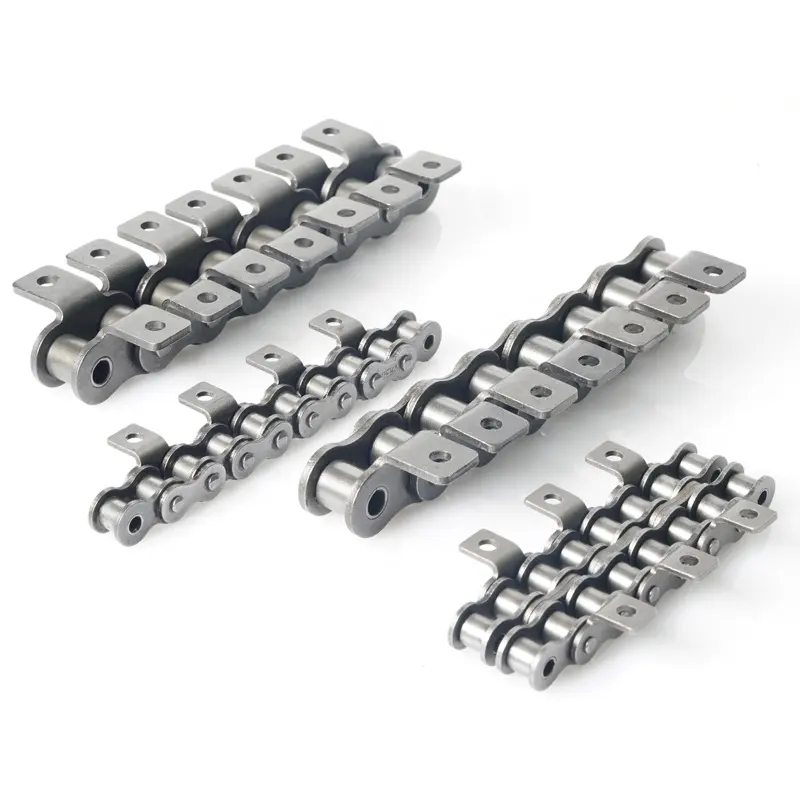
What are the main differences between standard and heavy-duty transmission chains?
Standard and heavy-duty transmission chains are designed to meet different load and performance requirements. Here are the main differences between these two types:
- Load Capacity: Heavy-duty transmission chains are built to handle higher loads and provide greater strength compared to standard chains. They are designed to withstand heavier and more demanding applications.
- Construction: Heavy-duty transmission chains are typically constructed with thicker plates, larger pins, and stronger components to enhance their durability and load-carrying capacity.
- Size: Heavy-duty transmission chains are often larger in size compared to standard chains to accommodate the increased load requirements.
- Weight: Due to their robust construction, heavy-duty transmission chains tend to be heavier than standard chains.
- Durability: Heavy-duty chains are engineered to have greater wear resistance, fatigue resistance, and overall durability to withstand harsh operating conditions and prolonged usage.
- Applications: Standard transmission chains are suitable for lighter-duty applications where moderate loads are involved, such as light machinery, conveyors, and small equipment. Heavy-duty transmission chains, on the other hand, are designed for heavy machinery, industrial equipment, mining applications, and other demanding environments.
It’s important to consider the specific requirements of your application, including load capacity, operating conditions, and expected lifespan, to determine whether a standard or heavy-duty transmission chain is the right choice.


editor by CX 2024-03-27