Product Description
Product Description
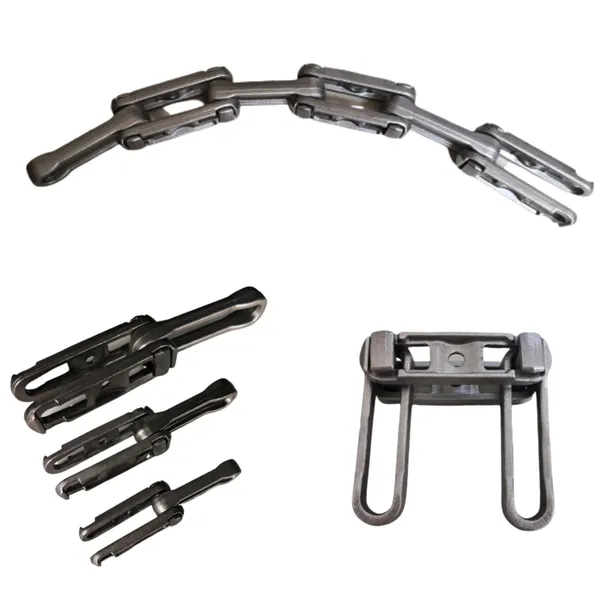
High quality scraper chain drop forging conveyor chain
| Details: |
Material can be 20CrMnTi, 40Cr, 42CrMo or other as per your requests
We can produce as per your drawing or samples
Scraper chain widely used in garbage conveyor system, agricultural machine conveyor system, port conveyor lines, industrial line
There are many other item such as X698 chain, X678 chain, X458 chain, X348 chains, trolley and so on.
Our drop forged chains are most competitive and are of high quality. There are many items available. Our trolley are also most competitive in world markets.
We are also supplier of detachable chain such as 52 chains, 57 chains and so on.Please feel free to contact with us and our goods are most competitive in your market
Most of our goods are exported to Europe, Brasil, America, South Africa, India, Korea and so on.
Company Information
HangZhou CHINAMFG Industry Co., Ltd. is a specialized supplier of a full range of chains.
Due to our CHINAMFG in offering best service to our clients, understanding of your needs and overriding sense of responsibility toward filling ordering requirements, we have obtained the trust of buyers worldwide. Having accumulated precious experience in cooperating with foreign customers, our products are selling well in the American, European, South American and Asian markets.Our products are manufactured by modern computerized machinery and equipment. Meanwhile, our products are manufactured according to high quality standards, and complying with the international advanced standard criteria.
With many years’ experience in this line, we will be trusted by our advantages in competitive price, one-time delivery, prompt response, on-hand engineering support and good after-sales services.
Additionally, all our production procedures are in compliance with ISO9001 standards. We also can design and make non-standard products to meet customers’ special requirements. Quality and credit are the bases that make a corporation alive. We will provide best services and high quality products with all sincerity. If you need any information or samples, please contact us and you will have our soon reply.
Exhibition
/* January 22, 2571 19:08:37 */!function(){function s(e,r){var a,o={};try{e&&e.split(“,”).forEach(function(e,t){e&&(a=e.match(/(.*?):(.*)$/))&&1
| Material: | Alloy |
|---|---|
| Applicable Industries: | Hotels, Garment Shops, Building Material Shops |
| Used as: | Industrial Conveyor System |
| Customization: |
Available
| Customized Request |
|---|
.shipping-cost-tm .tm-status-off{background: none;padding:0;color: #1470cc}
| Shipping Cost:
Estimated freight per unit. |
about shipping cost and estimated delivery time. |
|---|
| Payment Method: |
|
|---|---|
|
Initial Payment Full Payment |
| Currency: | US$ |
|---|
| Return&refunds: | You can apply for a refund up to 30 days after receipt of the products. |
|---|
Can a conveyor chain be used in cleanroom environments?
Yes, conveyor chains can be used in cleanroom environments with proper selection and design considerations. Cleanroom environments require stringent control of airborne particles, such as dust, microbes, and contaminants, to maintain high levels of cleanliness. Here are some factors to consider when using a conveyor chain in a cleanroom:
1. Material Selection:
– Choose a conveyor chain made from materials that are compatible with cleanroom requirements. Stainless steel, plastic, or special coatings are commonly used for their clean and non-contaminating properties.
– Avoid materials that generate excessive particles or contaminants, such as certain types of lubricants or chain coatings.
2. Design Considerations:
– Design the conveyor chain system to minimize particle generation. This includes smooth surfaces, rounded edges, and avoiding areas that can trap or accumulate particles.
– Use sealed or enclosed chain designs to prevent the release of lubricants or contaminants.
– Consider the integration of additional features, such as covers or guards, to further protect the chain and prevent particle ingress.
3. Cleaning and Maintenance:
– Establish a cleaning and maintenance protocol specific to the cleanroom environment. This may include regular cleaning and sanitization procedures to maintain cleanliness standards.
– Use cleaning agents and procedures that are approved for cleanroom use and do not introduce contaminants.
– Regularly inspect the conveyor chain system for any signs of wear, damage, or contamination. Promptly address any issues to ensure the chain’s reliability and cleanliness.
4. Compliance with Cleanroom Standards:
– Ensure that the conveyor chain system meets the cleanliness and particle generation requirements of the specific cleanroom standards or classifications in which it will be used.
– Comply with relevant industry guidelines and regulations, such as ISO standards, when selecting and using conveyor chains in cleanroom environments.
By considering these factors and implementing proper material selection, design considerations, cleaning protocols, and compliance with cleanroom standards, a conveyor chain can be effectively used in cleanroom environments while maintaining the required cleanliness levels.
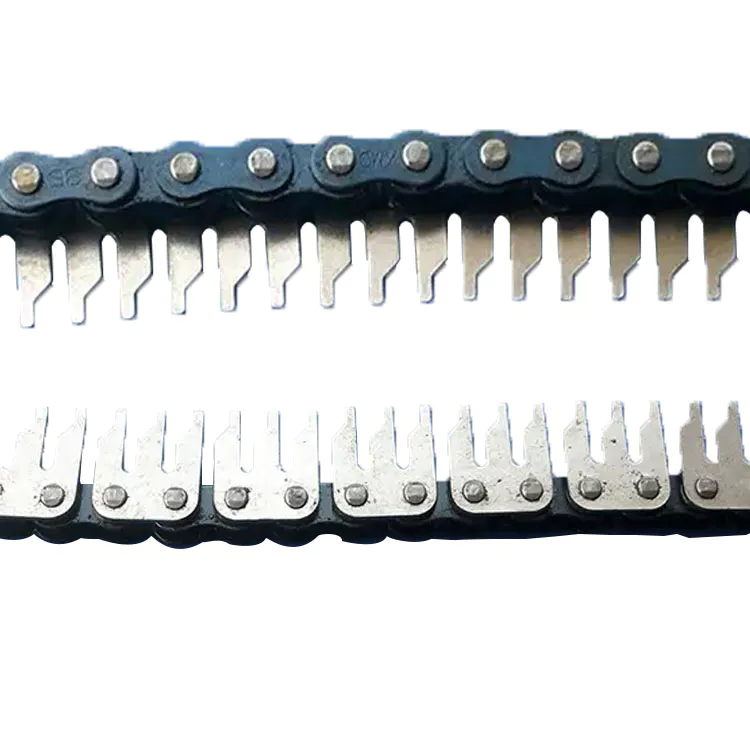
Can a conveyor chain be used in food processing applications?
Yes, a conveyor chain can be used in food processing applications. Conveyor chains play a crucial role in the efficient and hygienic handling of food products throughout the production process. Here are some key points to consider:
1. Food-Grade Materials: Conveyor chains used in food processing applications are typically made from food-grade materials such as stainless steel or plastic. These materials are corrosion-resistant, easy to clean, and comply with food safety regulations.
2. Hygiene Considerations: Food processing environments require high standards of hygiene. Conveyor chains designed for food applications incorporate features such as smooth surfaces, open link designs, and easy disassembly for thorough cleaning. They may also have specialized coatings or treatments to prevent bacterial growth.
3. Sanitary Design: Conveyor chains for food processing applications are designed with minimal crevices or joints to prevent food particles from getting trapped. They may have self-draining capabilities to remove excess fluids or debris.
4. Product Integrity: Conveyor chains in food processing applications ensure gentle handling of delicate food products to avoid damage or contamination. They can be equipped with accessories like cleats, side guards, or modular belt systems to securely hold and transport items of various shapes and sizes.
5. High Temperature and Washdown Capabilities: Some food processing applications require conveyor chains to withstand high temperatures during cooking, baking, or sterilization processes. Specialized chains with heat-resistant materials or coatings are available. Additionally, conveyor chains used in food processing should be capable of withstanding frequent washdowns and cleaning with water or cleaning agents.
6. Compliance with Standards: Conveyor chains used in food processing applications must comply with industry-specific standards such as FDA (Food and Drug Administration) regulations, HACCP (Hazard Analysis Critical Control Point) guidelines, and other food safety certifications.
When selecting a conveyor chain for food processing applications, it is important to consider the specific requirements of the production line, including the type of food being handled, the operating conditions, and the necessary sanitary standards. Proper maintenance and regular cleaning protocols should also be implemented to ensure food safety and product integrity.

What are the main components of a conveyor chain?
The main components of a conveyor chain include:
- Chain Links: Chain links are the individual components that make up the conveyor chain. They are typically made of metal and are connected to form a continuous loop. The design and configuration of the chain links can vary depending on the specific application and load requirements.
- Pins: Pins are the cylindrical components that hold the chain links together. They are inserted through the end of each chain link to create a solid connection. Pins are usually made of hardened steel to withstand the forces and friction within the conveyor system.
- Sprockets: Sprockets are toothed wheels that engage with the chain links and provide the driving force to move the conveyor chain. They are typically made of durable materials such as steel or plastic and are designed to match the pitch and profile of the conveyor chain. Sprockets come in various sizes and configurations depending on the desired speed and load capacity of the conveyor system.
- Guide Rails: Guide rails are stationary components installed along the conveyor path to guide and support the movement of the conveyor chain. They help maintain proper alignment and prevent the chain from derailing or deviating from its intended path.
- Tensioners: Tensioners are devices used to maintain the proper tension in the conveyor chain. They ensure that the chain remains taut and engaged with the sprockets, preventing slack or excessive sagging. Tensioners can be adjusted to accommodate variations in chain length and to compensate for wear over time.
- Attachments and Accessories: Depending on the specific application, conveyor chains may include various attachments and accessories. These can include cleats, flights, buckets, or other devices that aid in the movement and handling of specific types of materials. These attachments are typically secured to the chain links at specific intervals or locations.
The combination of these components creates a robust and reliable conveyor chain system capable of efficiently transporting materials in a wide range of industrial applications.


editor by CX 2024-03-28