Product Description
GN Motorcycle Accessories/Engine/Body/Electric/Brake/Transmission Parts Motorcycle Parts Motorcycle Chain Box
| OUR MAIN MMOTORCYCLE MODEL | ||||
| HONDA | C100, C110, C125, SUPRA 110,WAVE110, SPACY110, WAVE125, INOVA i125, ECO DELUXE 100, CD100 Hero Splendor, WH100, WH125, PCX125, PCX150, CG125, CG150, CG200, CG250, CG300, WY125, WY150, CGL125, CB110, CB125, CB150, STORM125, CB1-125, CBZ160, CB190, CBR250, CBX250, NXR125 BROSS, NXR150 BROSS, NXR200 BROSS, CTX200, CBF125, CBF150,…etc. | |||
| SUZUKI | AX100, AX4, GD110,QS110, SMASH110, VIVAX115, AN125, AN150, GN125, EN125, GS125, GS150R, GIXXER GSX150, DR200,…etc. | |||
| YAMAHA | T50, T80, V50, JOG50, BWS50, V80, CY80, BWS50, RX100, RX115, YB100, JOG100, BWS100, CRUX110, JY110 CRYPTON, T105, RS110, RX125, BWS125, DT125, DTK125, DT175, DTK175, YBR125, SRZ125, SRZ150, XTZ125, XTZ150, FAZER150, XT200, LC135, FZ16, …etc. | |||
| BAJAJ | CT100, Boxer BM100, BM150,Pulsar135, Puslar150, Pulsar180, Pulsar200, Pulsar200 NS, Pulsar220, Pulsar220 NS, XCD125,XCD135, Platina125, Caliper, KB4S, 3W4S, RE205D, RE4S,…etc. | |||
| SOUTH AMERICA | BAJAJ BOXER CT100,BAJAJ BOXER BM100,BAJAJ BOXER BM150, BAJAJ PULSAR135, BAJAJ PULSAR1150, BAJAJ PULSAR180, BAJAJ PULSAR200, BAJAJ PULSAR220, BAJAJ DISCOVER125, BAJAJ DISCOVER135, BAJAJ XCD125, BAJAJ 2T 3W, BAJAJ 4T 3W, BAJAJ CALIBER115, HONDA C100 WAVE, HONDA CGL125, HONDA NXR125 BROS, HONDA STORM125CC, HONDA TWISTER 250CC, HONDA XLR250-XR250, HONDA XL/XR/NX200, XIHU (WEST LAKE) DIS. JH100-2, XIHU (WEST LAKE) DIS. JH125-6, XIHU (WEST LAKE) DIS. JH150T , XIHU (WEST LAKE) DIS. ,…etc. | |||
| OTHER BRANDS | JH70, JH90, DY90, DY100, CD110, JH110, KTM100, KTM125, LF110, LX110, LX125, LX150, DY125, DY150, ZS200, KEEWAY, TVS start, TVS Sport, TVS king, TVS victor, TVS apache160, TVS apache180, HERO, XY125, XY150, XY200GY-6, XY200GY-8, XY200GY, GY200, CROSS200, BROSS200, GY6-50, GY6-80, GY6-100, GY6-125, GY6-150, SYM125, MIO100, CBT125, CM150, TIGER150, TIGER200, QJ125, HJ125-8, HJ150,…etc. | |||
| OUR MOTORCYCLE PRODUCTS | |||||||||
| Cylinder Head | Valve | Crankshaft | Piston Ring | Brake Shoes | Handle Switch | Spark Plug | Front Shock Absorber | Foot Pegs | Chain |
| Cylinder Kit | Clutch | Camshaft | Wheel Hub | Brake Pad | Sprocket Kit | Ignition Coil | Rear Shock Absorber | Shift Lever | Seat |
| Piston Kit | Motor | Clutch Plate | Side Mirror | Brake Cylinder | Speedometer | Lighting series | Front Shock Absorber | Clutch Line | Fuel Tank |
| Carburetor | Tire | Timing Chain | Wheel Rim | Lock System | Headlight | Fuel Tank | Transmission Shaft Assy | Front brake line | Side Cover |
Introduction of HangZhou HangZhoung:
HangZhou HangZhoung Auto Parts Trading Co., Ltd. was established in 2009, located in Xihu (West Lake) Dis. District, HangZhou City, construction area of 3000 square meters, the existing domestic and foreign staff more than 200. The company mainly engaged in motorcycle parts, involving the sales of nearly 5000 parts of more than 30 models; It also owns 6 independent brands such as HangZhoung, Evocs, UFC, Maersk, CHINAMFG and Hanchi. The company has set up offices in CHINAMFG d’ivoire, Ghana and Burikina faso, and its products are sold to 7 countries in South America, Middle East, Africa and other regions.
Company Advantages
1,OEM service & owns 6 independent brands such as HangZhoung, Evocs, UFC, Maersk, CHINAMFG and Hanchi.
2,Reliable& competitive price.
3,On time delivery & Reliable after-sales service.
4,Wide range of parts for more models available.
5,We have profession knowledge about Motorcycle parts ,more than 12 years experience in motorcycle parts.
FAQ
1. How to get the best price?
Re: The bulk order price can be negotiated.
We will quote the latest best price according to the customer final purchase list.
2.Can I get a sample to check your quality?
Re: Sure! For most product sample for free, but all other cost need to pay by customer.
Freight will be returned in first order.
3.What is your delivery time?
Re: Normally 30 working days
Generally speaking, we suggest that you start inquiry 1 months before the date you would like to get the products at your country.
Thx for reading ours introduction. /* January 22, 2571 19:08:37 */!function(){function s(e,r){var a,o={};try{e&&e.split(“,”).forEach(function(e,t){e&&(a=e.match(/(.*?):(.*)$/))&&1
| After-sales Service: | 1 Year |
|---|---|
| Warranty: | 1 Year |
| Type: | Motorcycle Body Parts |
| Samples: |
US$ 2.60/Piece
1 Piece(Min.Order) | Order Sample |
|---|
| Customization: |
Available
| Customized Request |
|---|
.shipping-cost-tm .tm-status-off{background: none;padding:0;color: #1470cc}
| Shipping Cost:
Estimated freight per unit. |
about shipping cost and estimated delivery time. |
|---|
| Payment Method: |
|
|---|---|
|
Initial Payment Full Payment |
| Currency: | US$ |
|---|
| Return&refunds: | You can apply for a refund up to 30 days after receipt of the products. |
|---|
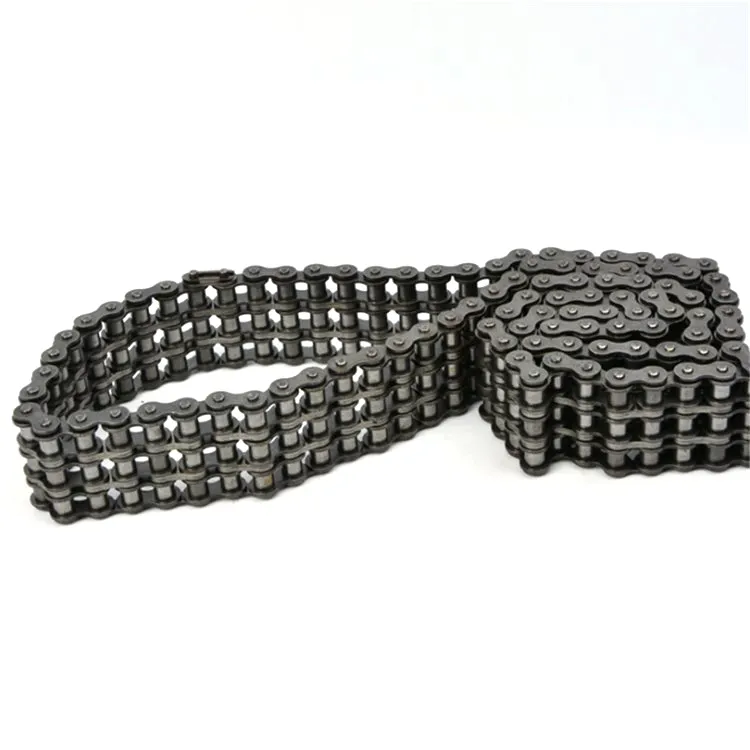
Can transmission chains be used in textile or weaving equipment?
Yes, transmission chains can be used in textile or weaving equipment. Here’s a detailed answer to the question:
Textile and weaving equipment often require reliable and efficient power transmission systems to drive various components and mechanisms. Transmission chains are well-suited for these applications due to their durability, strength, and versatility.
Transmission chains are commonly used in textile and weaving equipment for the following purposes:
1. Power Transmission: Transmission chains transfer rotational power from the motor to different components in the textile or weaving machine. They are used to drive the main shaft, loom mechanisms, take-up reels, warp beams, and other moving parts.
2. Tensioning and Positioning: In weaving machines, transmission chains are employed to maintain proper tension in the warp threads. They help in accurately positioning the warp beam and maintaining a consistent tension throughout the weaving process.
3. Shedding Mechanisms: In jacquard looms and other advanced weaving machines, transmission chains play a vital role in operating the shedding mechanisms. These mechanisms control the raising and lowering of warp threads to create patterns and designs in the fabric.
4. Yarn Feeding: Transmission chains are used to drive yarn feeding mechanisms, such as yarn carriers or yarn guides, ensuring a steady and controlled feed of yarn during the weaving process.
5. Synchronization: In complex textile machines, transmission chains are used to synchronize the movement of different machine components. This helps in achieving precise coordination between the loom mechanisms, beating-up action, weft insertion, and other critical operations.
The advantages of using transmission chains in textile or weaving equipment include:
– High durability and resistance to wear, allowing for extended service life even in demanding textile manufacturing environments.
– Ability to handle high loads and transmit power efficiently, enabling the smooth operation of various machine components.
– Versatility to accommodate different weaving techniques, loom sizes, and machine configurations.
– Availability of a wide range of chain types, sizes, and materials to suit specific application requirements.
– Easy maintenance and replacement, ensuring minimal downtime and efficient production.
Overall, transmission chains are an essential component in textile and weaving equipment, providing reliable power transmission, precise synchronization, and efficient operation. Manufacturers and designers of textile machinery often integrate transmission chains into their equipment to ensure consistent and high-quality fabric production.
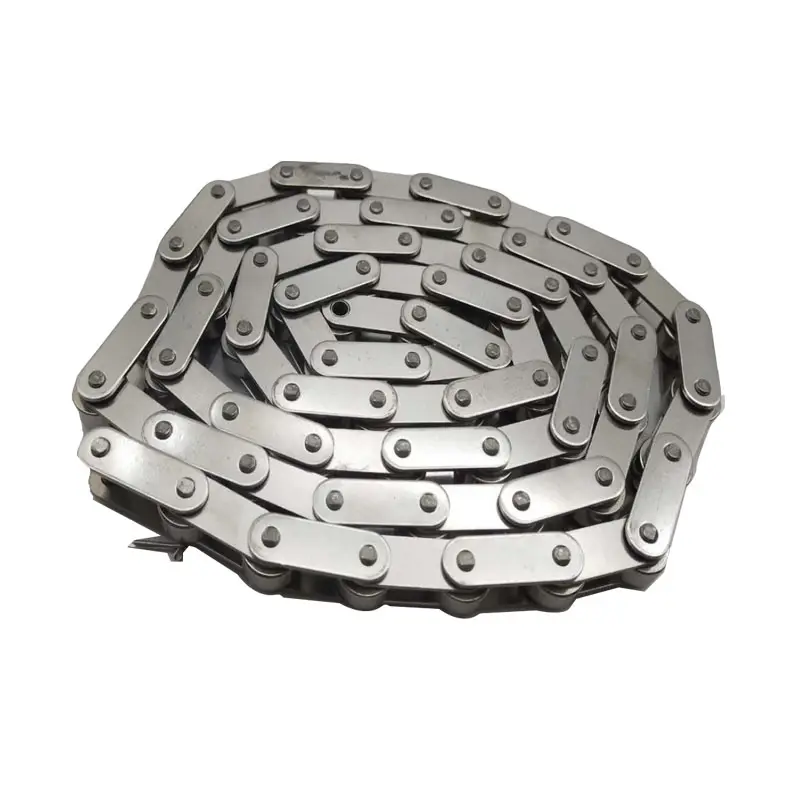
What are the benefits of using a lightweight transmission chain?
Using a lightweight transmission chain offers several advantages. Here’s a detailed answer to the question:
1. Improved Efficiency: A lightweight transmission chain reduces the overall weight of the system, resulting in improved energy efficiency. With less mass to move, the power required to drive the chain is reduced, leading to lower energy consumption.
2. Increased Power-to-Weight Ratio: The lightweight nature of the chain allows for a higher power-to-weight ratio. This means that a smaller, lighter chain can transmit the same amount of power as a heavier chain, making it suitable for applications where weight reduction is crucial, such as in portable or handheld equipment.
3. Reduced Inertia: The lower weight of the transmission chain reduces the inertia of the system. This enables faster acceleration and deceleration, resulting in improved response times and better overall performance in dynamic applications.
4. Easier Handling and Installation: Lightweight transmission chains are easier to handle and install compared to heavier chains. They require less effort and manpower during installation or maintenance activities, making them more convenient and time-saving.
5. Lower Wear and Tear: The reduced weight of the chain contributes to lower wear and tear on other components of the system, such as sprockets, bearings, and shafts. This can extend the lifespan of these components and reduce the frequency of maintenance and replacement.
6. Cost Savings: Using a lightweight transmission chain can result in cost savings in several ways. The reduced energy consumption leads to lower operating costs, and the lighter weight may allow for the use of smaller and less expensive supporting components.
It’s important to note that the choice of a lightweight transmission chain should be based on the specific application requirements. Factors such as load capacity, speed, operating environment, and compatibility with other system components should be considered to ensure that the lightweight chain meets the performance and durability needs of the application.
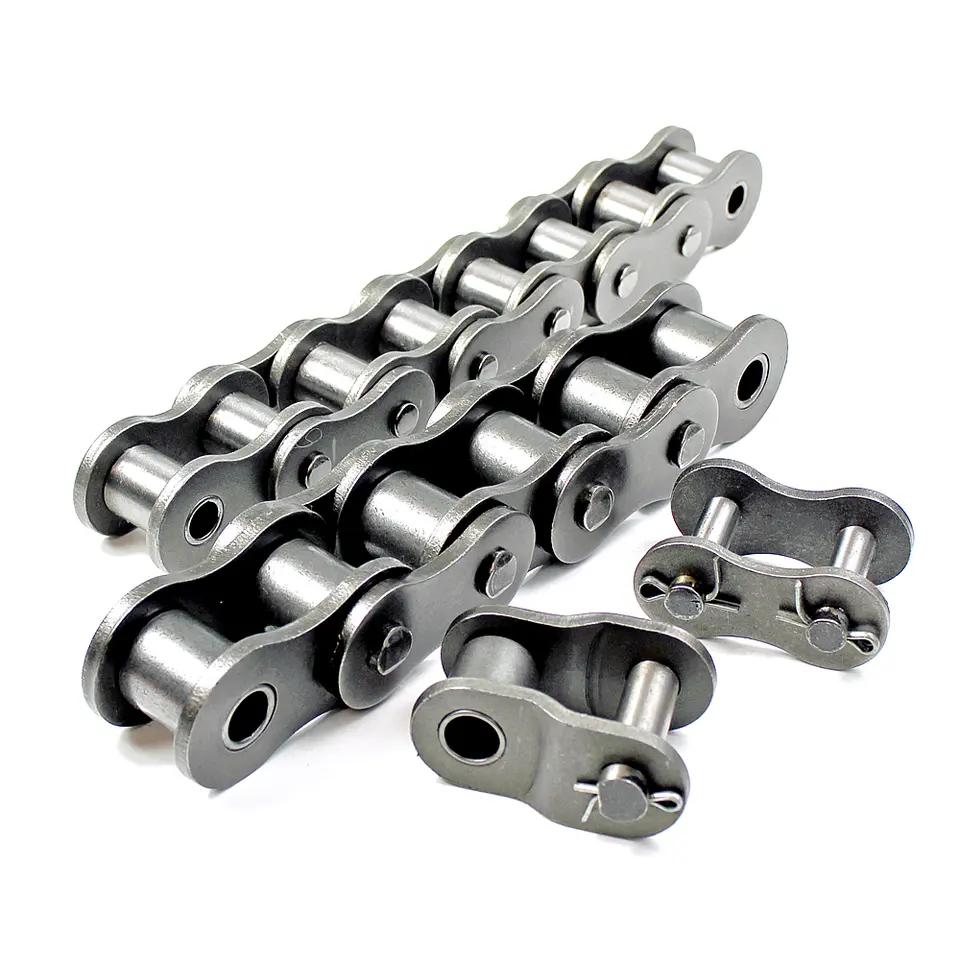
How does the load capacity of a transmission chain affect its performance?
The load capacity of a transmission chain plays a crucial role in determining its performance and reliability in various applications. Here’s a detailed explanation:
The load capacity refers to the maximum amount of force or weight that a transmission chain can withstand without experiencing premature wear, deformation, or failure. It is typically specified by the manufacturer and depends on several factors, including the chain’s design, material, construction, and operating conditions.
When the load on a transmission chain exceeds its capacity, several performance issues may arise:
- Increased Wear: Excessive loads can cause accelerated wear on the chain’s components, such as the pins, bushings, and rollers. This can lead to elongation, increased friction, and potential chain failure.
- Reduced Efficiency: Overloading the chain can result in higher frictional losses, reducing the efficiency of power transmission. This can lead to energy wastage and decreased overall system performance.
- Potential Chain Breakage: If the load exceeds the chain’s capacity by a significant margin, it can cause the chain to break, resulting in machine downtime and potential safety hazards.
- Increased Stress on Other Components: An overloaded transmission chain puts additional stress on other connected components, such as sprockets, bearings, and shafts. This can lead to premature wear and failure of these components as well.
Choosing a transmission chain with an appropriate load capacity is crucial for ensuring optimal performance and longevity. It is important to consider factors such as the expected load magnitude, variations in load during operation, and safety factors to select a chain that can safely and reliably handle the intended application.
Manufacturers provide load capacity charts and guidelines based on extensive testing and engineering analysis. It is advisable to consult these resources and work closely with the manufacturer or a qualified engineer to determine the most suitable transmission chain for your specific load requirements.


editor by CX 2024-04-17