
Five essential quality control steps that international buyers must follow when importing sprocket chains from China — covering dimensional verification, mechanical testing, material certification, and pre-shipment inspection.
Why Quality Verification Is Non-Negotiable for Imported Chains
Importing sprocket chains from China offers significant cost advantages, but those savings are meaningless if the delivered product fails in the field. Unlike domestic purchases where factory reputation and proximity provide implicit quality assurance, international procurement requires explicit verification at multiple stages — before, during, and after production. The five quality control steps in this guide form a systematic framework that protects the buyer’s investment and ensures that every shipment meets the engineering specification.
The consequences of skipping QC are severe: chains that fail prematurely incur replacement costs, production downtime, secondary equipment damage, and potential safety incidents. For chains destined for critical applications — food processing, mining, automotive manufacturing — a quality failure can trigger regulatory action or product liability claims. Investing a small percentage of the order value in quality verification eliminates these risks entirely.
Step 1: Pre-Production Verification
5-Step Quality Control Checkpoint Matrix
Before production begins, verify the raw material source and the manufacturer’s quality management system. Request Mill Test Certificates (MTC) per EN 10204 Type 3.1 for the steel used in plates, pins, bushings, and rollers. The MTC should confirm chemical composition, mechanical properties, and heat number traceability. Verify that the sprocket chain factory holds a current ISO 9001 certificate issued by an accredited certification body — check the certificate number against the issuing body’s online database.
If this is a first-time supplier, conduct or commission a factory audit. A qualified auditor inspects production equipment (CNC machines, stamping presses, heat-treatment furnaces), quality control instruments (CMM, tensile tester, hardness tester), raw material storage and traceability systems, and finished goods packaging. The audit report becomes the baseline for ongoing supplier qualification and should be updated annually.
Step 2: In-Process Quality Monitoring
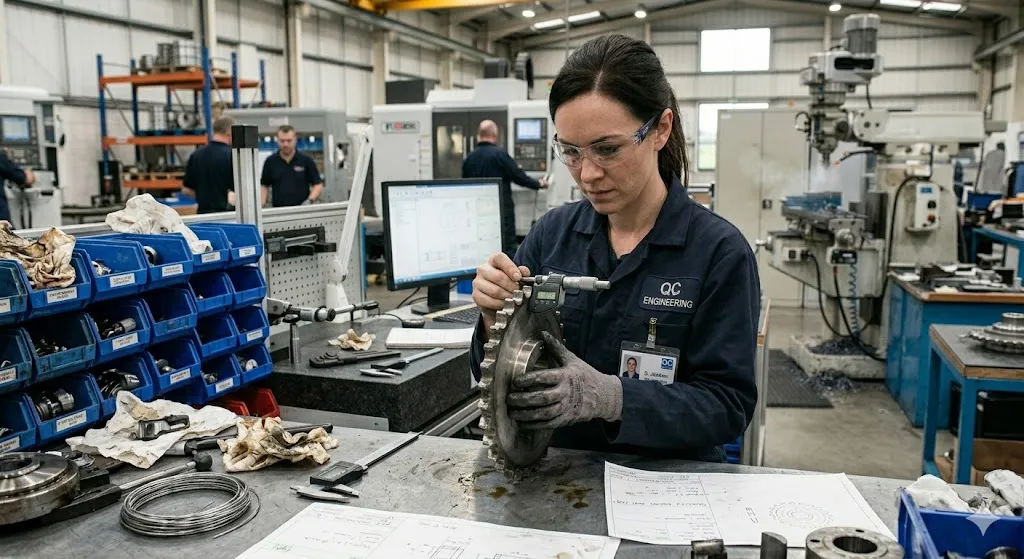
During production, the manufacturer should maintain process control records for critical operations: blanking plate dimensions, pin and bushing turning tolerances, heat treatment parameters (temperature, soak time, quench medium), and post-treatment hardness values. Request that the factory share heat treatment furnace charts and spot-check hardness records for your specific production batch. Pin hardness should fall within HRC 50-58 and roller hardness within HRC 45-52 for standard carbon steel chains.
In-process monitoring catches defects before they are assembled into finished chain, where they become much harder to detect and far more expensive to rectify. A pin that is 0.02 mm undersize or 2 HRC points below specification may not be detectable in the assembled chain but will fail prematurely under load. The cost of scrapping a batch of defective pins is trivial compared to the cost of a field failure.
Step 3: Dimensional Inspection
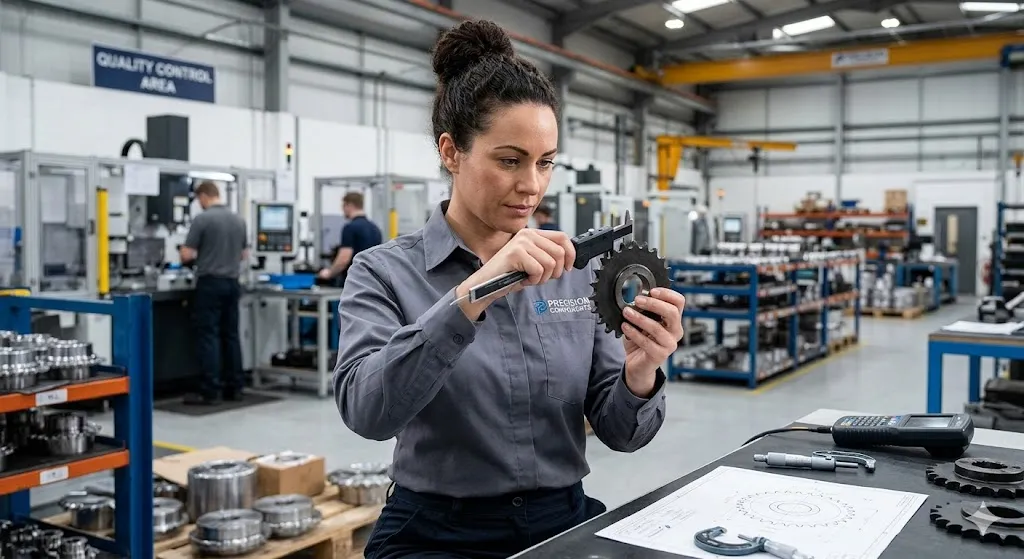
Dimensional inspection verifies that the assembled chain meets the specified pitch, roller diameter, inner width, and plate thickness tolerances. The critical measurement is pitch accuracy across 10 consecutive links — the tolerance per ANSI B29.1 is ±0.15% of the nominal 10-pitch length. For an ANSI 80 chain, the nominal 10-pitch length is 254.0 mm, and the acceptable range is 253.62 to 254.38 mm.
Use a coordinate measuring machine (CMM) or calibrated vernier caliper for these measurements. Sample at least 5 random locations per 100 meters of finished chain. Record all measurements in an inspection report that references the purchase order number, chain specification, and batch/lot number. This report serves as the quality record and the basis for incoming inspection at the buyer’s facility.
Step 4: Mechanical Testing
Tensile testing is the definitive verification of chain strength. Test a minimum of 3 samples per production batch by pulling them to failure on a calibrated universal testing machine. The breaking load must meet or exceed the minimum ultimate tensile strength specified in ANSI B29.1 or ISO 606 for the chain designation. For example, ANSI 80 simplex chain must withstand at least 71.2 kN per strand. Record the actual breaking load, the mode of failure (pin shear, plate fracture, bushing pull-out), and any elongation at break.
For fatigue-critical applications, request fatigue testing — cycling the chain under a specified load for a defined number of cycles (typically 1 to 5 million) and verifying that no component fails. Fatigue testing is more expensive and time-consuming than static tensile testing but provides assurance for applications with pulsating loads, frequent start-stop cycles, or vibration-intensive environments.
Step 5: Pre-Shipment Inspection
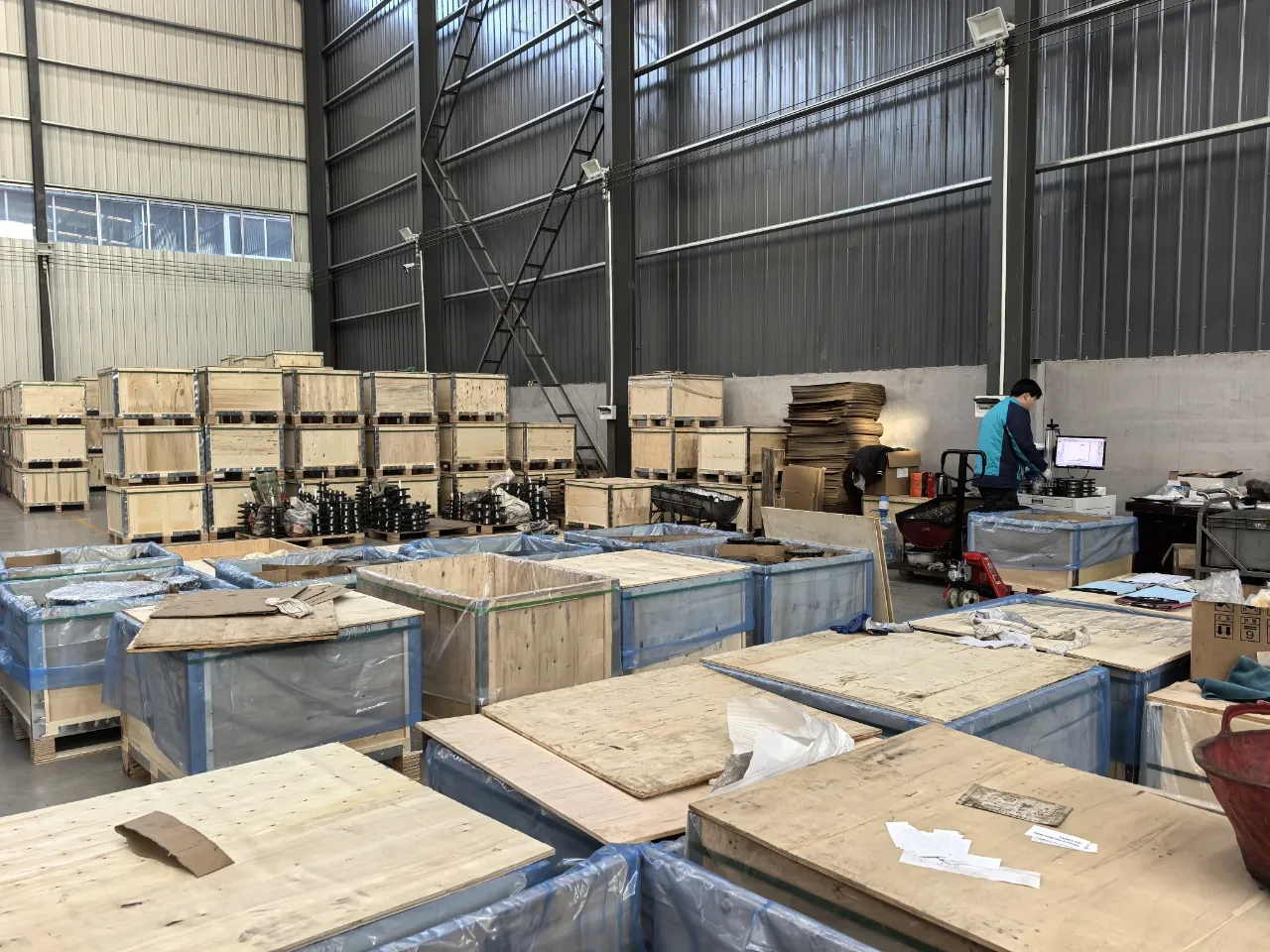
Pre-shipment inspection is the final quality gate before the chain leaves the factory. Engage a third-party inspection agency (SGS, Bureau Veritas, TUV, Intertek) to visit the factory after production is complete and conduct a random sampling inspection covering visual appearance, dimensional verification, packaging integrity, labeling accuracy, and documentation completeness.
The inspection scope should include: visual check for surface defects, rust, burrs, and assembly errors; pitch measurement on randomly selected chain sections; verification that packaging is rated for the specified shipping mode (sea freight requires moisture-barrier wrapping and wooden crate protection); confirmation that all contractual documents — commercial invoice, packing list, test certificates, certificates of origin — are present and accurate. A passed inspection report authorizes shipment; a failed report triggers corrective action before goods leave the factory.
Building a Long-Term QC Relationship with Your Supplier
Quality verification should not be adversarial — it is a collaborative process that benefits both buyer and manufacturer. A sprocket chain exporter that welcomes inspection, provides proactive quality documentation, and responds constructively to non-conformance reports is a supplier worth retaining. Over time, as the quality track record builds, the intensity of incoming inspection can be reduced while maintaining periodic audit and testing to verify continued compliance.
Establish a Supplier Quality Agreement (SQA) that defines acceptable quality levels, inspection methods, non-conformance handling procedures, corrective action timelines, and continuous improvement expectations. An ISO 9001 certified sprocket manufacturer like Hangzhou Ever-Power already has these systems in place and can integrate with the buyer’s quality management framework with minimal customization.
Why Choose Hangzhou Ever-Power as Your Supplier
Selecting a sprocket chain supplier is a decision that extends far beyond unit price. Delivery reliability, dimensional consistency across production batches, willingness to support OEM customization, and responsive after-sales technical backing all factor into the total cost of ownership. Hangzhou Ever-Power Sprocket Chain Co., Ltd. has built its reputation over decades by treating each of these factors as a baseline expectation rather than a premium add-on.
From raw steel blanking through heat treatment, shot peening, and final assembly, every production stage happens under one roof in Hangzhou — eliminating the quality drift that plagues multi-vendor supply chains.
Non-standard bore sizes, special tooth profiles, proprietary surface coatings, and unique attachment configurations are routine production orders — not special projects that require months of back-and-forth negotiation.
Every batch undergoes tensile testing, Rockwell hardness verification, dimensional inspection with CMM equipment, and pre-shipment elongation checks before products leave the factory floor.
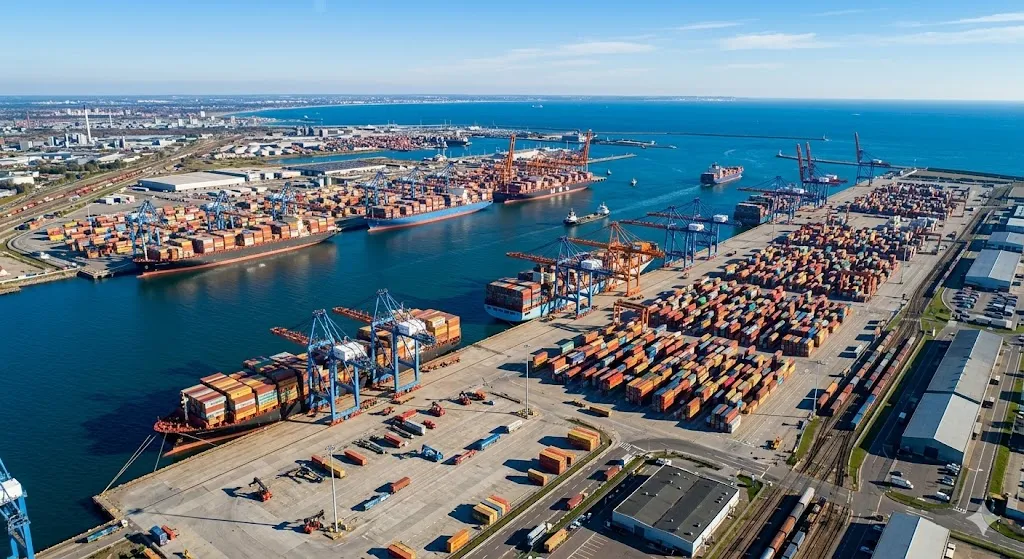
Products ship to over 60 countries with packaging rated for ocean freight and documentation compliant with EU, North American, and Southeast Asian import regulations.
Frequently Asked Questions
Get in Touch with Our Engineering Team
Whether you need a standard catalog chain or a fully custom-engineered solution, our technical sales team is ready to assist with specification, pricing, and logistics.
Company
Hangzhou Ever-Power Sprocket Chain Co., Ltd.
Address
Shenhua Road, Hangzhou, China
Phone
+86-571-88220653