
Product Description
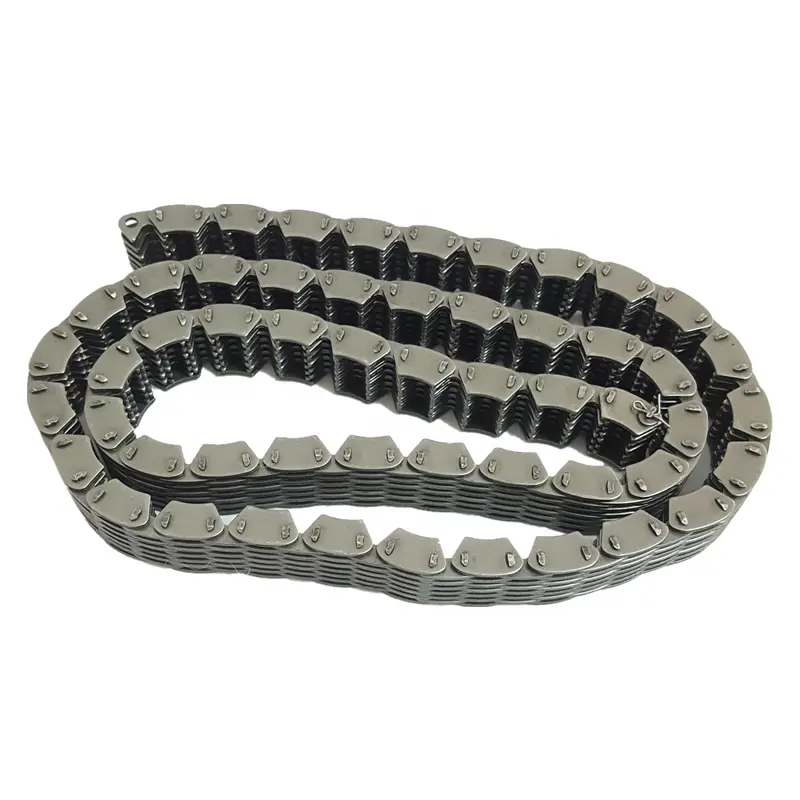
Simplex stainless 304 Roller Chain (08B-1, 24B-1)
The most commonly used chain is roller chain or as it is also known transmission chain. These are the simplest chain drives, Used mainly for transmitting power. Can be supplied from 3mm pitch up to 4″ pitch in either mild steel or stainless steel.
| DIN/ISO Chain No. |
Pitch | Roller Diameter |
Width Between Inner Plates |
Pin Diameter |
Pin Length |
Inner Plate depth |
Plate thick ness |
Ultimate Tensile Strength |
Average Tensile Strength |
Weight Per Meter |
|
| Mm | mm | mm | mm | mm | mm | mm | mm | kN/LB | kN | Kg/m | |
| 04B-1 | 6.000 | 4.00 | 2.80 | 1.85 | 6.80 | 7.80 | 5.00 | 0.60 | 3.0/682 | 3.2 | 0.11 |
| 05B-1 | 8.000 | 5.00 | 3.00 | 2.31 | 8.20 | 8.90 | 7.10 | 0.80 | 5.0/1136 | 5.9 | 0.20 |
| *06B-1 | 9.525 | 6.35 | 5.72 | 3.28 | 13.15 | 14.10 | 8.20 | 1.30 | 9.0/2045 | 10.4 | 0.41 |
| 08B-1 | 12.700 | 8.51 | 7.75 | 4.45 | 16.70 | 18.20 | 11.80 | 1.60 | 18.0/4091 | 19.40 | 0.69 |
| 10B-1 | 15.875 | 10.16 | 9.65 | 5.09 | 19.50 | 20.90 | 14.70 | 1.70 | 22.4/5091 | 27.50 | 0.93 |
| 12B-1 | 19.050 | 12.07 | 11.68 | 5.72 | 22.50 | 24.2 | 16.00 | 1.85 | 29.0/6591 | 32.20 | 1.15 |
| 16B-1 | 25.400 | 15.88 | 17.02 | 8.28 | 36.10 | 37.4 | 21.00 | 4.15/3.1 | 60.0/13636 | 72.80 | 2.71 |
| 20B-1 | 31.750 | 19.05 | 19.56 | 10.19 | 41.30 | 45.0 | 26.40 | 4.5/3.5 | 95.0/21591 | 106.7 | 3.70 |
| 24B-1 | 38.100 | 25.40 | 25.40 | 14.63 | 53.40 | 57.80 | 33.20 | 6.0/4.8 | 160.0/36364 | 178.0 | 7.10 |
| 28B-1 | 44.450 | 27.94 | 30.99 | 15.90 | 65.10 | 69.50 | 36.70 | 7.5/6.0 | 200.0/45455 | 222.0 | 8.50 |
| 32B-1 | 50.800 | 29.21 | 30.99 | 17.81 | 66.00 | 71.0 | 42.00 | 7.0/6.0 | 250.0/56818 | 277.5 | 10.25 |
| 40B-1 | 63.50 | 39.37 | 38.10 | 22.89 | 82.20 | 89.2 | 52.96 | 8.5/8.0 | 355.0/80682 | 394.0 | 16.35 |
| 48B-1 | 76.20 | 48.26 | 45.72 | 29.24 | 99.10 | 107.0 | 63.80 | 12.0/10.0 | 560.0/127272 | 621.6 | 25.00 |
| 56B-1 | 88.90 | 53.98 | 53.34 | 34.32 | 114.60 | 123.0 | 77.80 | 13.5/12.0 | 850.0/193180 | 940.0 | 35.78 |
| *Bushing chain: d1 in the table indicate the external diameter of bushing |
|||||||||||
We own the sophisticated equipment and the advanced technology, such as:
1. CAD Designer
2. Wire Cutting Machine
3. Chain Running In Machine
4. Conveyor Furance
5. Ball Drift
6. Shot Peened Parts
7. Design Of Link Plate Waist
Company Detail:
GOODLUCK TRANSMISSION is 1 of a professional exporter with exporting POWER TRANSMISSION PARTS: Roller chains,conveyor chain,stainless steel chains, agricultural chains, steel detachable chains, special chains, sprockets, s. S. Sprockets, HRC couplings, pulleys, bushes etc. All these products have been supplied regularly to World Wide for over 15 years.
Welcome contact for more detail.
| Usage: | Transmission Chain |
|---|---|
| Material: | Stainless steel |
| Surface Treatment: | Polishing |
| Samples: |
US$ 100/Piece
1 Piece(Min.Order) | Order Sample Pls contact with Sellers
|
|---|
| Customization: |
Available
| Customized Request |
|---|
.shipping-cost-tm .tm-status-off{background: none;padding:0;color: #1470cc}
|
Shipping Cost:
Estimated freight per unit. |
about shipping cost and estimated delivery time. |
|---|
| Payment Method: |
|
|---|---|
|
Initial Payment Full Payment |
| Currency: | US$ |
|---|
| Return&refunds: | You can apply for a refund up to 30 days after receipt of the products. |
|---|

Can transmission chains be used in high-temperature environments?
Yes, transmission chains can be used in high-temperature environments, but there are certain considerations to keep in mind. Here’s a detailed explanation:
1. Material Selection: When operating in high-temperature environments, it’s crucial to select transmission chains made from heat-resistant materials. Common materials used for high-temperature applications include heat-treated alloy steels, stainless steels, and specialized heat-resistant alloys. These materials offer improved resistance to thermal expansion, oxidation, and deformation at elevated temperatures.
2. Lubrication: Proper lubrication is essential for the performance and longevity of transmission chains in high-temperature environments. High-temperature lubricants with superior thermal stability should be used to ensure adequate lubrication and minimize frictional heat generation. These lubricants are specifically formulated to withstand the elevated temperatures and provide effective lubrication, reducing wear and extending chain life.
3. Chain Design: The design of transmission chains for high-temperature environments may incorporate features to enhance heat resistance. These features can include heat-resistant coatings, specialized heat-treatment processes, and improved heat dissipation characteristics. Additionally, the chain’s load capacity, fatigue resistance, and dimensional stability should be carefully considered to ensure reliable operation under thermal stress.
4. Temperature Limits: It’s important to be aware of the temperature limits specified by the manufacturer for a particular transmission chain. Different chains have different temperature ranges within which they can safely operate. Exceeding the recommended temperature limits can lead to chain failure, reduced strength, accelerated wear, and potential damage to surrounding components.
5. Regular Inspection and Maintenance: Regular inspection and maintenance are crucial for monitoring the condition of transmission chains in high-temperature environments. Periodic inspections can help detect signs of wear, elongation, or damage caused by thermal stress. Prompt replacement of worn or damaged chains, as well as proper lubrication and tension adjustment, will help ensure continued reliable operation.
It’s important to consult with chain manufacturers or industry experts to select the appropriate transmission chain and ensure its compatibility with the specific high-temperature application. Following manufacturer guidelines, proper installation, and regular maintenance practices will contribute to the safe and efficient use of transmission chains in high-temperature environments.
What are the advantages of using a double-pitch transmission chain?
A double-pitch transmission chain offers several advantages in certain applications. Here’s a detailed answer to the question:
1. Cost-Effective: Double-pitch transmission chains are typically less expensive compared to standard pitch chains. This makes them a cost-effective choice for applications where high precision and high load capacity are not essential.
2. Lighter Weight: Double-pitch chains are lighter in weight compared to standard pitch chains of the same length. This can be advantageous in applications where weight reduction is desired, such as in portable equipment or conveyor systems.
3. Reduced Noise and Vibration: The longer pitch of double-pitch chains helps to reduce noise and vibration levels during operation. This can be beneficial in applications where noise reduction is important, such as in automotive or industrial machinery.
4. Higher Speed Capability: Double-pitch chains can operate at higher speeds compared to standard pitch chains. The longer pitch allows for smoother and more efficient motion, making them suitable for applications that require high-speed operation.
5. Extended Life: Due to their longer pitch, double-pitch chains distribute the load over a larger surface area, reducing stress and wear on individual chain components. This can result in an extended service life compared to standard pitch chains.
6. Customization Options: Double-pitch chains can be customized to meet specific application requirements. They can be made with different materials, coatings, and attachments to enhance their performance in specific environments or applications.
7. Wide Availability: Double-pitch transmission chains are widely available in the market, making them easily accessible for various industries and applications. They come in different sizes and configurations to accommodate different load capacities and system designs.
It’s important to note that while double-pitch transmission chains offer advantages in certain applications, they may not be suitable for all applications. Factors such as load capacity, speed, precision, and environmental conditions should be considered when selecting the appropriate chain for a specific application.
Are there any industry standards or certifications for transmission chains?
Yes, there are industry standards and certifications that govern the manufacturing, quality, and performance of transmission chains. Here’s a detailed explanation:
1. ANSI/ASME Standards: The American National Standards Institute (ANSI) and the American Society of Mechanical Engineers (ASME) have developed standards for transmission chains, such as ANSI/ASME B29.1 for roller chains and ANSI/ASME B29.3 for pintle chains. These standards define the dimensions, materials, tolerances, and performance requirements for various types of transmission chains.
2. ISO Standards: The International Organization for Standardization (ISO) has also established standards for transmission chains, including ISO 606 for short-pitch precision roller chains and ISO 1275 for short-pitch conveyor chains. These standards ensure global consistency and compatibility in terms of chain dimensions and performance.
3. DIN Standards: In Germany, the Deutsches Institut für Normung (DIN) has developed standards for transmission chains, such as DIN 8187 for roller chains and DIN 8181 for bush chains. These standards are widely used in Europe and define the specifications and requirements for chain design and performance.
4. Certifications: In addition to standards, there are certifications that validate the quality and performance of transmission chains. One notable certification is the ISO 9001:2015, which demonstrates that the manufacturer has implemented a quality management system and meets the specified criteria for consistent product quality.
It is important to note that adherence to these standards and certifications is voluntary but highly recommended. Choosing transmission chains that comply with recognized standards and certifications ensures that they have been manufactured and tested to meet specific criteria for performance, reliability, and durability.
When selecting transmission chains, it is advisable to look for products from reputable manufacturers who prioritize quality and compliance with industry standards. This helps to ensure that the chains you choose will meet the necessary requirements for your application and deliver reliable performance over time.


editor by CX 2023-11-07