Product Description
DIN ANSI standard or Customize Industrial Agricultural machinery parts Stainless Steel Drive Transmission Conveyor Roller Chains |
| Related Products |
| Our Company |
| Ever-power Group specialist in making all kinds of mechanical transmission and hydraulic transmission like: planetary gearboxes, worm reducers, in-line helical gear speed reducers, parallel shaft helical gear reducers, helical bevel reducers, helical worm gear reducers, agricultural gearboxes, tractor gearboxes, auto gearboxes, pto shafts, special reducer & related gear components and other related products, sprockets, hydraulic system, vacuum pumps, fluid coupling, gear racks, chains, timing pulleys, udl speed variators, v pulleys, hydraulic cylinder, gear pumps, screw air compressors, shaft collars low backlash worm reducers and so on. furthermore, we can produce customized variators, geared motors, electric motors and other hydraulic products according to customers’ drawings. We provides a reliable grantee for the product’ s quality by advanced inspection and testing equipment. professional technical team, exquisite processing technology and strict control system. In recent years, the company has been developing rapidly by its rich experience in production, advanced management system, standardized management system, strong technical force. We always adhere the concept of survival by quality, and development by innovation in science and technology. Our Group is willing to work with you hand in hand and create brilliance together! |
| Material available Low carbon steel, C45, 20CrMnTi, 42CrMo, 40Cr, stainless steel. Can be adapted regarding customer requirements. |
/* January 22, 2571 19:08:37 */!function(){function s(e,r){var a,o={};try{e&&e.split(“,”).forEach(function(e,t){e&&(a=e.match(/(.*?):(.*)$/))&&1
| Standard or Nonstandard: | Standard |
|---|---|
| Application: | Textile Machinery, Conveyer Equipment, Packaging Machinery, Electric Cars, Motorcycle, Food Machinery, Marine, Mining Equipment, Agricultural Machinery |
| Surface Treatment: | Chrome Plating |
| Structure: | Hollow Chain |
| Material: | Carbon Steel |
| Type: | Double Pitch Chain |
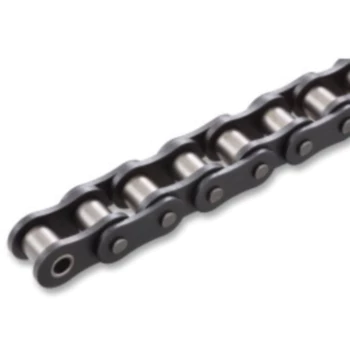
Can a drive chain be used in a conveyor oven or industrial baking application?
Yes, a drive chain can be used in a conveyor oven or industrial baking application where reliable and efficient power transmission is required. Here is a detailed explanation:
In conveyor ovens and industrial baking applications, a conveyor system is used to transport products through the baking or cooking process. Drive chains offer several advantages in these applications:
- High Temperature Resistance: Conveyor ovens and industrial baking processes often involve high temperatures. Drive chains can be selected or specially designed with materials that can withstand the elevated temperatures encountered in these applications. Heat-resistant materials, such as stainless steel or special alloys, ensure reliable chain operation and prevent chain failure due to excessive heat.
- Smooth and Continuous Operation: Drive chains provide smooth and continuous power transmission in conveyor systems, ensuring consistent movement of products through the baking or cooking process. The interlocking design of the chain and sprockets allows for precise product positioning and control.
- Load Capacity: Conveyor ovens and industrial baking applications may involve heavy loads and products with varying weights. Drive chains are designed to handle high load capacities, ensuring reliable power transmission and efficient movement of products along the conveyor system.
- Durability and Wear Resistance: Drive chains used in conveyor ovens and industrial baking applications are built to withstand the demanding conditions of continuous operation. They are designed with materials and coatings that provide durability, wear resistance, and protection against corrosion or food contamination.
- Easy Maintenance: Conveyor systems require regular maintenance to ensure optimal performance and prevent downtime. Drive chains offer ease of maintenance, with features such as removable links or easy access to chain components for inspection, lubrication, and tension adjustment. This facilitates quick and efficient maintenance routines, minimizing production interruptions.
When selecting a drive chain for a conveyor oven or industrial baking application, factors such as temperature resistance, load capacity, speed requirements, and compatibility with food or baking regulations should be considered.
Regular inspection, lubrication, and tension adjustment are crucial for maintaining the performance and longevity of the drive chain in conveyor oven or industrial baking applications. These maintenance practices help prevent chain elongation, excessive wear, and potential chain failure.
By utilizing drive chains in conveyor ovens and industrial baking applications, operators can benefit from high temperature resistance, smooth operation, high load capacity, durability, and easy maintenance, contributing to efficient and reliable baking processes and product throughput.
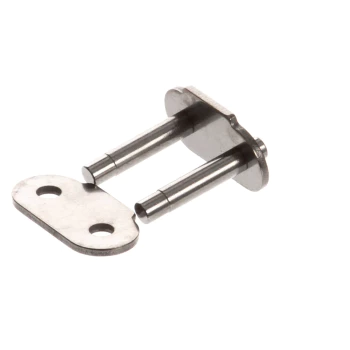
Can a drive chain be used in a hydraulic or pneumatic system?
A drive chain is not typically used as a primary power transmission method in hydraulic or pneumatic systems. Hydraulic and pneumatic systems rely on fluid power to transmit force and motion. However, drive chains can still be used in certain auxiliary or secondary applications within these systems. Here is a detailed explanation:
In hydraulic or pneumatic systems, the primary power transmission is achieved through the use of hydraulic fluid or compressed air. The fluid or air is pressurized and controlled to generate force and motion in actuators or motors. Drive chains, on the other hand, are commonly used in mechanical power transmission applications where direct force is required, such as in mechanical drives or conveyors.
While drive chains may not be used as the main power transmission method, they can be employed in auxiliary or secondary applications within hydraulic or pneumatic systems, including:
- Tensioning and Positioning: Drive chains can be used to tension belts or other components in a system that is driven by hydraulic or pneumatic power. They can provide accurate positioning and tension control in certain applications.
- Linkage Mechanisms: Drive chains can be utilized as part of mechanical linkage mechanisms in hydraulic or pneumatic systems to transmit motion or force between different components.
- Drive Chain Actuators: In some cases, specialized drive chain actuators can be used in combination with hydraulic or pneumatic power to provide linear or rotary motion for specific applications.
- Accessories and Ancillary Devices: Drive chains can be employed in various accessories or ancillary devices within hydraulic or pneumatic systems, such as tensioners, clutches, or braking mechanisms.
It is important to note that the selection and application of drive chains in hydraulic or pneumatic systems require careful consideration of the specific requirements, load conditions, and compatibility with the fluid power components. Consulting with experts or manufacturers is recommended to ensure the proper integration and performance of the drive chain in such applications.
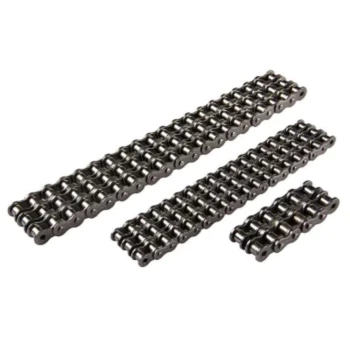
What are the noise and vibration levels associated with a drive chain?
The noise and vibration levels associated with a drive chain can vary depending on several factors, including the type of chain, operating conditions, and maintenance practices. Here’s an explanation:
Noise Levels:
- Drive chains, especially roller chains, can generate noise during operation. The noise level depends on various factors, such as the chain’s design, speed, tension, lubrication, and the condition of the sprockets.
- Proper lubrication helps reduce friction and noise generation, while inadequate or dry lubrication can increase noise levels.
- Other factors, such as misalignment, worn-out components, or loose fittings, can contribute to increased noise levels. Regular inspections and maintenance help identify and address sources of excessive noise.
Vibration Levels:
- Drive chains can produce vibrations during operation, especially if there are issues such as misalignment, improper tension, or worn-out components.
- Proper tensioning, alignment, and maintenance practices help minimize vibrations and ensure smooth operation.
- Excessive vibrations can lead to accelerated wear, reduced chain life, and potential damage to other components.
It’s worth noting that advancements in chain design and manufacturing techniques have resulted in quieter and smoother-running chains. Manufacturers may also offer specialized low-noise or low-vibration chains for applications where noise or vibration reduction is a priority.
To maintain acceptable noise and vibration levels associated with a drive chain, it is important to follow proper maintenance practices, including regular lubrication, tension adjustment, and alignment checks. Additionally, addressing any sources of excessive noise or vibration promptly can help ensure the smooth and efficient operation of the drive chain.


editor by CX 2024-04-08