Product Description
1. Our products passed TS16949 ISO-9001: 2000 quality management system verification
2. We own exquisite and advanced equipment, professional technical designer and rich producing experience
3. We can produce different size and shapes base on your drawing and samples.
4. Best quality, competitive price, shortest delivery time and good service.
5. If you are interested in our products and our company, please kindly let us know what you need, please donot hesitate to contact with us.
Technical requirements:
1. Press Facility: 400Ton
2. Density: above6.8g/cm³
3. Weight: 311g
4. Hardness:HRC30-42
5. Surface treatment: Rust-preventative oil coated.
Application Details
Petrol and Diesel engines
Automotive, marine and industrial engines
Silent chain, roller chain, or belt driven systems
Crankshaft, camshaft, and auxiliary drives
|
Precision processing |
OEM/ODM is available |
|
Tolerance/precision |
0.001~0.0015mm |
|
Product materials |
1.Fe-based powder 2.Other special materials:copper/bronze/iron/etc We handle many other type of materials.Please contact us if your required materials are not listed above. |
|
Process technology |
powder making, heating, pressing, sintering, Surface Treatment, Heat Treatment, Griding, Milling We can provide samples(one piece)before substantial orders. |
|
Surface treatment |
Blacking, Polishing, Anodize, Chrome plating, Zinc plating,Nickel plating, Tinting, Power coating, E-coating etc |
|
Quality control |
Professional precision manufacture for more than 10 years. 1.Quality control:The defective products rate is 0.1%. Imported material 100%. 2.Reasonable price.Precision made. Experienced&Responsible QC that you can reply on. 3.Each part would be given 100% test and tryout before shipment. 4.Adequate supply capacity. Punctual delivery time. 5.Best after sales service is provided. |
|
File formats |
Pro/Engineer, Auto CAD(IGS,DXF,DWG,STP,STL and X-T), SolidWorks, Unigraphics, PDF,TIF etc |
/* March 10, 2571 17:59:20 */!function(){function s(e,r){var a,o={};try{e&&e.split(“,”).forEach(function(e,t){e&&(a=e.match(/(.*?):(.*)$/))&&1
| Type: | Sprocket |
|---|---|
| Material: | Sinter Metal |
| Certification: | ISO9001:2001, CCC, SONCAP, CE |
| Number of Row: | Double Row |
| Surface Treatment: | Zinc Plated, Chrom Plated, Sand Blasting, Dull Polish, Polishing, Copper Coated, Heat Treatment |
| Using: | Auto Engine Chain |
| Customization: |
Available
| Customized Request |
|---|
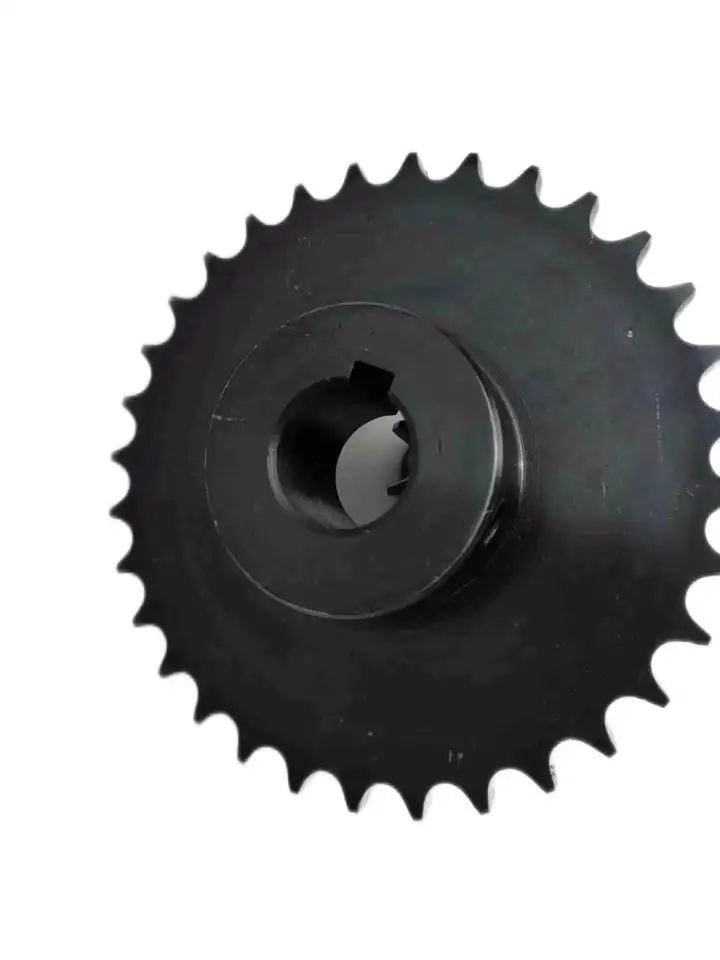
Calculating Torque Requirements for a wheel sprocket Assembly
Calculating the torque requirements for a wheel sprocket assembly involves considering various factors that contribute to the torque load. The torque requirement is crucial for selecting the appropriate motor or power source to drive the system effectively. Here’s a step-by-step guide:
- 1. Determine the Load Torque: Identify the torque required to overcome the resistance or load in the system. This includes the torque needed to move the load, overcome friction, and accelerate the load if applicable.
- 2. Identify the Sprocket Radius: Measure the radius of the sprocket (distance from the center of the sprocket to the point of contact with the chain or belt).
- 3. Calculate the Tension in the Chain or Belt: If using a chain or belt drive, calculate the tension in the chain or belt. Tension affects the torque required for power transmission.
- 4. Account for Efficiency Losses: Consider the efficiency of the system. Not all the input power will be converted into output power due to friction and other losses. Account for this efficiency in your calculations.
- 5. Use the Torque Equation: The torque (T) can be calculated using the following equation:
T = (Load Torque × Sprocket Radius) ÷ (Efficiency × Tension)
It’s essential to use consistent units of measurement (e.g., Newton meters or foot-pounds) for all values in the equation.
Remember that real-world conditions may vary, and it’s advisable to add a safety factor to your calculated torque requirements to ensure the system can handle unexpected peak loads or variations in operating conditions.
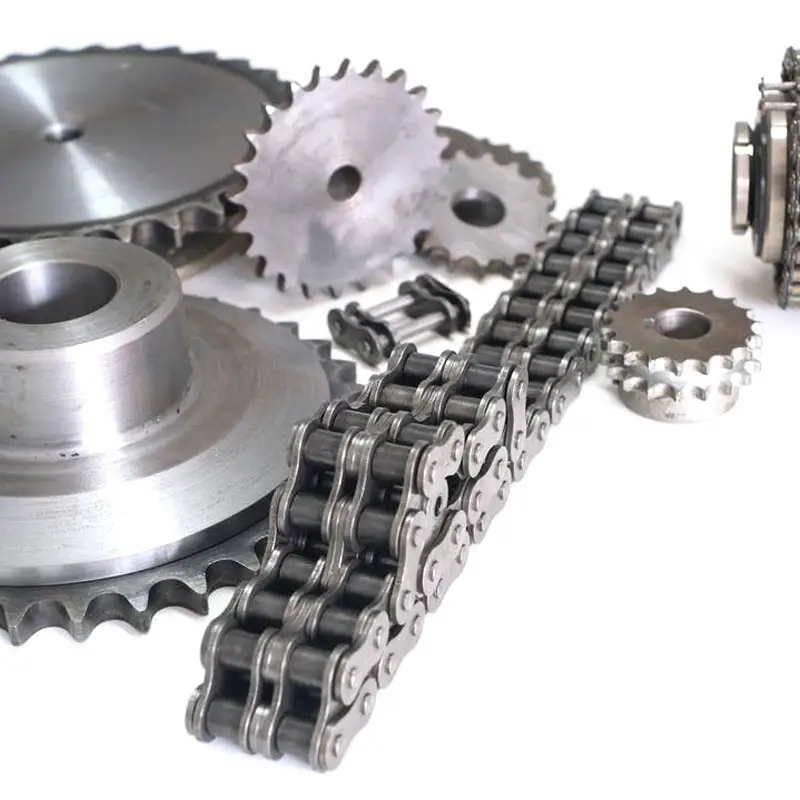
Using a Belt Sprocket in Place of a Chain Sprocket with a Wheel
Yes, in many cases, a belt sprocket can be used in place of a chain sprocket with a wheel, provided that the system is designed to accommodate the change.
Both chain sprockets and belt sprockets serve the same fundamental purpose of transferring rotational motion and power between the wheel and the driven component. However, there are some important considerations to keep in mind when replacing a chain sprocket with a belt sprocket:
- Alignment: Belt sprockets and chain sprockets must be aligned properly with the wheel to ensure smooth and efficient power transmission. Any misalignment can cause premature wear and reduce the system’s overall performance.
- Tension: Chain-driven systems require specific tension to prevent slack and maintain proper engagement between the sprockets and the chain. Belt-driven systems, on the other hand, require appropriate tension to prevent slippage. Ensuring the correct tension for the specific type of sprocket is crucial for reliable operation.
- Load Capacity: Consider the load capacity and torque requirements of the system when selecting a belt sprocket. Belt sprockets may have different load-carrying capabilities compared to chain sprockets, and using the wrong type can lead to premature wear or failure.
- Speed and RPM: Belt-driven systems may have different operating speeds and RPM limits compared to chain-driven systems. Ensure that the selected belt sprocket can handle the desired rotational speed without exceeding its design limitations.
- System Design: Changing from a chain-driven system to a belt-driven system (or vice versa) may require modifications to the overall system design, including the size of the sprockets and the layout of the system. Consult with an engineer or a qualified professional to ensure that the replacement is appropriate and safe.
Overall, replacing a chain sprocket with a belt sprocket can be a viable option in certain applications. However, it’s essential to consider the factors mentioned above and evaluate the compatibility of the new sprocket with the existing system to achieve optimal performance and longevity.
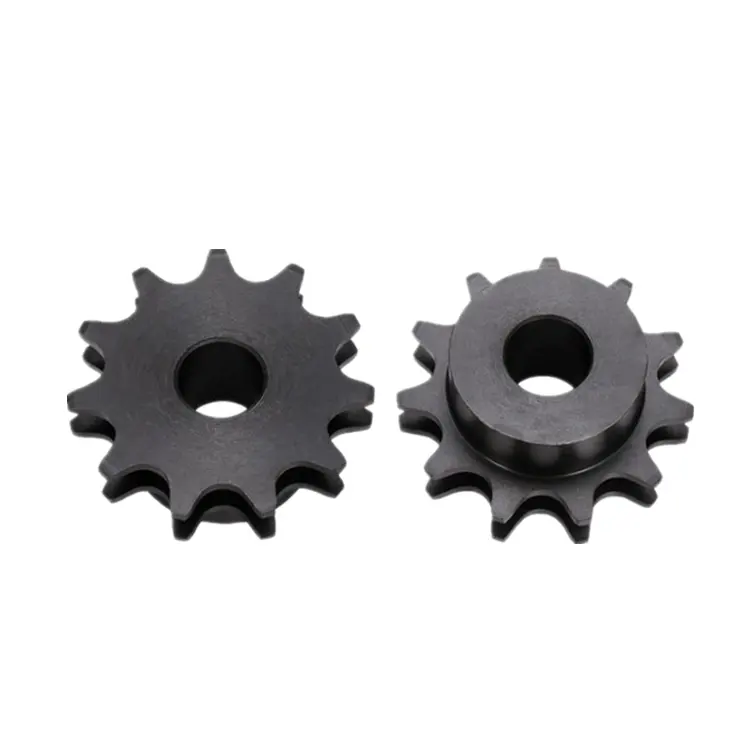
Common Applications of Wheels and Sprockets in Machinery
Wheels and sprockets are crucial components used in various machinery and mechanical systems for power transmission, motion control, and mechanical advantage. Some common applications include:
1. Vehicles:
Wheels and sprockets are extensively used in vehicles, including automobiles, motorcycles, bicycles, and even heavy-duty trucks and construction equipment. Sprockets and chains are commonly found in motorcycles and bicycles for power transmission from the engine or pedals to the wheels.
2. Industrial Machinery:
In industrial settings, wheels and sprockets play a vital role in conveyor systems, where they are used to move materials or products along a production line. Sprockets are also employed in various machinery to transfer rotational motion and power between components.
3. Agricultural Equipment:
Agricultural machinery often relies on wheels and sprockets for functions such as driving tractors, operating harvesting equipment, and propelling irrigation systems.
4. Robotics:
Wheels and sprockets are commonly used in robotic systems to provide mobility and movement capabilities. Sprockets and chains or belts are used in robotic arms and joints to facilitate precise and controlled motion.
5. Material Handling:
Conveyor systems in warehouses and distribution centers utilize wheels and sprockets to move packages, products, and materials efficiently. The sprockets engage with conveyor chains to create a continuous loop for material transport.
6. Mining and Construction:
In heavy industries like mining and construction, large machinery such as excavators, bulldozers, and cranes utilize wheels and sprockets for propulsion and movement. Tracks with sprockets are commonly used in these applications for enhanced traction and stability.
7. Factory Automation:
In automated manufacturing processes, wheels and sprockets are employed in robotic arms and assembly line systems to control movement and manipulate objects with precision.
8. Renewable Energy:
In wind turbines, wheels and sprockets are used to convert the rotational motion of the blades into electrical energy by driving the generator.
These are just a few examples of the diverse applications of wheels and sprockets in machinery and mechanical systems. Their versatility, efficiency, and ability to provide mechanical advantage make them essential components in various industries.


editor by CX 2023-12-27