Product Description
Short Pitch Precision Roller Chains
A. Our Services:
1. Any of your kind inquiry about chain would be replied within 24 hours.
2. Well-trained and experienced sales staffs will reply all your concerns in fluent English.
3. OEM services are available with us, our professional designer would make your private idea into being.
4. Protection of your sales area, ideas of design and all your private information.
5. Delivery by air mail or ship for your orders.
6. With years of manufacture and promotion experience in global market, brings you profit and great success!
B.Product Description:
| Style: | Simplex Roller Chains, Duplex Roller Chains, Triplex Roller Chains, Multiple Roller Chains |
| Chain No.: (ANSI/ISO) | 03C, 04C, 06C, 08A, 10A, 12A-~ 48A |
| Chain No.: ( ANSI ) | 15, 25,35,41,40,50 ~ 240 |
| Pitch: | 4.7625 mm ~ 76.200 mm |
C.Company show & Product Process
D. Packaging & Certificate
| Packaging Details: | Chain+Plastic Bag+Neutral Box+Wooden case+Big Carton+Steel Pallets |
| Delivery Detail: | five weeks |
E. FAQ:
1. Are you manufacturer or trade Company?
We are a factory founded in 1991 with trade team for international service.
2. What terms of payment you usually use?
T/T 30% deposit and 70% against document, Western Union, L/C at sight
3. what is your lead time for your goods?
Normally 45 days after confirmed order. 30 days could be available in low season for some items (during May to July), and 65 days during new year and hot season ( Jan to March).
4. Do you attend any Show?
We attend Hannover show in Germany, NMW in Austrilia, Canton fair, PTC, in China and many other special furniture shows.
5. Do you have any instant chat ?
| Usage: | Conveyor Chain |
|---|---|
| Material: | Alloy/Carbon Steel |
| Surface Treatment: | Electroplating |
| Feature: | Heat Resistant |
| Chain Size: | 1/2"*11/128" |
| Structure: | Roller Chain |
| Customization: |
Available
| Customized Request |
|---|
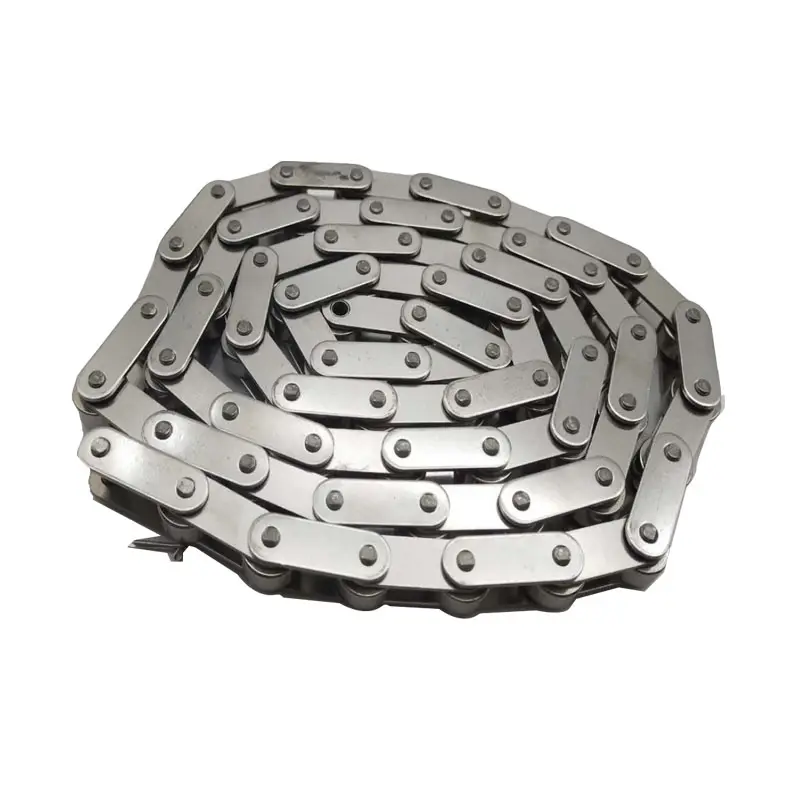
How does the chain tension affect the operation of a transmission chain?
Chain tension plays a crucial role in the operation of a transmission chain. Here’s a detailed explanation:
1. Proper Power Transmission: The tension in a transmission chain ensures the transfer of power from the driving sprocket to the driven sprocket. Adequate tension is necessary to prevent slippage and ensure efficient power transmission. Insufficient tension can lead to power loss, reduced efficiency, and potential chain disengagement, while excessive tension can cause excessive stress on the chain and other components.
2. Smooth Operation: Optimal chain tension promotes smooth and consistent operation of the transmission chain. It helps to maintain the engagement between the chain and the sprockets, ensuring a continuous and reliable transfer of rotational force. With proper tension, the chain runs smoothly over the sprocket teeth, minimizing vibrations, noise, and potential chain derailment.
3. Chain Wear and Fatigue: Improper chain tension can accelerate wear and fatigue of the transmission chain. Insufficient tension may cause the chain to ride on the sprocket teeth, leading to premature wear and elongation. On the other hand, excessive tension can increase stress on the chain, causing accelerated fatigue and potential failure of the chain or other components.
4. Component Life and Reliability: Maintaining the correct chain tension contributes to the longevity and reliability of the entire transmission system. Proper tension reduces the likelihood of chain elongation, excessive wear, and premature failure. By minimizing these issues, the lifespan of the transmission chain and related components, such as sprockets and bearings, is extended, leading to improved overall reliability and reduced maintenance costs.
5. Safety: Chain tension is also crucial for ensuring safe operation. An appropriately tensioned transmission chain reduces the risk of unexpected chain disengagement or derailment, which could result in accidents or equipment damage. It’s important to follow manufacturer’s guidelines or consult with experts to determine the recommended tension for specific chain types and applications.
Regular inspection and adjustment of chain tension are essential for maintaining optimal performance and safety. Monitoring the tension and making necessary adjustments can prevent premature wear, improve efficiency, and ensure the reliable operation of the transmission chain.
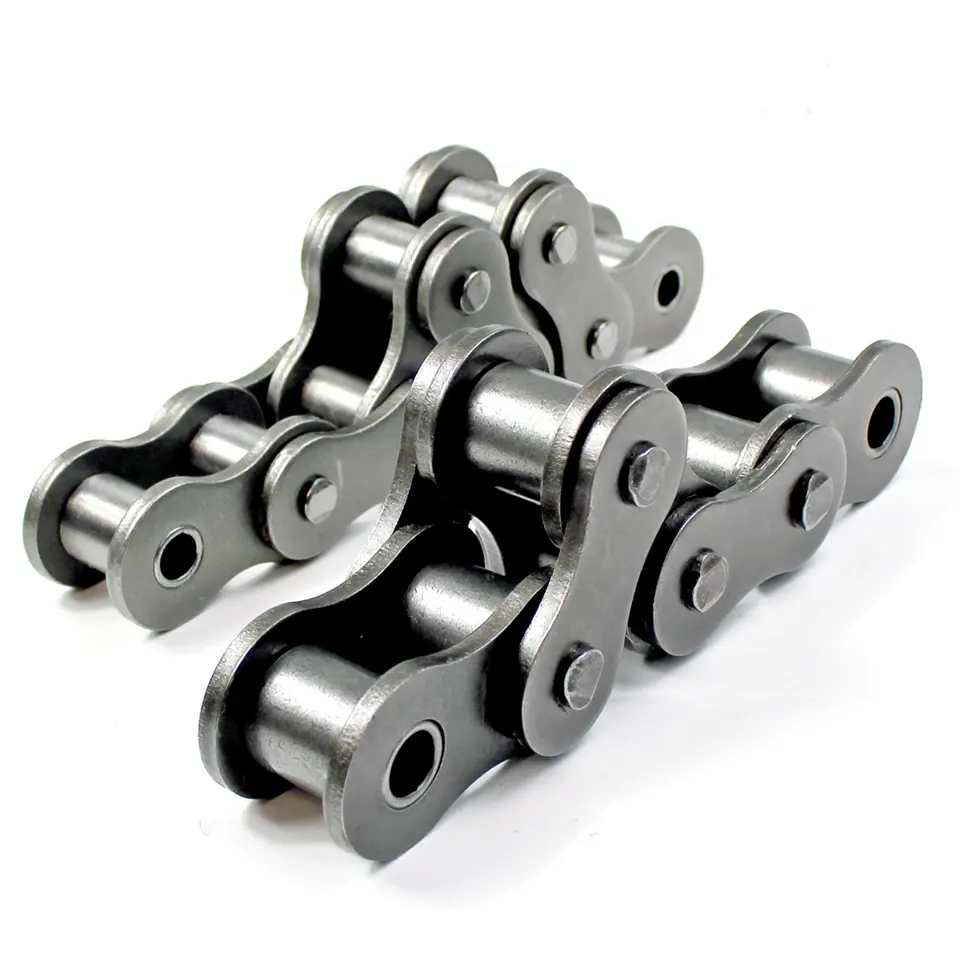
What are the advantages of using a lubrication-free transmission chain?
Using a lubrication-free transmission chain offers several benefits. Here’s a detailed answer to the question:
1. Maintenance-free Operation: Lubrication-free transmission chains eliminate the need for regular lubrication and maintenance. This saves time, reduces maintenance costs, and minimizes downtime associated with lubrication tasks.
2. Clean and Environmentally Friendly: Lubrication-free chains operate without the need for external lubricants, which eliminates the risk of oil or grease contamination in the surrounding environment. This is particularly advantageous in applications where cleanliness is crucial, such as in food processing, pharmaceutical, or cleanroom environments.
3. Reduced Friction and Wear: Lubrication-free chains are designed with self-lubricating materials or coatings that offer low friction and excellent wear resistance. These chains are specifically engineered to provide long-lasting performance without the need for external lubrication. The reduced friction and wear contribute to extended chain life and improved efficiency.
4. Enhanced Reliability: Lubrication-free transmission chains provide consistent and reliable performance, as they are not dependent on external lubrication that can deteriorate or deplete over time. They are designed to withstand various operating conditions and maintain their performance even in the absence of lubrication.
5. Wide Range of Applications: Lubrication-free transmission chains are suitable for a wide range of applications across different industries. They are commonly used in industries such as food and beverage, packaging, medical equipment, textile, and electronics, where lubrication may not be feasible or desirable.
6. Improved Cleanliness and Safety: Lubrication-free chains contribute to a cleaner working environment by eliminating the risk of oil or grease leaks. This enhances workplace safety, reduces the potential for slip hazards, and ensures compliance with stringent cleanliness standards.
It’s important to note that lubrication-free chains are designed and manufactured using specialized materials and coatings to provide the necessary self-lubricating properties. It’s essential to choose the appropriate lubrication-free chain based on the specific application requirements and operating conditions.

Can transmission chains be used in corrosive environments?
Transmission chains can be used in corrosive environments, but the choice of materials and proper maintenance are crucial to ensure their performance and longevity. Here’s a detailed explanation:
1. Material Selection: When operating in corrosive environments, it is important to select transmission chains made from corrosion-resistant materials. Stainless steel chains are commonly used due to their excellent resistance to rust and corrosion. They are capable of withstanding exposure to moisture, chemicals, and other corrosive agents.
2. Coatings and Treatments: Applying specialized coatings or treatments to the transmission chains can provide an extra layer of protection against corrosion. These coatings, such as zinc plating or epoxy coatings, create a barrier between the chain and the corrosive environment, reducing the risk of degradation.
3. Sealed or Enclosed Design: In some cases, using transmission chains with sealed or enclosed designs can help prevent contaminants, including corrosive substances, from entering the chain assembly. This can prolong the chain’s life and maintain its performance in corrosive environments.
4. Proper Lubrication: Adequate lubrication is crucial for maintaining the performance and preventing corrosion in transmission chains. Lubricants with anti-corrosive properties should be used to provide a protective film on the chain’s surfaces, reducing friction and preventing the corrosive agents from reaching the chain’s metal components.
5. Regular Inspection and Cleaning: Regular inspection and cleaning of the transmission chains are necessary in corrosive environments. This helps detect any signs of corrosion or damage early on, allowing for timely maintenance or replacement. Cleaning the chains with appropriate cleaning agents can help remove any corrosive residues and prolong their lifespan.
It is important to consult with the chain manufacturer or a knowledgeable expert to determine the most suitable chain and maintenance practices for specific corrosive environments. By selecting the right materials, applying protective coatings, ensuring proper lubrication, and conducting regular maintenance, transmission chains can be effectively used in corrosive environments while maintaining their performance and durability.


editor by CX 2023-11-13