Product Description
Introducing the RUIAO Steel Hinged Conveyor Chain Belt by ZheJiang Ruiao Machine Tool Accessories Producing Co., Ltd. This carbon steel belt is perfect for CNC conveyors, offering durability and reliability. Upgrade your chip conveyor system with this high-quality steel chain belt.
Product Description
CNC Machine Customized Carbon Transmission Chain Hinged Belt Chip Conveyor Chain
Our chip conveyor chain provides complete solutions to mechanical handling problems. It is divided into a variety of chip removal machines and can be customized according to user requirements.
Features:
- Material: Stainless steel 201/304 and A3 steel
- Application: Mainly used in excluding scraps in all kinds of mechanisms and coal mines, as well as metallurgy equipment
Applications:
The 1.25″ – 1.50″ – 2.50″ Chip Conveyor Belt is ideal for handling parts, stampings, die castings, screws, scrap, chips, turnings, material wet or dry, horizontal or elevating, single or multiple unit systems. It is commonly used in the following industries:
- Small Manufacturers
- CNC Turning & Milling Centers
Thank you for your attention to our chip conveyor chain belt. We are proud to have our own factory, ensuring the most reasonable price for a CHINAMFG product
|
Width |
Pitch |
Through Shaft Diameter |
Roller Diameter |
Steel belt thickness |
|
As customer required |
31.75mm |
Φ8 |
Φ19.05 |
1.0/1.5/2.0mm |
|
As customer required |
38.1mm |
Φ8 |
Φ22.23 |
1.0/1.5/2.0mm |
|
As customer required |
50.8mm |
Φ10 |
Φ28.58 |
1.0/1.5/2.0/3.0mm |
|
As customer required |
63.5mm |
Φ10 |
Φ40 |
1.5/2.0/3.0mm |
|
As customer required |
76.2mm |
Φ14 |
Φ44.45 |
1.5/2.0/2.5mm |
|
As customer required |
101.6mm |
Φ14 |
Φ57.15 |
2.5/3.0/4.0mm |
|
As customer required |
150mm |
Φ20 |
Φ57.15 |
2.5/3.0/4.0mm |
Steel Hinged Conveyor Belt Chain Designs
At ZheJiang Ruiao Machine Tool Accessories Producing Co., Ltd., we offer a range of hinged belt designs to suit different operating conditions:
- Hinged Belt (Standard): Designed for dry materials and chips with a low proportion of coolant.
- Hinged Belt with Perforations: Ideal for preseparation of coolant in materials with a high proportion of coolant.
- Hinged Belt Conveyor with Bump: Specifically designed for transporting “sticky” parts.
Our steel hinged conveyor belt chain designs provide exceptional performance and reliability in various industrial applications. Whether you need to handle dry materials, chips, or materials with a high proportion of coolant, we have the right solution for you.
With our hinged belt designs, you can experience efficient material handling, reduced downtime, and improved productivity. The standard hinged belt is perfect for dry materials and chips, while the perforated option ensures effective coolant preseparation. For “sticky” parts, our hinged belt conveyor with a bump guarantees smooth and reliable transportation.
Choose ZheJiang Ruiao Machine Tool Accessories Producing Co., Ltd. for top-quality steel hinged conveyor belt chain designs that meet your specific requirements. Contact us today to learn more!
Detailed Photos
Application
Packaging & Shipping
Company Profile
Certifications
FAQ
Q: Are you trading company or manufacturer ?
A: We are factory.
Q: How long is your delivery time?
A: Generally it is 5-10 days if the goods are in stock. or it is 15-20 days if the goods are not in stock, it is according to
quantity.
Q: Do you provide samples ? is it free or extra ?
A: Yes, we could offer the sample for free charge but do not pay the cost of freight.
Q: What is your terms of payment ?
A: Payment=1000USD, 30% T/T in advance ,balance before shippment.
If you have another question, pls feel free to contact us at any time.
Q: Will you provide installation video?
A: Yes, we will share instruction manual or sample video to help you.
Q: Can I visit your factory on LIVE?
A: Yes, we can connect LIVE SHOW via or Wechat or Trademanager directly.
Q: What is your nearest Port?
A: The nearest port is ZheJiang Seaport, ZheJiang Airport, at the same time, we can arrange the shipment to any port in China.
/* January 22, 2571 19:08:37 */!function(){function s(e,r){var a,o={};try{e&&e.split(“,”).forEach(function(e,t){e&&(a=e.match(/(.*?):(.*)$/))&&1
| Type: | Steel Belt |
|---|---|
| Material: | A3 Carbon Steel/Galvanized Steel/1Cr13 Steel/SS304 |
| Inside Material: | A3 Carbon Steel/Galvanized Steel/1Cr13 Steel/SS304 |
| Feature: | Heat-Resistant |
| Tensile Strength: | Strong |
| Application: | Transport Steel Chips Scraps |
| Samples: |
US$ 30/Meter
1 Meter(Min.Order) | |
|---|
| Customization: |
Available
| Customized Request |
|---|
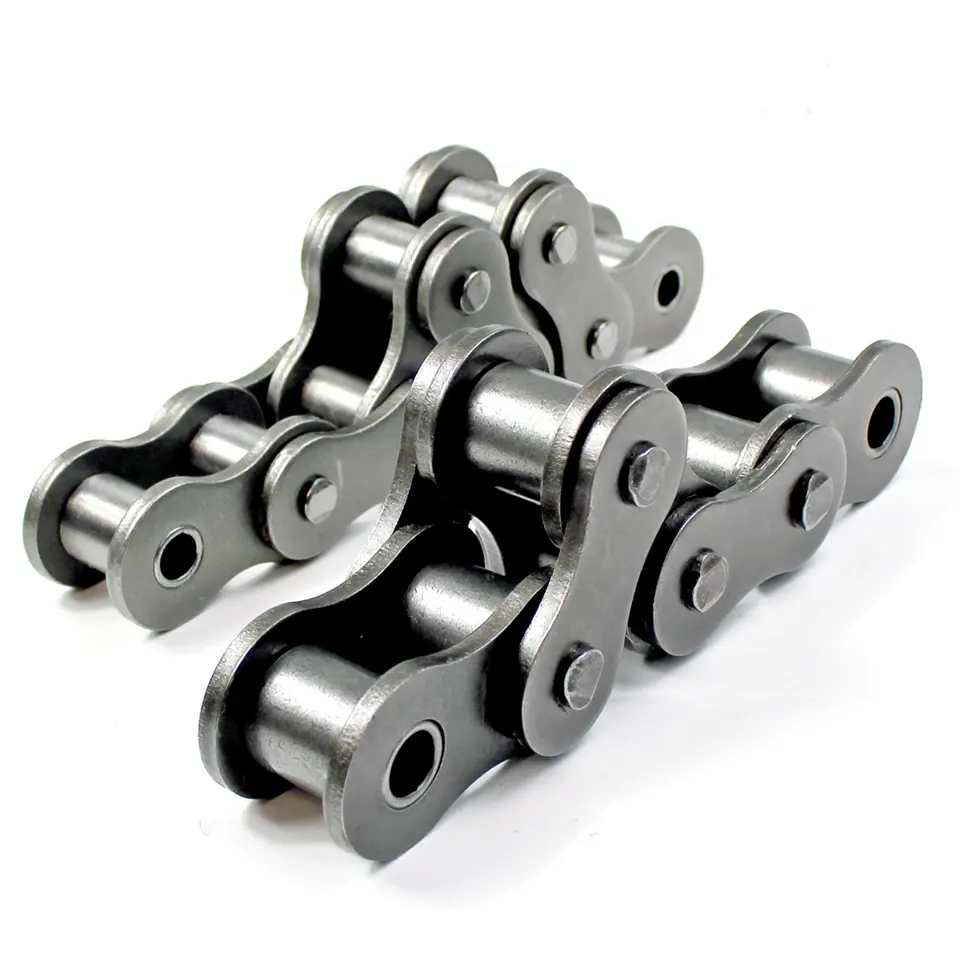
How does the weight of a transmission chain impact its installation and operation?
The weight of a transmission chain plays a significant role in its installation and operation. Here’s a detailed answer to the question:
1. Installation Process: The weight of a transmission chain can affect the ease and complexity of the installation process. Heavier chains may require additional manpower or equipment to lift and position them accurately. Installers need to consider the weight of the chain during handling and ensure proper safety measures are in place to prevent injuries or accidents.
2. System Design: The weight of the chain is a crucial factor in the overall design of the transmission system. It influences the selection of other components such as sprockets, bearings, and shafts. The system needs to be designed to handle the weight of the chain and transmit power effectively without excessive strain or wear.
3. Power Transmission Efficiency: The weight of the chain affects the overall mass of the system. Excessive weight can increase inertia and result in higher energy requirements for acceleration and deceleration. This can impact the efficiency of power transmission and result in increased energy consumption. It is important to strike a balance between chain weight and system performance to optimize energy efficiency.
4. Load Capacity: The weight of the chain is directly related to its load-carrying capacity. Heavier chains are typically designed to handle higher loads and transmit greater amounts of power. It is essential to choose a chain with an appropriate weight and load capacity that matches the requirements of the application to ensure safe and reliable operation.
5. Wear and Fatigue: The weight of the chain can contribute to wear and fatigue over time. Excessive weight or overloading can accelerate the wear process, leading to premature failure of the chain. Proper maintenance, lubrication, and regular inspection are necessary to mitigate the effects of wear and ensure the longevity of the chain.
6. Noise and Vibration: The weight of the chain can influence the noise and vibration levels during operation. Heavier chains may generate more noise and vibration, especially at higher speeds. Proper tensioning, alignment, and lubrication help minimize these effects and maintain smooth and quiet operation.
When considering the weight of a transmission chain, it is essential to balance factors such as installation requirements, system design, power transmission efficiency, load capacity, wear and fatigue, and noise and vibration levels. Selecting the right chain weight for the specific application ensures optimal performance, longevity, and overall system reliability.
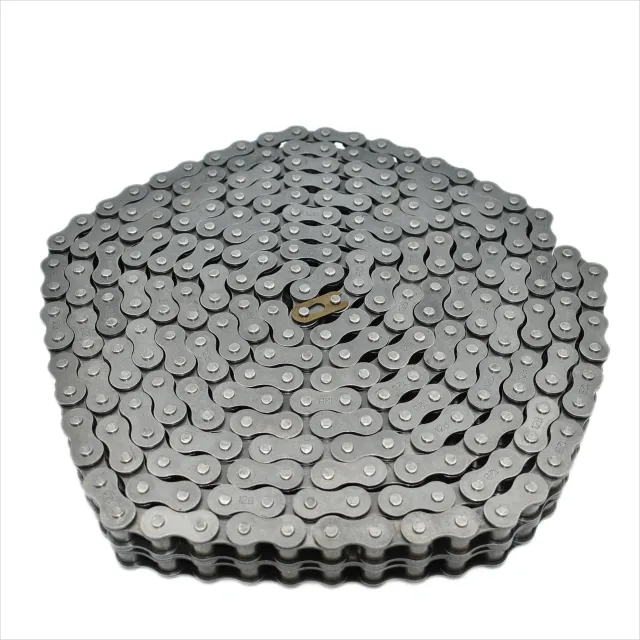
Can transmission chains be used in agricultural machinery?
Yes, transmission chains are commonly used in various types of agricultural machinery. Here’s a detailed answer to the question:
Agricultural machinery often requires reliable and efficient power transmission to perform tasks such as harvesting, planting, tilling, and transporting. Transmission chains offer several advantages that make them suitable for agricultural applications:
1. High Strength and Load Capacity: Agricultural machinery often operates in demanding conditions and handles heavy loads. Transmission chains are designed to have high tensile strength and load-carrying capacity, making them capable of withstanding the rigorous demands of agricultural tasks.
2. Versatility: Transmission chains can be used in different agricultural machinery types, including tractors, combines, balers, harvesters, and sprayers. They are adaptable to a wide range of power transmission requirements, including transmitting torque, speed, and motion.
3. Durability: Agricultural environments can be harsh, with exposure to dirt, debris, moisture, and variable weather conditions. Transmission chains are built to withstand such conditions, and their robust construction and materials ensure long-lasting performance in agricultural machinery.
4. Easy Maintenance: Agricultural operations often involve extended working hours and remote locations. Transmission chains are relatively easy to inspect, lubricate, and maintain, allowing for efficient maintenance schedules in the field.
5. Cost-Effective: Compared to other power transmission options, transmission chains offer a cost-effective solution for agricultural machinery. They provide reliable power transfer, have a long service life when properly maintained, and are available at competitive prices.
When using transmission chains in agricultural machinery, it is essential to select the appropriate chain type and size based on the specific requirements of the equipment. Factors such as load capacity, speed, operating environment, and maintenance considerations should be taken into account to ensure optimal performance and longevity of the transmission chain.
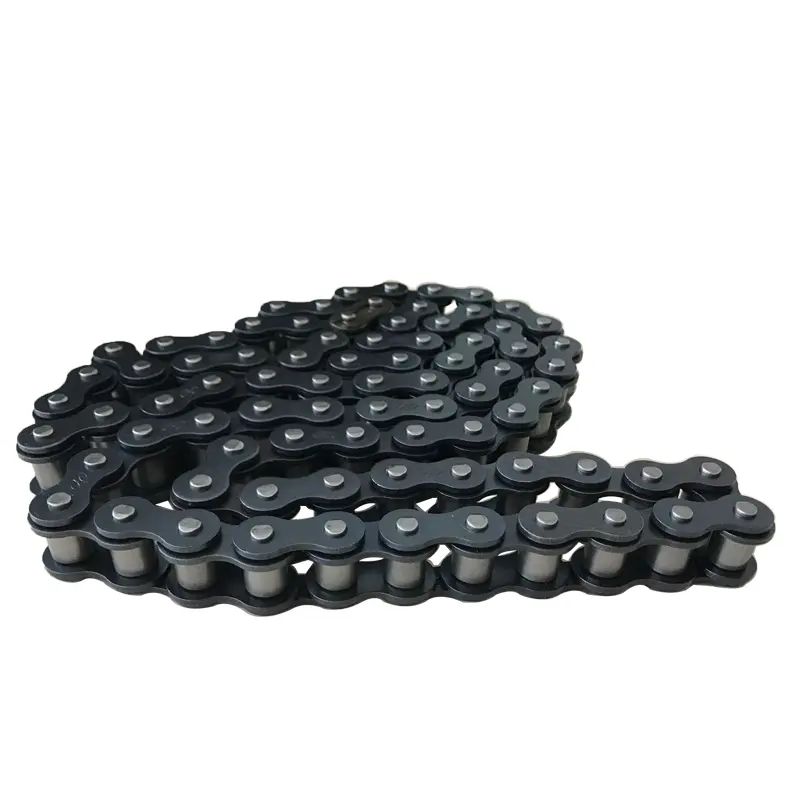
What is a transmission chain and how does it work?
A transmission chain is a type of mechanical chain used to transmit power between two or more rotating shafts. It consists of a series of interconnected links that engage with toothed sprockets to transfer motion and torque.
In a typical transmission chain system, the chain wraps around two or more sprockets, with one sprocket connected to the input shaft and the other(s) connected to the output shaft(s). As the input shaft rotates, the chain moves along the sprockets, causing the output shaft(s) to rotate at the same speed or different speeds depending on the sprocket sizes.
The functioning of a transmission chain relies on the principle of mechanical power transmission through interlocking links and the engagement between the chain and the sprocket teeth. The chain’s links are designed to fit precisely with the sprocket teeth, ensuring a positive and reliable transfer of power.
As the chain engages with the sprockets, the teeth on the sprockets push against the chain’s rollers or pins, causing the chain to move. This movement transfers rotational motion and torque from the input shaft to the output shaft(s), enabling the transmission of power and facilitating various mechanical operations.
Transmission chains are widely used in various applications such as automotive engines, motorcycles, bicycles, industrial machinery, and power transmission systems. They are valued for their durability, efficiency, and ability to handle high loads and speeds.


editor by CX 2024-05-03