
Product Description
Welcome to visit Xihu (West Lake) Dis. CHINAMFG mechanical (chain )factory .
We produce a wide range power transmission products. Such as roller chains and leaf chains, conveyor chains, drive chains, agricultural chains .
Also we can supply all kinds of industrial sprockets, chain couplings.
Established in year of 2000. With over 20 years history of specializing in the roller chains producing. With stable and good quality. We now have gained customer’s high praise from at home and abroad.
Our manufacturing plant and workshop area is over 10000 square CHINAMFG and with staff is about 70. We are the middle scale factory in China.
Our chain quality can match with GB,DIN,ASA,ANSI,JIS standard.and have gain the ISO9001 Certificate.
Till now, except for the domestic market, we have exported many chains to USA, CANADA,COLOMBIA,BRAZIL,ARGENTINA,POLAND, ITALY,SPAIN AND SO ON.
1.Standards: ISO /DIN /ANSI/GB/JIS/ASA
2. Model: 06C-35-240, 04B-48B Simplex, Duplex, Triplex AND ACCORDING TO CUSTOMER’S REQUIREMENTS
3. Materials: Carbon steel 40Mn,# 10 FOR THE ROLLER AND BUSH,40CR FOR THE PIN
4. All spare parts of chains are heat treated(quenching and tempering) and controlled in a reasonable tolerance range and suitable for the industry standard.
5. Tensile strength: more higher than the standard about 15%
6. Certificate of Quality: ISO 9001
7. Good lubrication with excellent grease.
8. Color: Self color and shot peen.
9.Can match with sprockets freely
| we are CHINAMFG chain factory from CHINA. |
| We make roller chains over 20 years. main ASA chains: — main DIN chains:06b-08b-10b-12b-16b-20b-24b-32b main motorcycle chains: H 520 520H 530 Our quality: middle level and good and stable. Follow up XIHU (WEST LAKE) DIS.HUA standard We also exported many industrial sprockets together with our chains. We mainly exported chains to South America AND Europe. |
/* January 22, 2571 19:08:37 */!function(){function s(e,r){var a,o={};try{e&&e.split(“,”).forEach(function(e,t){e&&(a=e.match(/(.*?):(.*)$/))&&1
| Standard or Nonstandard: | Standard |
|---|---|
| Application: | Textile Machinery, Garment Machinery, Conveyer Equipment, Packaging Machinery, Electric Cars, Motorcycle, Food Machinery, Marine, Mining Equipment, Agricultural Machinery, Car |
| Surface Treatment: | Polishing |
| Structure: | Roller Chain |
| Material: | Carbon Steel |
| Type: | Short Pitch Chain |
| Samples: |
US$ 1/Meter
1 Meter(Min.Order) | |
|---|
| Customization: |
Available
| Customized Request |
|---|
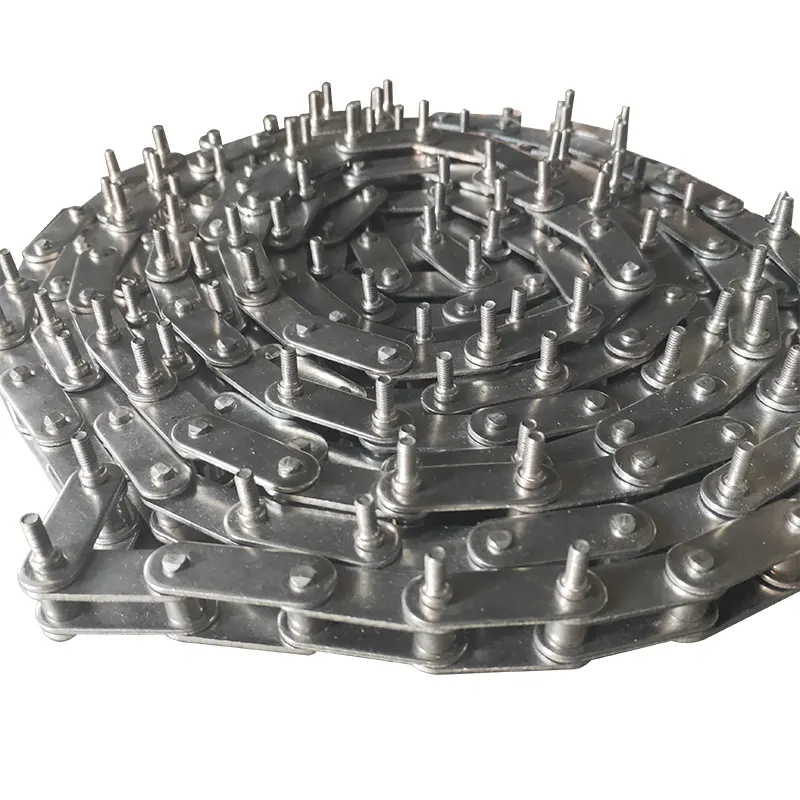
What are the benefits of using a corrosion-resistant material for a transmission chain?
Using a corrosion-resistant material for a transmission chain offers several advantages. Here’s a detailed answer to the question:
Corrosion-resistant materials, such as stainless steel or specialized coatings, provide the following benefits for transmission chains:
1. Enhanced Durability: Corrosion can significantly reduce the lifespan of a transmission chain by causing surface degradation, pitting, or rusting. By using a corrosion-resistant material, the chain’s durability is improved, allowing it to withstand exposure to harsh environments, chemicals, moisture, and temperature variations.
2. Extended Service Life: Corrosion-resistant materials help prevent or minimize the formation of rust or corrosion on the chain’s surface. This extends the chain’s service life, reducing the frequency of replacements and associated downtime and maintenance costs.
3. Reliable Performance: Corrosion can negatively impact the performance of a transmission chain by increasing friction, decreasing flexibility, and impairing the smooth engagement with sprockets or other components. Using a corrosion-resistant material ensures consistent and reliable performance, allowing the chain to operate smoothly and efficiently.
4. Reduced Maintenance: Corrosion-resistant transmission chains require less maintenance compared to chains made from non-corrosion-resistant materials. They are less prone to surface damage, require fewer lubrication intervals, and generally demand less attention to prevent deterioration. This results in reduced maintenance efforts and costs.
5. Suitable for Challenging Environments: Many industries and applications expose transmission chains to corrosive substances, moisture, humidity, or high temperatures. Using a corrosion-resistant material ensures that the chain can perform reliably in these challenging environments, such as marine, chemical processing, food processing, or outdoor applications.
6. Improved Safety: Corrosion can compromise the integrity and strength of a transmission chain, potentially leading to chain failure or unexpected equipment downtime. Utilizing a corrosion-resistant material helps maintain the chain’s structural integrity, reducing the risk of accidents, equipment failures, and associated safety hazards.
It’s important to consider the specific requirements of the application and the level of corrosion resistance needed when selecting a transmission chain material. Factors such as environmental conditions, temperature, exposure to chemicals, and industry standards should be taken into account to ensure optimal performance and longevity of the chain.
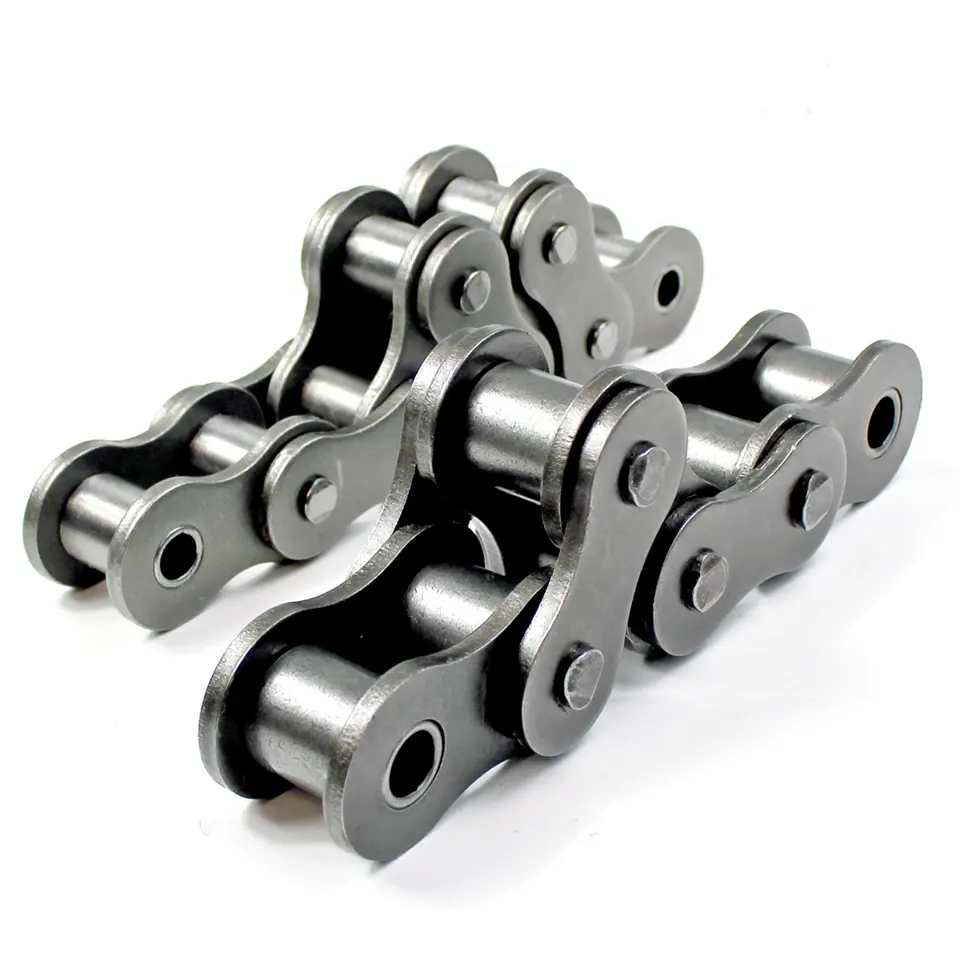
What are the advantages of using a lubrication-free transmission chain?
Using a lubrication-free transmission chain offers several benefits. Here’s a detailed answer to the question:
1. Maintenance-free Operation: Lubrication-free transmission chains eliminate the need for regular lubrication and maintenance. This saves time, reduces maintenance costs, and minimizes downtime associated with lubrication tasks.
2. Clean and Environmentally Friendly: Lubrication-free chains operate without the need for external lubricants, which eliminates the risk of oil or grease contamination in the surrounding environment. This is particularly advantageous in applications where cleanliness is crucial, such as in food processing, pharmaceutical, or cleanroom environments.
3. Reduced Friction and Wear: Lubrication-free chains are designed with self-lubricating materials or coatings that offer low friction and excellent wear resistance. These chains are specifically engineered to provide long-lasting performance without the need for external lubrication. The reduced friction and wear contribute to extended chain life and improved efficiency.
4. Enhanced Reliability: Lubrication-free transmission chains provide consistent and reliable performance, as they are not dependent on external lubrication that can deteriorate or deplete over time. They are designed to withstand various operating conditions and maintain their performance even in the absence of lubrication.
5. Wide Range of Applications: Lubrication-free transmission chains are suitable for a wide range of applications across different industries. They are commonly used in industries such as food and beverage, packaging, medical equipment, textile, and electronics, where lubrication may not be feasible or desirable.
6. Improved Cleanliness and Safety: Lubrication-free chains contribute to a cleaner working environment by eliminating the risk of oil or grease leaks. This enhances workplace safety, reduces the potential for slip hazards, and ensures compliance with stringent cleanliness standards.
It’s important to note that lubrication-free chains are designed and manufactured using specialized materials and coatings to provide the necessary self-lubricating properties. It’s essential to choose the appropriate lubrication-free chain based on the specific application requirements and operating conditions.
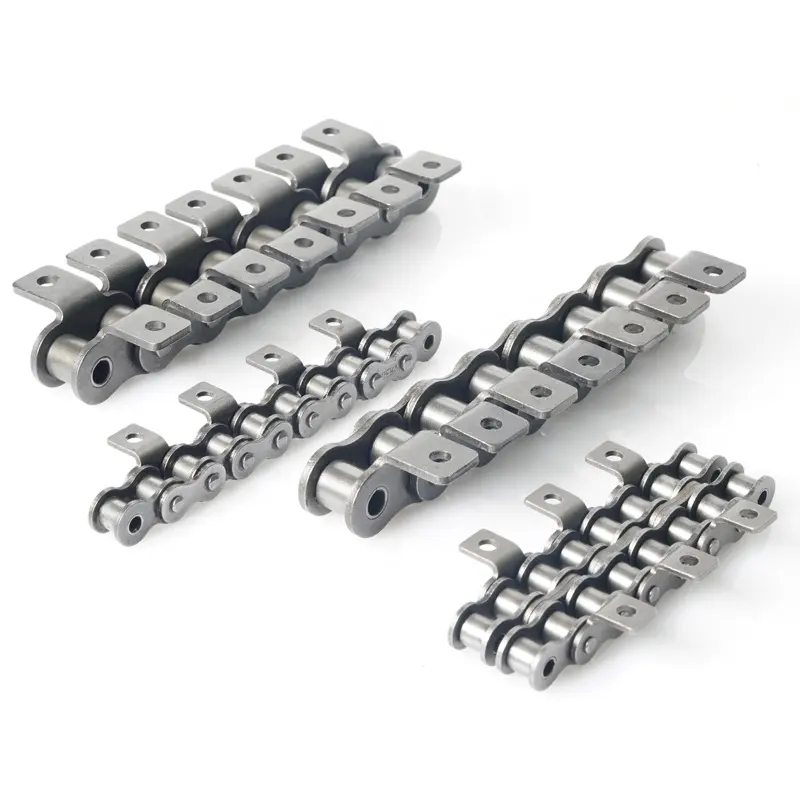
What are the main differences between standard and heavy-duty transmission chains?
Standard and heavy-duty transmission chains are designed to meet different load and performance requirements. Here are the main differences between these two types:
- Load Capacity: Heavy-duty transmission chains are built to handle higher loads and provide greater strength compared to standard chains. They are designed to withstand heavier and more demanding applications.
- Construction: Heavy-duty transmission chains are typically constructed with thicker plates, larger pins, and stronger components to enhance their durability and load-carrying capacity.
- Size: Heavy-duty transmission chains are often larger in size compared to standard chains to accommodate the increased load requirements.
- Weight: Due to their robust construction, heavy-duty transmission chains tend to be heavier than standard chains.
- Durability: Heavy-duty chains are engineered to have greater wear resistance, fatigue resistance, and overall durability to withstand harsh operating conditions and prolonged usage.
- Applications: Standard transmission chains are suitable for lighter-duty applications where moderate loads are involved, such as light machinery, conveyors, and small equipment. Heavy-duty transmission chains, on the other hand, are designed for heavy machinery, industrial equipment, mining applications, and other demanding environments.
It’s important to consider the specific requirements of your application, including load capacity, operating conditions, and expected lifespan, to determine whether a standard or heavy-duty transmission chain is the right choice.


editor by CX 2024-05-13