
Product Description
Harvester Chains of Carton Steel (415S)
PRODUCT SHOW
PRODUCT DETAILS
Product Parameters
| Standard | GB, ISO, ANSI, DIN |
| Type | Standard A and standard B precision roller chain, conveyor chain; |
| special chain with accessories, welding chain, leaf chain and sprocket | |
| ANSI chain No. | 40,50,60,80,100,120,140,160,180,200,240; |
| C40,C50,C60,C80,C100,C120,C140,C160; | |
| DIN/ISO chain No. | 08A,10A,12A,16A,20A,24A,28A,32A,36A,40A,48A; |
| C08A,C10A,C12A,C16A,C20A,C24A,C28A,C32A; | |
| Application | Food processing, pharmaceutical and chemical industries, electronics, machinery; |
| household appliances, automotive manufacturing, metallurgy, sewage treatment | |
| Series | A series, B series |
More Products
Advantage
Certifications
DETAILS ABOUT CHINAMFG CHAIN
Exhibition
Workshop
Application
Packaging Details
Shipping
FAQ
1. Are you a manufacturer or trade Company?
We are a factory founded in 1997 with a trade team for international service.
2. What terms of payment do you usually use?
T/T 30% deposit and 70% against document, Western Union, L/C at sight
3. What is your lead time for your goods?
Normally 35 days after confirmed order. 30 days could be available in the low season for some items (during May to July), and 45 days during the new year and hot season ( Jan to March).
4. Samples
For customers who need sample confirmation before ordering, please bear in mind that the following policy will be adopted:
1) All samples are free of charge with a maximum value not exceeding USD 100.
2) The courier cost for the first-time sample sending will be charged by the consignee. We will send the samples with freight to be collected. So please inform your account with FedEx, UPS, DHL, or TNT so that we can proceed promptly.
3) The first-time courier cost will be totally deducted from the contract value of the trial cooperation.
| Usage: | Transmission Chain, Conveyor Chain, Agricultural Machine |
|---|---|
| Material: | Alloy/Carbon Steel |
| Surface Treatment: | Polishing |
| Feature: | Heat Resistant |
| Chain Size: | All Sizes |
| Structure: | Agricultural Machine |
| Customization: |
Available
| Customized Request |
|---|
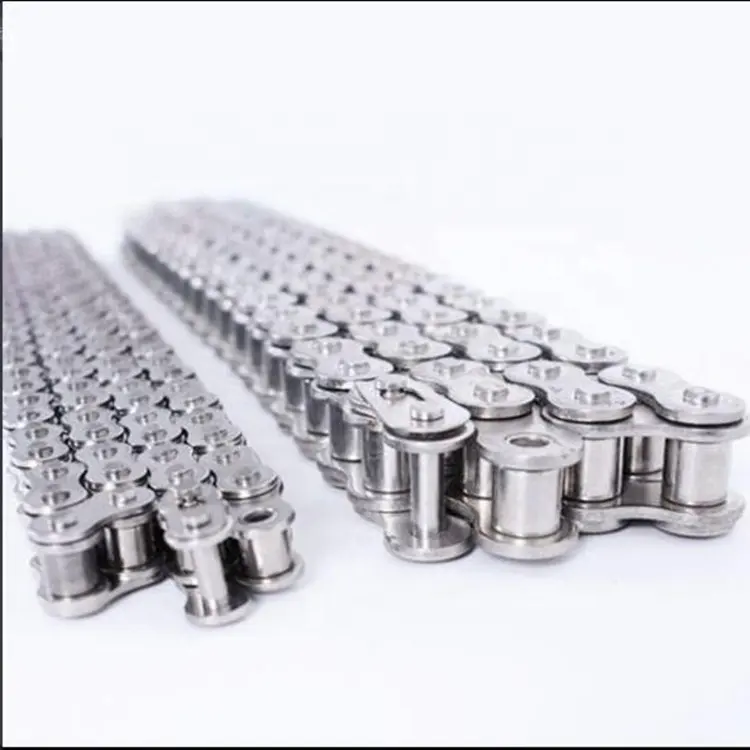
How does the choice of chain lubricant affect the maintenance requirements?
The choice of chain lubricant has a significant impact on the maintenance requirements of a transmission chain. Here’s a detailed answer to the question:
1. Lubrication Interval: Different chain lubricants have varying properties, including their ability to withstand high temperatures, resist contamination, and provide long-lasting lubrication. The right choice of lubricant can extend the lubrication interval, reducing the frequency of lubrication and, consequently, the maintenance requirements.
2. Wear Protection: The primary function of chain lubrication is to reduce friction and wear between the chain components. The selection of a high-quality lubricant with excellent wear protection properties can significantly extend the chain’s lifespan and reduce the need for frequent replacements or repairs.
3. Contamination Resistance: Some chain lubricants are specifically formulated to resist contaminants such as dust, dirt, or water. Using a lubricant with superior contamination resistance can help maintain optimal chain performance and reduce the risk of premature wear or failure due to the presence of contaminants. This, in turn, reduces the maintenance requirements associated with cleaning and removing contaminants from the chain.
4. Corrosion Prevention: In applications where the chain is exposed to corrosive environments, selecting a chain lubricant with corrosion prevention properties is crucial. Such lubricants form a protective film that helps shield the chain from moisture, chemicals, and other corrosive agents. By using a corrosion-resistant lubricant, the maintenance requirements related to combating corrosion are minimized.
5. Temperature Stability: The operating temperature of a transmission chain can significantly impact its performance and maintenance requirements. Choosing a chain lubricant with excellent temperature stability ensures that the lubricant maintains its viscosity and protective properties even under high temperatures. This reduces the need for frequent lubricant replacements due to thermal degradation.
6. Environmental Considerations: Some applications may have specific environmental regulations or requirements. Choosing a chain lubricant that is environmentally friendly, biodegradable, or compliant with certain standards can simplify maintenance procedures and ensure compliance with regulations.
It’s essential to consult the manufacturer’s recommendations and guidelines when selecting the appropriate chain lubricant for a specific application. Consideration should be given to factors such as operating conditions, load, speed, temperature range, and environmental factors to ensure optimal lubrication and minimize maintenance requirements.
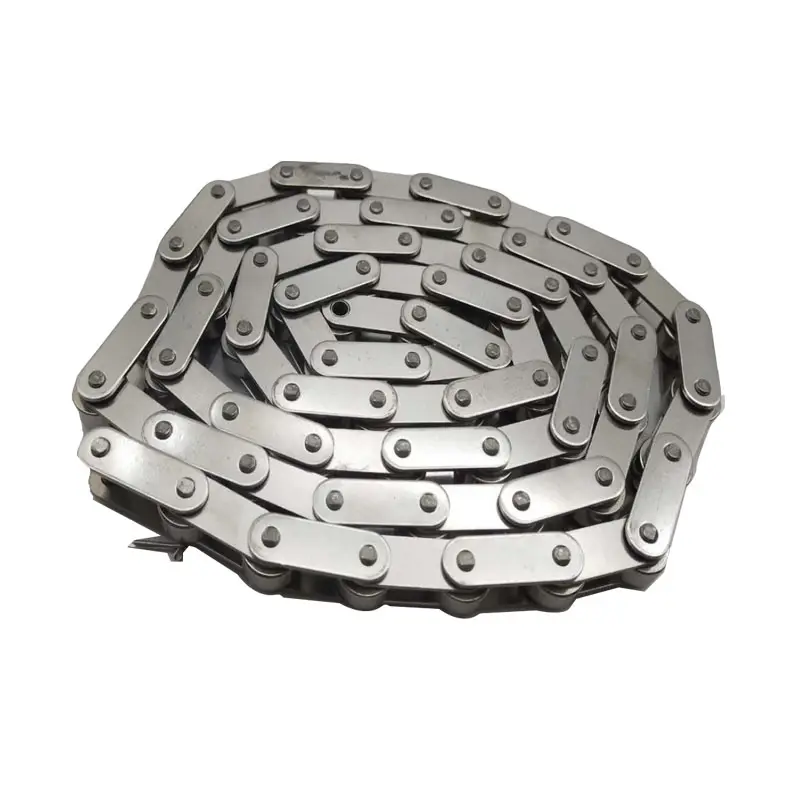
What are the benefits of using a lightweight transmission chain?
Using a lightweight transmission chain offers several advantages. Here’s a detailed answer to the question:
1. Improved Efficiency: A lightweight transmission chain reduces the overall weight of the system, resulting in improved energy efficiency. With less mass to move, the power required to drive the chain is reduced, leading to lower energy consumption.
2. Increased Power-to-Weight Ratio: The lightweight nature of the chain allows for a higher power-to-weight ratio. This means that a smaller, lighter chain can transmit the same amount of power as a heavier chain, making it suitable for applications where weight reduction is crucial, such as in portable or handheld equipment.
3. Reduced Inertia: The lower weight of the transmission chain reduces the inertia of the system. This enables faster acceleration and deceleration, resulting in improved response times and better overall performance in dynamic applications.
4. Easier Handling and Installation: Lightweight transmission chains are easier to handle and install compared to heavier chains. They require less effort and manpower during installation or maintenance activities, making them more convenient and time-saving.
5. Lower Wear and Tear: The reduced weight of the chain contributes to lower wear and tear on other components of the system, such as sprockets, bearings, and shafts. This can extend the lifespan of these components and reduce the frequency of maintenance and replacement.
6. Cost Savings: Using a lightweight transmission chain can result in cost savings in several ways. The reduced energy consumption leads to lower operating costs, and the lighter weight may allow for the use of smaller and less expensive supporting components.
It’s important to note that the choice of a lightweight transmission chain should be based on the specific application requirements. Factors such as load capacity, speed, operating environment, and compatibility with other system components should be considered to ensure that the lightweight chain meets the performance and durability needs of the application.

What are the key components of a transmission chain?
A transmission chain consists of several key components that work together to transmit power and motion efficiently. The main components of a transmission chain include:
- Inner Plates: These are flat metal plates with holes or slots for connecting the other components of the chain.
- Outer Plates: Similar to inner plates, outer plates provide additional strength and support to the chain.
- Pins: The pins hold the inner and outer plates together, creating a flexible link between them. They play a crucial role in maintaining the integrity and functionality of the chain.
- Bushings: Bushings are cylindrical components that fit into the holes of the inner and outer plates. They provide a smooth surface for the chain to rotate around the pins.
- Rollers: Rollers are cylindrical elements that fit between the inner plates and the bushings. They reduce friction and enable smooth movement as the chain engages with the sprockets.
- Solid Bushings (optional): In some transmission chains, solid bushings may be used instead of bushings with holes. Solid bushings provide additional strength and stability to the chain.
- Sprockets: Sprockets are toothed wheels that engage with the rollers of the transmission chain. They transfer power and motion to the chain, enabling it to drive various machinery and equipment.
These components work together to form a continuous loop that transmits power from the driving sprocket to the driven sprocket, allowing the chain to transfer rotational motion and drive various mechanical systems.


editor by CX 2023-12-06