Product Description
Yuchen power tramsmission offer all the sprocket
Product Description
1. American Standard, European Standard, Japanese Standard
2. Pilot bore, finished bore, taper bore and special bore available
3. Bright surface and high precision
4. Advanced heat treatment and surface treatment crafts
5. Better quality and competitive price.
6. Material C45(1045), low carbon steel, 40Cr, 20CrMnTi, stainless steel such as SS316L, SS316, SS304, SS420, copper etc. available
7. Standard sea worthy package to Europe and American
8. High speed digital gear hobbing machines to guarantee the teeths quality
9. Corrosion resistance treatment available
10. Control on tolerance and easy to install
11. Good material and good treatment to make sure long life span
12. OEM/ODM welcome
Product show
Manufacture process
| Business type | Manufacturer & Exporter |
| Main export market | Europe, North and South America, Southeast Asia, Oceania, Middle East, Africa |
| Material | C45, low carbon steel, 40Cr, cast iron, stainless steel, copper etc |
| Manufacturing method | Forged and then machined, hobbed, if need can also weld |
| Heat treatment | High frequency quenching and so on |
| Surface treatment | Oxide black, Galvanized, Nickel plated, Chrome plated, Sandblasting, Painted and so on |
| Model | Type A & Type B, Single, Double, Triple – 35B10-80,40B9-90,50B9-90,60B9-90,80B9-90,100B9-90,120B9-80,140B10-60,160B10-60;06B10-125,08B9-125,10B9-125,12B9-125,16B9-125,20B9-114,24B9-90,28B9-76,32B9-76, and other sprocket to fit with conveyor chain, transmission chain |
| Packing | Plywood Case/Pallet |
FAQ
Q1. What is your terms of packing?
A: Generally, we pack our goods in single color box. If you have special request about packing, pls negotiate with us in advance, we can pack the goods as your request.
Q2. What is your terms of payment?
A: T/T 30% as deposit, and 70% before delivery. We’ll show you the photos of the products and packages
before you pay the balance. Other payments terms, pls negotiate with us in advance, we can discuss.
Q3. What is your terms of delivery?
A: EXW, FOB, CFR, CIF.
Q4. How about your delivery time?
A: Generally, it will take 25 to 30 days after receiving your advance payment. The specific delivery time depends
on the items and the quantity of your order.
Q5. Can you produce according to the samples?
A: Yes, we can produce by your samples or technical drawings. We can build the molds and fixtures.
Q6. What is your sample policy?
A: We can supply the sample if we have ready parts in stock, but the customers have to pay the sample cost and
the courier cost.We welcome sample order.
Q7. Do you test all your goods before delivery?
A: Yes, we have 100% test before delivery
Q8: How do you make our business long-term and good relationship?
1. We keep good quality and competitive price to ensure our customers benefit ;
2. We respect every customer as our friend and we sincerely do business and make friends with them,
no matter where they come from.
| Standard or Nonstandard: | Nonstandard |
|---|---|
| Feature: | Flame-Retardant, Anti-Static, Oil-Resistant, Cold-Resistant, Corrosion-Resistant, Heat-Resistant, Alkali-Resistant, Skid-Resistance, Wear-Resistant, Acid-Resistant, High Temperature-Resistance |
| Application: | Textile Machinery, Garment Machinery, Conveyer Equipment, Packaging Machinery, Electric Cars, Motorcycle, Food Machinery, Marine, Mining Equipment, Agricultural Machinery, Car |
| Surface Treatment: | Zinc Plating |
| Material: | Carbon Steel |
| Transport Package: | Non-Fumigation |
| Samples: |
US$ 1/Piece
1 Piece(Min.Order) | |
|---|
| Customization: |
Available
| Customized Request |
|---|
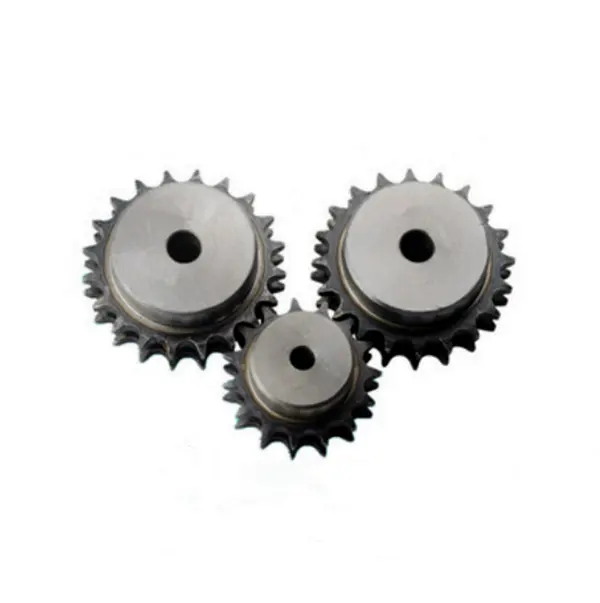
Ensuring Proper Alignment between a Wheel and its Corresponding Sprocket
Proper alignment between a wheel and its corresponding sprocket is crucial for the smooth and efficient operation of the wheel sprocket system. Misalignment can lead to increased wear, noise, and reduced performance. Here are some steps to ensure proper alignment:
- Use Precision Components: Ensure that both the wheel sprocket are high-quality, precision-manufactured components that meet the required specifications. Using well-machined components will aid in achieving better alignment.
- Check Axle Alignment: Make sure the axle or shaft on which the wheel sprocket are mounted is straight and properly aligned. Any misalignment in the axle can lead to misalignment of the wheel sprocket.
- Proper Mounting: Ensure that the wheel sprocket are securely and correctly mounted on the axle or shaft. Use appropriate fasteners and tightening techniques to prevent any movement or shifting during operation.
- Check for Parallelism: The axes of the wheel sprocket should be parallel to each other. Measure the distance between the axes at multiple points to verify parallel alignment.
- Use Alignment Tools: Alignment tools, such as laser alignment systems, can be employed to accurately align the wheel sprocket. These tools can help identify and correct misalignments effectively.
- Check Tension and Tensioner Alignment: If a tensioner is used in the system, ensure that it is properly aligned and applying the right tension to the chain or belt. Incorrect tension can cause misalignment.
- Regular Maintenance: Implement a regular maintenance schedule to check and adjust alignment as needed. Regular inspections can help identify and address alignment issues before they cause significant problems.
- Monitor Performance: Keep an eye on the performance of the wheel sprocket system. Unusual noises, vibrations, or signs of wear can indicate misalignment and should be investigated promptly.
Proper alignment is essential for the long-term performance and reliability of the wheel sprocket system. By following these steps and conducting regular maintenance, you can ensure that the wheel sprocket work together harmoniously, providing efficient power transmission and minimizing wear and tear.
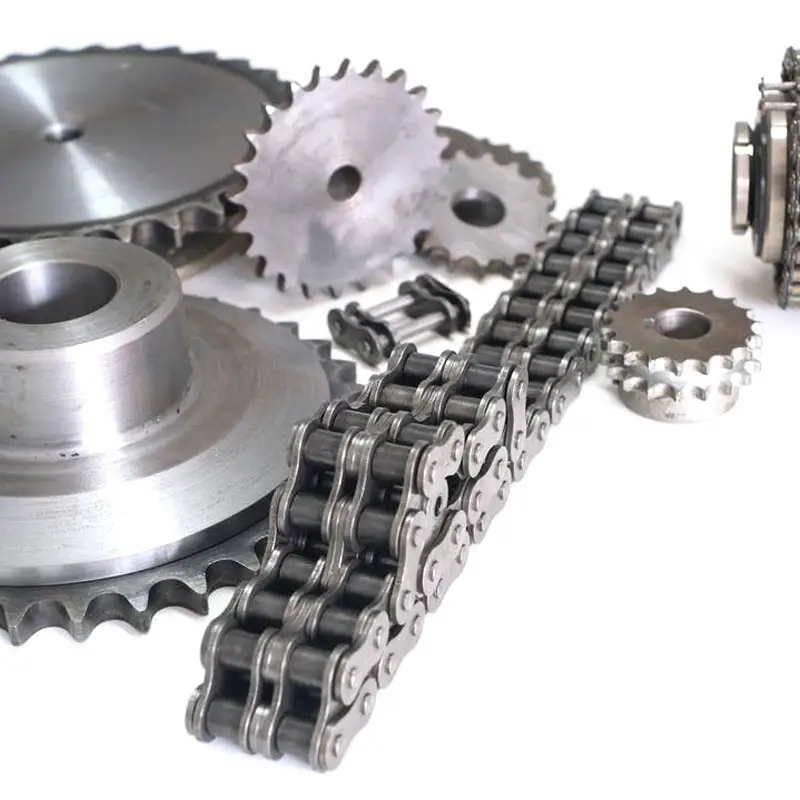
Using a Belt Sprocket in Place of a Chain Sprocket with a Wheel
Yes, in many cases, a belt sprocket can be used in place of a chain sprocket with a wheel, provided that the system is designed to accommodate the change.
Both chain sprockets and belt sprockets serve the same fundamental purpose of transferring rotational motion and power between the wheel and the driven component. However, there are some important considerations to keep in mind when replacing a chain sprocket with a belt sprocket:
- Alignment: Belt sprockets and chain sprockets must be aligned properly with the wheel to ensure smooth and efficient power transmission. Any misalignment can cause premature wear and reduce the system’s overall performance.
- Tension: Chain-driven systems require specific tension to prevent slack and maintain proper engagement between the sprockets and the chain. Belt-driven systems, on the other hand, require appropriate tension to prevent slippage. Ensuring the correct tension for the specific type of sprocket is crucial for reliable operation.
- Load Capacity: Consider the load capacity and torque requirements of the system when selecting a belt sprocket. Belt sprockets may have different load-carrying capabilities compared to chain sprockets, and using the wrong type can lead to premature wear or failure.
- Speed and RPM: Belt-driven systems may have different operating speeds and RPM limits compared to chain-driven systems. Ensure that the selected belt sprocket can handle the desired rotational speed without exceeding its design limitations.
- System Design: Changing from a chain-driven system to a belt-driven system (or vice versa) may require modifications to the overall system design, including the size of the sprockets and the layout of the system. Consult with an engineer or a qualified professional to ensure that the replacement is appropriate and safe.
Overall, replacing a chain sprocket with a belt sprocket can be a viable option in certain applications. However, it’s essential to consider the factors mentioned above and evaluate the compatibility of the new sprocket with the existing system to achieve optimal performance and longevity.
Types of Sprockets Used with Wheels
In mechanical systems, sprockets are toothed wheels that mesh with a chain or a belt to transmit rotational motion and power. There are several types of sprockets used with wheels, each designed for specific applications:
1. Roller Chain Sprockets:
These are the most common type of sprockets used with wheels and are designed to work with roller chains. Roller chain sprockets have teeth that match the profile of the chain’s rollers, ensuring smooth engagement and reducing wear on both the sprocket and the chain. They are widely used in bicycles, motorcycles, and industrial machinery.
2. Silent Chain Sprockets:
Also known as inverted-tooth chain sprockets, these sprockets are designed to work with silent chains. Silent chains are toothed chains that run quietly and smoothly, making them ideal for applications where noise reduction is essential, such as timing drives in engines and automotive systems.
3. Timing Belt Sprockets:
Timing belt sprockets are used with timing belts to ensure precise synchronization between the crankshaft and camshaft in internal combustion engines. They have specially designed teeth that fit the profile of the timing belt, allowing for accurate timing and smooth motion.
4. Idler Sprockets:
Idler sprockets are used to guide and tension chains or belts in a system. They do not transmit power themselves but play a crucial role in maintaining proper tension and alignment, which is essential for efficient power transmission and to prevent chain or belt slack.
5. Weld-On Sprockets:
Weld-on sprockets are designed to be welded directly onto a wheel hub or shaft, providing a secure and permanent attachment. They are commonly used in industrial machinery and equipment.
6. Double-Single Sprockets:
Double-single sprockets, also known as duplex sprockets, have two sets of teeth on one sprocket body. They are used when two separate chains need to be driven at the same speed and with the same sprocket ratio, often found in heavy-duty applications and conveyor systems.
7. Taper-Lock Sprockets:
Taper-lock sprockets are designed with a taper and keyway to provide a secure and easy-to-install connection to the shaft. They are widely used in power transmission systems, where sprocket positioning and removal are frequent.
Each type of sprocket is selected based on the specific application’s requirements, chain or belt type, and the desired performance characteristics. Proper selection and maintenance of sprockets are essential for ensuring efficient power transmission and extending the life of the entire system.


editor by CX 2023-12-07