Product Description
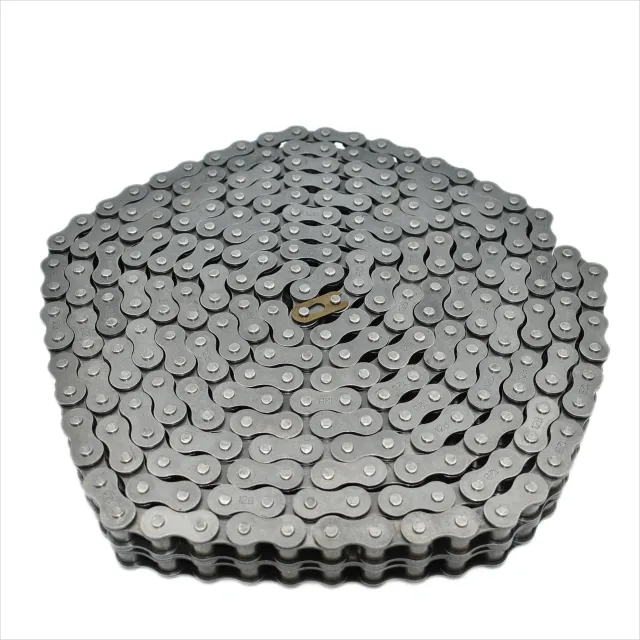
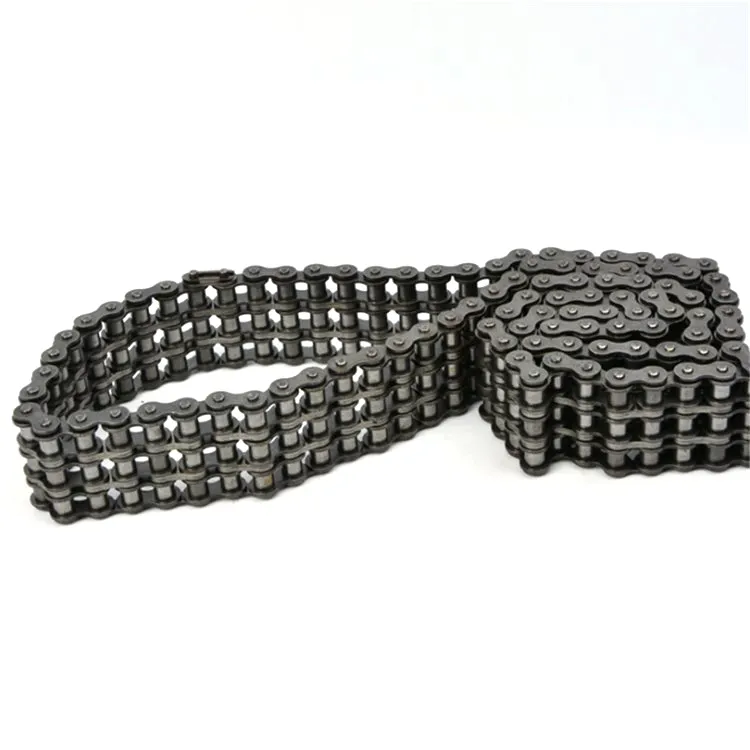
Duplex Short Pitch Precision Conveyor Roller Chain Transmission Chain (DIN764)
SHORT PITCH PRECISSION ROLLER CHAINS (B SERIES)
Material: Alloy Steel
Surface Treatment: Shot Peening / Blacking / Blueing
Main Application: Idustry machinery
ANSI CHAIN NO.: 05B-2 06B-2 10B-2 12B-2 16B-2 20B-2 24B-2 28B-2 32B-2 40B-2 48B-2 56B-2 72B-2
Pitch:8 9.525 12.7 15.875 19.05 25.4 31.75 38.1 44.45 50.8 63.5 76.2 88.9 101.6 114.3
| Product name | Duplex Short Pitch Precision Roller Chain (B series) Chain (DIN764) |
| Materials Available | 1. Stainless Steel: SS201, SS303, SS304, SS316, SS416, SS420 |
| 2. Steel:C45(K1045), C46(K1046),C20 | |
| 3. Brass:C36000 ( C26800), C37700 ( HPb59), C38500( HPb58), C27200(CuZn37), C28000(CuZn40) | |
| 4. Bronze: C51000, C52100, C54400, etc | |
| 5. Iron: 1213, 12L14,1215 | |
| 6. Aluminum: Al6061, Al6063 | |
| 7.OEM according to your request | |
| Surface Treatment | Annealing, natural anodization, heat treatment, polishing, nickel plating, chrome plating, znic plating,yellow passivation, gold passivation, satin, Black surface painted etc. |
| Products Available | sprockt chains, pulley, shafts(axles, spline shafts, dart shafts),gears (pinions, wheels gear rack) bearing, bearing seat, bushing, coupling, lock assembly etc. |
| Processing Method | CNC machining, punch,turning, milling, drilling, grinding, broaching, welding and assembly |
| QC : | Technicians self-check in production,final-check before package by professional Quality inspector |
| Size | Drawings |
| Package | Wooden Case/Container and pallet, or as per customized specifications |
| Certificate | ISO9001:2008 , ISO14001:2001,ISO/TS 16949:2009 |
| Advantage | Quality first Service superior , Advanced equipment,Experienced workers,Perfect testing equipment |
| Lead Time | 15-25days samples. 30-45days offcial order |
1. Are you manufacturer or trade Company?
We are a factory founded in 1991 with trade team for international service.
2. What terms of payment you usually use?
T/T 30% deposit and 70% against document, Western Union, L/C at sight
3. what is your lead time for your goods?
Normally 45 days after confirmed order. 30 days could be available in low season for some items (during May to July), and 65 days during new year and hot season ( Jan to March).
4. Do you attend any Show?
We attend Hannover show in Germany, NMW in Austrilia, Canton fair, PTC, in China and many other special furniture shows.
/* January 22, 2571 19:08:37 */!function(){function s(e,r){var a,o={};try{e&&e.split(“,”).forEach(function(e,t){e&&(a=e.match(/(.*?):(.*)$/))&&1
| Usage: | Transmission Chain |
|---|---|
| Material: | Alloy/Carbon Steel |
| Surface Treatment: | Polishing |
| Feature: | Heat Resistant |
| Chain Size: | 1/2"*3/32" |
| Structure: | Roller Chain |
| Customization: |
Available
| Customized Request |
|---|
How does the choice of chain coating impact the performance of a transmission chain?
The choice of chain coating can significantly influence the performance and durability of a transmission chain. Here’s a detailed answer to the question:
1. Corrosion Resistance: Chain coatings, such as zinc plating or polymer coatings, provide a protective layer that prevents the transmission chain from corroding when exposed to moisture, chemicals, or harsh environments. Corrosion can weaken the chain, leading to premature failure and reduced performance. A proper chain coating can extend the chain’s lifespan and maintain its functionality.
2. Wear Resistance: Some chain coatings, such as those with specialized polymers or ceramic particles, offer enhanced wear resistance. These coatings reduce the friction and abrasion between the chain and the sprockets, minimizing wear on the chain’s pins, bushings, and rollers. By reducing wear, the chain’s performance and longevity are improved, resulting in less frequent replacements and lower maintenance costs.
3. Reduced Friction and Energy Loss: Certain chain coatings are designed to reduce friction between the chain and the sprockets, resulting in smoother operation and improved energy efficiency. The reduced friction leads to lower energy loss during power transmission, which is especially beneficial in applications where energy savings are a priority.
4. Noise Reduction: Some chain coatings incorporate noise-dampening properties, which can help reduce the noise generated during chain operation. This is particularly advantageous in applications where noise reduction is essential, such as in residential or office settings, or in machinery that requires quiet operation.
5. Compatibility with Lubricants: The choice of chain coating should be compatible with the lubricants used in the application. Certain coatings have self-lubricating properties, allowing for reduced reliance on external lubrication. In contrast, other coatings may require specific lubricants to ensure optimal performance and longevity of the chain.
6. Environmental Considerations: Depending on the application, there may be specific environmental regulations or requirements to consider. Chain coatings that are environmentally friendly, such as those free of harmful substances or compliant with specific industry standards, can help meet these requirements and ensure sustainable operation.
It’s important to select the appropriate chain coating based on the specific application’s demands, including environmental conditions, load capacity, operating speed, and lubrication requirements. Consulting with experts or manufacturers can help determine the most suitable chain coating for optimal performance, durability, and longevity of the transmission chain.
What are the advantages of using a flame-retardant transmission chain?
Flame-retardant transmission chains offer specific benefits in certain applications where fire safety is a concern. Here’s a detailed answer to the question:
1. Fire Protection: The primary advantage of using a flame-retardant transmission chain is enhanced fire protection. These chains are designed with materials and coatings that have high resistance to ignition and flame spread. In the event of a fire, they help to minimize the risk of the chain contributing to the spread of flames.
2. Safety: Flame-retardant transmission chains contribute to overall safety in environments where fire hazards are present. By reducing the flammability of the chain, they help prevent the chain from igniting or sustaining a fire, protecting personnel and property.
3. Compliance with Fire Regulations: In industries or applications where fire safety regulations are stringent, using flame-retardant transmission chains ensures compliance with these requirements. It helps to meet the necessary standards and regulations for fire prevention and protection.
4. Extended Escape Time: In situations where personnel may need to evacuate quickly during a fire, flame-retardant transmission chains can provide valuable additional time for safe evacuation. By resisting ignition and flame propagation, they help maintain structural integrity and delay the spread of fire.
5. Property Protection: Flame-retardant transmission chains help protect valuable equipment, machinery, and assets from fire damage. By reducing the risk of the chain catching fire, they minimize the potential for equipment failure and subsequent loss or damage.
It’s important to note that flame-retardant transmission chains may have specific design considerations and limitations. They are typically used in applications where fire safety is critical, such as in transportation systems, aerospace, mining, and other industries where the risk of fire is high. Selecting the appropriate flame-retardant chain requires considering the specific requirements of the application and ensuring compliance with relevant fire safety standards and regulations.

What are the common industries or applications that use transmission chains?
Transmission chains are widely used in various industries and applications where the efficient transfer of power and motion is required. Here are some common industries and applications that rely on transmission chains:
- Automotive: Transmission chains are used in automobile engines and drivetrains to transfer power from the engine to the wheels.
- Agriculture: Transmission chains are utilized in agricultural machinery such as tractors, combines, and harvesters for power transmission in various applications like conveyor systems and agricultural equipment.
- Industrial Manufacturing: Transmission chains are found in a wide range of industrial machinery, including conveyors, material handling systems, packaging equipment, printing presses, and machine tools.
- Mining and Construction: Transmission chains are used in heavy machinery, such as excavators, bulldozers, and mining equipment, to transmit power for digging, lifting, and other operations.
- Food and Beverage: Transmission chains are employed in food processing equipment, bottling plants, and conveyor systems to move products along production lines.
- Textile: Transmission chains are utilized in textile manufacturing machinery, such as looms and spinning machines, for power transmission during the weaving and spinning processes.
- Energy and Utilities: Transmission chains are used in power generation plants, wind turbines, and other renewable energy systems for transmitting power from the source to the electrical grid.
- Material Handling: Transmission chains are commonly used in material handling equipment, including forklifts, palletizers, and automated storage systems, to transport and handle goods in warehouses and distribution centers.
- Marine: Transmission chains find applications in marine vessels, such as ship propulsion systems, anchor handling equipment, and winches for cargo handling.
These are just a few examples, and transmission chains are also utilized in various other industries and applications where reliable power transmission is essential. The specific design and characteristics of the transmission chains may vary based on the requirements of each industry and application.


editor by CX 2024-04-30