Product Description
ISO 9001 Approved Agricultural Chain
Why choose us ?
1. HangZhou Xihu (West Lake) Dis.hua Chain Group Co., Ltd established in 1991, we have 5 subsidiaries in china and also have 6 subsidiaries abroad;
2. we covering a production area of 200,100 square meters, have more than 1,800 sets of advanced equipment and over 3,100 highly skilled employees, the annual production capacity has exceeded 20,000,000 meters;
3. we specialized in producing all kinds of standard chains and special chains, such as A or B series chains, drive chains, conveyor chains, drag chains, agricultural chains, sprockets, gears and so on;
4. we have obtained ISO9001, ISO14001, ISO16969, AAA and API certificates.
5. Our partners among world top enterprises, such as JOHNDEERE, NEW HOLLAND, CLAAS, HONDA, KUBOTA, YANMAR, etc.
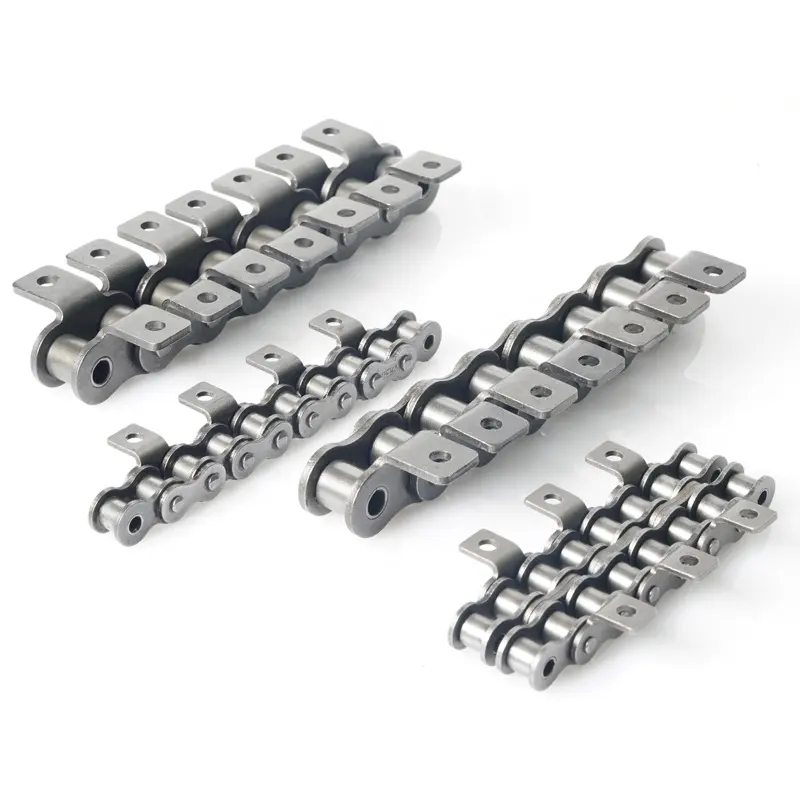
Our agricultural chains are as following items:
1. SH series high strength heavy duty short pitch roller chains
2. SP series high strength heavy duty short pitch roller chains
3. Walking tractor chains
4. Combine chains
5. ZGS38 combine chain with attachments
6. Rice harvester chains
7. Various agricultural chain with attachments
8. S type steel agricultural chains
9. S type steel agricultural chain with attachments
10. A Type steel agricultural chains
11. CA type steel agricultural chains
12. C type steel agricultural chain with attachments
13. Special agricultural chain with attachments
1) Related Products
2) Certificates
HangZhou Xihu (West Lake) Dis.hua Chain Group Co., Ltd was founded in 1 9 9 1, and now it has five wholly owned subsidiaries, one in ZheJiang province, other four in HangZhou, ZHangZhoug province, it is a professional manufacturer of chains, sprockets, tooth gears and various power transmission products.
The group has XIHU (WEST LAKE) DIS.HUA, ZIQIANG brands, is focused on producing all variety of standard roller chains and special chains, such as conveyor chain, stainless steel chain, agricultural chain. With Xihu (West Lake) Dis.hua brand registered in more than 70 countries like America, Europe, Japan, it is building long term cooperation with these world top enterprises, such as JOHNDEERE, NEW HOLLAND, CLAAS, HONDA, KUBOTA, YANMAR.
There is a technical center of province level, Xihu (West Lake) Dis.hua academician working station, experiment station for Xihu (West Lake) Dis.hua post doctors, and national hundreds of program set up in Xihu (West Lake) Dis.hua group. With these platforms and strong technical ability, the more than hundreds of Engineers and technicians have developed all variety of special high precise and high strength products, conducted mold programs for key components in the car and national industry revitalizing program.
Great attention has been paid on environmental protection and energy saving. The product well displays environmental protection and energy saving. In the year of 2 0 0 0, Xihu (West Lake) Dis.hua took the lead in gaining I S O 1 4 0 0 1 environment management certificate and thereafter passed the inspection of clean production and recycling economy, winning the title of “ZHangZhoug Green Enterprise”.
“We are always serving our customers with our best products.”
/* March 10, 2571 17:59:20 */!function(){function s(e,r){var a,o={};try{e&&e.split(“,”).forEach(function(e,t){e&&(a=e.match(/(.*?):(.*)$/))&&1
| Usage: | Transmission Chain |
|---|---|
| Material: | Alloy/Carbon Steel |
| Surface Treatment: | Oil Blooming |
| Feature: | Heat Resistant |
| Chain Size: | 1/2"*11/128" |
| Structure: | Roller Chain |
| Customization: |
Available
| Customized Request |
|---|
What are the benefits of using a corrosion-resistant transmission chain?
Using a corrosion-resistant transmission chain offers several advantages in terms of performance, durability, and cost-effectiveness. Here’s a detailed answer to the question:
1. Extended Lifespan: Corrosion-resistant transmission chains are specifically designed to withstand harsh environments and resist the effects of corrosion. They are made from materials such as stainless steel, nickel-plated steel, or coatings like zinc or chrome, which provide excellent protection against corrosion. By using a corrosion-resistant chain, you can significantly extend the lifespan of the chain and reduce the need for frequent replacements.
2. Reliable Performance: Corrosion can negatively impact the performance of transmission chains by causing wear, friction, and binding. Corrosion-resistant chains maintain their smooth operation and consistent performance over time, ensuring reliable power transmission and reducing the risk of chain failure or downtime.
3. Reduced Maintenance: Corrosion-resistant chains require less maintenance compared to standard chains. They are less prone to rust and degradation, resulting in lower maintenance costs and time spent on chain lubrication, cleaning, and replacement. This is particularly beneficial in industries where maintenance accessibility is challenging or costly.
4. Cost Savings: although corrosion-resistant chains may have a higher upfront cost compared to standard chains, they offer long-term cost savings. The extended lifespan and reduced maintenance requirements result in lower overall operating costs and improved equipment reliability. Additionally, avoiding premature chain failure due to corrosion can prevent costly equipment damage and production downtime.
5. Versatility: Corrosion-resistant transmission chains are suitable for a wide range of applications and environments. They can be used in industries such as food processing, marine, chemical, pharmaceutical, or outdoor equipment, where exposure to moisture, chemicals, s altwater, or other corrosive substances is common. The versatility of corrosion-resistant chains allows them to be deployed in diverse operating conditions without compromising performance or durability.
6. Compliance with Regulations: In certain industries, such as food processing or pharmaceuticals, strict regulations and hygiene standards are in place. Using corrosion-resistant chains helps meet these regulatory requirements, ensuring product integrity, safety, and compliance with industry standards.
By choosing a corrosion-resistant transmission chain, you can benefit from its extended lifespan, reliable performance, reduced maintenance, cost savings, versatility, and compliance with regulations. It is important to consider the specific application requirements and environmental conditions when selecting the appropriate corrosion-resistant chain for optimal performance and longevity.
What are the advantages of using a self-cleaning transmission chain?
Using a self-cleaning transmission chain offers several benefits, which are outlined in detail below:
1. Improved Performance: Self-cleaning transmission chains are designed to effectively remove debris, dirt, and contaminants that can accumulate on the chain during operation. By keeping the chain clean, it helps maintain optimal performance and prevents the build-up of debris that can affect the chain’s movement, engagement with sprockets, and overall efficiency.
2. Reduced Maintenance: With a self-cleaning transmission chain, the need for frequent manual cleaning and maintenance is significantly reduced. The chain’s design includes features such as special-shaped plates, curved sidebars, or additional components that actively prevent debris from sticking to the chain or entering its critical areas. This reduces the time and effort required for cleaning and maintenance tasks, resulting in cost savings and improved productivity.
3. Extended Chain Life: The self-cleaning mechanism of these chains helps to prolong their lifespan. By effectively removing debris and preventing the build-up of contaminants, the chain experiences less wear and tear. This leads to reduced chain elongation, minimized internal friction, and decreased risk of premature failure. As a result, the chain’s overall durability and longevity are improved.
4. Enhanced Reliability: Self-cleaning transmission chains contribute to enhanced reliability and consistent performance. The absence of debris build-up ensures smooth engagement with sprockets, preventing chain slippage, jamming, or sudden disruptions in power transmission. The reliable operation of the chain translates to improved uptime, reduced downtime, and increased overall system efficiency.
5. Suitable for Challenging Environments: Industries and applications that operate in environments with high levels of dust, dirt, or other particulate matter benefit greatly from self-cleaning transmission chains. They are commonly used in industries such as agriculture, construction, mining, and material handling, where exposure to challenging environments is prevalent. The self-cleaning feature helps to maintain chain performance and reliability even in these harsh conditions.
It’s important to note that while self-cleaning transmission chains offer significant advantages, regular inspection and maintenance are still necessary to ensure their optimal performance. Monitoring the chain’s condition, applying appropriate lubrication, and addressing any signs of wear or damage are essential for maximizing the benefits of self-cleaning transmission chains and ensuring their long-term reliability.
What materials are commonly used in manufacturing transmission chains?
Transmission chains are manufactured using various materials, each offering different properties and advantages. The choice of material depends on the specific application requirements, including load capacity, wear resistance, and environmental conditions. Here are some commonly used materials in the manufacturing of transmission chains:
- Carbon Steel: Carbon steel is a popular choice for transmission chains due to its excellent strength, durability, and affordability. It provides good wear resistance and can handle moderate loads.
- Stainless Steel: Stainless steel chains are highly resistant to corrosion and offer superior durability in challenging environments. They are commonly used in industries where cleanliness and hygiene are critical, such as food processing and pharmaceuticals.
- Alloy Steel: Alloy steel chains are alloyed with various elements to enhance their mechanical properties. They offer higher strength, increased wear resistance, and improved fatigue resistance compared to carbon steel chains.
- Plastic: Plastic chains are lightweight, corrosion-resistant, and offer excellent chemical resistance. They are often used in applications where noise reduction, low friction, or non-magnetic properties are required.
- Non-metallic Composites: Non-metallic composite chains are made from materials such as fiberglass, carbon fiber, or Kevlar. These chains offer high strength-to-weight ratios, exceptional chemical resistance, and low friction characteristics.
It’s important to select the appropriate chain material based on the specific operating conditions and requirements of the application. Factors such as load capacity, speed, environmental conditions, and maintenance considerations should be taken into account when choosing the material for a transmission chain.


editor by CX 2023-12-25