
Product Description
Wheel Loader Tire Protection Chains
contacts: Miss Mandy
L-Guard Int’l Enterprise Co., Ltd. Is a medium-sized private enterprise, dealing researching, manufacturing and trading. Our main products are tires, rubber tracks and wheels.
Our company covers an area of more than 20, 000 square meters. We have introduced qualified raw materials and developed technology. What’s more, depending on advanced equipment and complete measurement of rest and dominate, we produce over 300 kinds of sizes in 6 series of tires for OTR tire, forklift CHINAMFG tire, forklift industrial tire, agricultural tire, skid steer tire, rubber tracks, wheels, bicycle tire and motorcycle (including tire and tube). The products are exported to Europe and America, Southeast Asia and Australia.
Our “L-GUARD” brand has been assessed as the national “Well-Known Brand”. Our customers all over the world are welcome to visit our company. We sincerely hope that we can cooperate and establish long-term relationships with clients from different countries and regions.
| 16/70-20 | 29.5-25 | 37.5-33 | 65/40-39CM | 11.00-20 | 18.00-33 |
| 17.5-25 | 29.5-29 | 37.25-35 | 40/65-39R | 12.00-20 | 21.00-33 |
| 20.5-25 | 29.5-35 | 37.5-39 | 65/45-45CM | 14.00-24 | 21.00-35 |
| 23.5-25 | 33.5-33 | 38-39 | 45/65-45R | 14.00-25 | 27.00-49 |
| 26.5-25 | 33.5-39 | 65/35-33CM | 9.00-20 | 16.00-25 | 3600R-51 |
| 26.5-29 | 33.25-35 | 35/65-33R | 10.00-20 | 18.00-25 | ^^. |
| Usage: | Transportation Chain |
|---|---|
| Material: | Stainless steel |
| Surface Treatment: | Electroplating |
| Feature: | Heat Resistant |
| Chain Size: | 1/2"*3/32" |
| Structure: | Roller Chain |
| Customization: |
Available
| Customized Request |
|---|
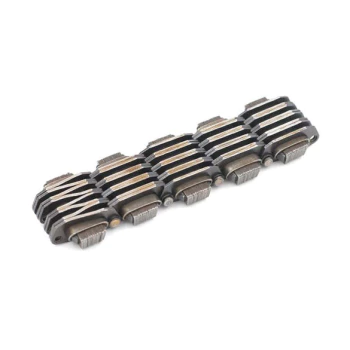
What are the benefits of using a corrosion-resistant coating on a drive chain?
A corrosion-resistant coating provides several benefits when applied to a drive chain. Here is a detailed explanation:
Drive chains used in various applications are often exposed to harsh environments that can lead to corrosion, including moisture, chemicals, contaminants, or high humidity. Applying a corrosion-resistant coating to the chain offers the following advantages:
- Protection against Corrosion: The primary benefit of a corrosion-resistant coating is its ability to protect the chain from corrosive elements. The coating acts as a barrier, preventing moisture, chemicals, and other corrosive agents from reaching the chain’s surface. This helps to inhibit or slow down the corrosion process, extending the chain’s lifespan and reducing the risk of premature failure.
- Enhanced Durability: By adding a corrosion-resistant coating, the drive chain’s durability is significantly improved. The coating helps to prevent rust, oxidation, and degradation, thereby maintaining the chain’s structural integrity and preserving its mechanical properties. This results in a longer service life and reduces the need for frequent chain replacements.
- Reduced Maintenance Requirements: A corrosion-resistant coating reduces the maintenance efforts required to keep the chain in optimal condition. Since the coating provides a protective layer, there is less need for frequent lubrication or cleaning to combat corrosion. This leads to reduced maintenance costs and downtime, contributing to improved operational efficiency.
- Compatibility with Harsh Environments: In applications where the chain is exposed to aggressive chemicals, high humidity, saltwater, or other corrosive substances, a corrosion-resistant coating is essential. The coating ensures the chain’s reliability and performance even in demanding and challenging environments, such as marine, chemical processing, or outdoor applications.
- Promotion of Cleanliness and Hygiene: Some corrosion-resistant coatings are designed to be smooth and easy to clean. This promotes cleanliness and hygiene in applications where cleanliness is critical, such as food processing, pharmaceuticals, or cleanroom environments. The coating prevents the accumulation of contaminants, making the chain easier to clean and maintain compliance with industry regulations.
- Improved Aesthetics: A corrosion-resistant coating can enhance the visual appeal of the chain. It provides a clean and professional appearance, which is particularly important in applications where the chain is visible, such as in architectural designs or decorative installations.
It is important to note that the selection of a suitable corrosion-resistant coating should consider the specific application requirements, environmental conditions, and the compatibility of the coating with the chain material.
Regular inspection and proper maintenance practices, including periodic cleaning and lubrication, are still recommended to ensure the optimal performance and longevity of the drive chain, even with a corrosion-resistant coating.
By using a corrosion-resistant coating on a drive chain, operators can benefit from corrosion protection, enhanced durability, reduced maintenance requirements, compatibility with harsh environments, cleanliness, improved aesthetics, and ultimately, reliable and long-lasting chain performance.
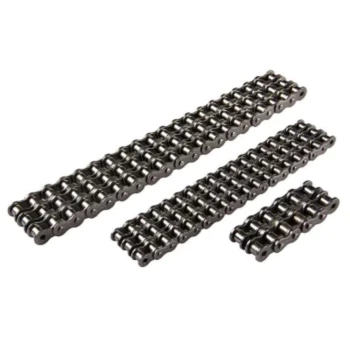
How does the weight of a drive chain affect its performance?
The weight of a drive chain can have some impact on its performance, although it is generally not a significant factor. Here is a detailed explanation:
The weight of a drive chain refers to the mass of the chain itself. While the weight of the chain may vary depending on its size, type, and material, it is typically not a critical consideration in most applications. Here are a few points to understand about the weight of a drive chain:
- Inertia: The weight of the drive chain contributes to its inertia, which is the resistance to changes in motion. In high-speed or dynamic applications, such as robotics or automation, excessive chain weight can increase inertia and potentially affect the responsiveness and precision of the system. However, the weight of the chain is usually relatively small compared to other components in the system, and the impact on performance is often minimal.
- Tension and Tensioning Mechanisms: The weight of the chain can influence the tensioning requirements and the design of tensioning mechanisms. Heavier chains may require stronger tensioning systems to maintain proper tension and prevent chain slack. It is essential to consider the weight of the chain when designing and implementing tensioning mechanisms to ensure optimal performance.
- Load Capacity: The weight of the chain itself does not significantly affect the load capacity or strength of the chain. The load capacity is determined by the chain’s design, material, and construction. Proper chain selection based on the specific application requirements is necessary to ensure sufficient load-carrying capacity.
- Installation and Handling: The weight of the chain can influence the ease of installation and handling, especially in larger or heavier chains. Proper lifting and handling equipment should be used to ensure safe installation and prevent injuries.
Overall, while the weight of a drive chain can have some minor influence on its performance in certain applications, it is typically not a critical factor. Factors such as chain design, material, lubrication, tension, and alignment have a more significant impact on the overall performance and reliability of the drive chain.
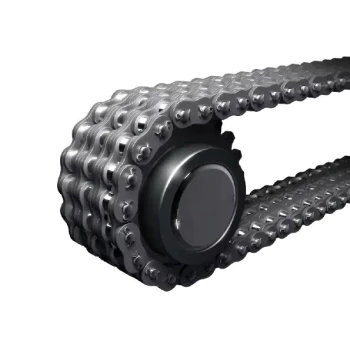
What are the load capacities of different drive chains?
The load capacity of a drive chain depends on various factors, including the type of chain, its size, design, and material. Here is a general overview of the load capacities for different drive chains:
- 1. Roller Chains: Roller chains are commonly used and have a wide range of load capacities. The load capacity can vary based on the chain’s pitch size, roller diameter, and the material used. Standard roller chains can handle loads ranging from a few hundred pounds to several thousand pounds.
- 2. Double Pitch Chains: Double pitch chains typically have a larger pitch, resulting in increased spacing between the chain links. They are often used in applications with lighter loads and slower speeds compared to standard roller chains.
- 3. Leaf Chains: Leaf chains are known for their high tensile strength and are commonly used in heavy-duty applications that require lifting or load-bearing. They have excellent load-carrying capabilities and can handle loads ranging from several thousand pounds to tens of thousands of pounds.
- 4. Silent Chains: Silent chains, also known as inverted-tooth chains, are used in high-speed applications that require high-load capacity and precise synchronization. They have robust load-carrying capabilities and can handle significant loads while operating smoothly.
- 5. Engineered Chains: Engineered chains, such as drive chains, plastic chains, or self-lubricating chains, may have varying load capacities depending on their design and intended applications. These chains are often designed to meet specific load requirements in specialized industries.
It’s important to note that load capacities can vary within each chain type based on specific configurations and manufacturer specifications. When selecting a drive chain for a particular application, it is crucial to consider the expected load requirements and consult the manufacturer’s guidelines and specifications to ensure that the chosen chain is suitable for the intended load capacity.


editor by CX 2023-12-06