Product Description
We specialize in the chains made to customers’ drawings and specification. Our advantage is reliable quality, competitive price, prompt delivery and good service.
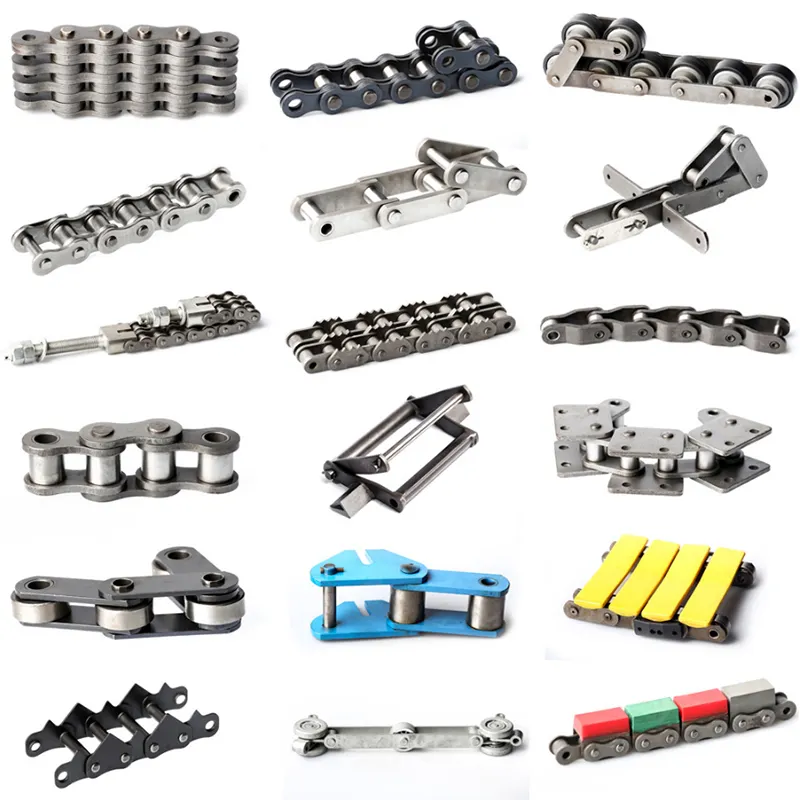
Standard products include various transmission and conveyor chains, like Roller Chain, double pitch Conveyor Chain, Hollow Pin Chain, Leaf Chain, Table Top Chain, Side Bow Chain, Lumber Chain, Agriculture Chain, Silent Chain, PIV Chain, Stainless Steel Chain, Nickel/ Zinc plated Chain, Dacromet Chain, Engineering Chain, Steel Pintle Chain, Welded steel chain, Forged chain, Malleable Iron chain, and many other types. Different kinds of attachment are available.
Product Description
Specifications:
1) Attachments on 1 side
2) Attachments on inner plates
3) Attachments on outer plates
4) Attachments on both sides
5) Straight attachments
6) Crank attachments
7) Pin attachments
8) Other special attachments
Transmission chain is famous for its high strength and continuous antifatigue; The chain dimensions fully meet the standards of ANSI and BS.
According to varied working conditions, it may choose the chain with different coating treatment, such as zinc plating, nickel plating, chromeplating and dacromet plating ec
Product Description
|
25-1 to 240-1 |
We supply varied kinds of roller chains, conveyor chains, transmission chains and agricultural chains etc. According drawings.
Features:
1) A series chains:
A) Simplex: 25-1 – 240-1
B) Duplex: 25-2 – 240-2
C) Triplex: 25-3 – 240-3
2) B series chains:
A) Simplex: 04B-1 – 72B-1
B) Duplex: 05B-2 – 72B-2
C) Triplex: 05B-3 – 72B-3
3) Materials: Stainless steel or carbon steel
4) Other chains available: Heavy-duty series roller chains, cottered type short pitch precision roller chains (A series), heavy duty series cottered type roller chains, other simplex roller chains, zinc plated chains, dacromet plated chains, nickel plated chains, anti-side bow chains, side bow chains for pushing windows, side bow chains, side bow chains, self-lubrication roller chains, silent chains, self-tooth forming chains (P. I. V. Chains), heavy-duty cranked-link transmission chains, steel chains for sewage disposal, oil field chains, coupling chains, motorcycle chains, O-ring motorcycle chains, engine mechanism chain (timing chains), double pitch transmission chains and double pitch transmission chain attachments.
/* March 10, 2571 17:59:20 */!function(){function s(e,r){var a,o={};try{e&&e.split(“,”).forEach(function(e,t){e&&(a=e.match(/(.*?):(.*)$/))&&1
| Material: | Stainless Steel |
|---|---|
| Structure: | Roller Chain |
| Surface Treatment: | Polishing |
| Chain Size: | 1/2"*11/128" |
| Feature: | Antirust, Anticorrosion |
| Structure(for Chain): | Roller Chain |
| Customization: |
Available
| Customized Request |
|---|
Can transmission chains be used in construction or heavy equipment?
Yes, transmission chains are commonly used in construction and heavy equipment due to their durability and ability to handle high loads. Here’s a detailed answer to the question:
Construction and heavy equipment, such as excavators, bulldozers, cranes, and loaders, often rely on transmission chains to transmit power and motion between different components. These chains are designed to withstand the demanding conditions and heavy loads encountered in construction and earthmoving applications.
The primary advantages of using transmission chains in construction and heavy equipment include:
1. Load Capacity: Transmission chains are engineered to handle heavy loads and provide reliable power transmission in equipment that requires substantial force. They are designed to withstand the extreme stresses and strains associated with lifting, pulling, and pushing heavy materials.
2. Durability: Construction and heavy equipment operate in challenging environments with debris, dust, vibrations, and harsh weather conditions. Transmission chains are built to be robust and resistant to wear, corrosion, and fatigue, ensuring reliable operation and long service life in these demanding settings.
3. Versatility: Transmission chains are available in various sizes, configurations, and materials, allowing them to be tailored to specific equipment requirements. This versatility enables manufacturers to select the most suitable chain for different applications, ensuring optimal performance and efficiency.
4. Power Transmission: Construction and heavy equipment often require high torque and precise power transmission. Transmission chains excel in transmitting power from the engine or motor to various moving parts, such as wheels, tracks, and lifting mechanisms, allowing the equipment to perform its intended functions effectively.
5. Easy Maintenance: Transmission chains typically have a straightforward design, making them relatively easy to maintain. Regular inspection, lubrication, and tension adjustment are essential to ensure proper functioning and extend the chain’s lifespan. Proper maintenance practices can help minimize downtime and reduce overall equipment maintenance costs.
It’s important to note that while transmission chains are widely used in construction and heavy equipment, the specific application and operating conditions should be taken into consideration when selecting the appropriate chain type, size, and material. Consulting the equipment manufacturer’s guidelines and recommendations is crucial to ensure optimal performance and safety.

How does the wear resistance of a transmission chain affect its longevity?
Wear resistance is a critical factor that affects the longevity of a transmission chain. Here’s a detailed answer to the question:
1. Extended Lifespan: A transmission chain with high wear resistance is designed to withstand the effects of friction and abrasion, leading to an extended lifespan. It can resist wear caused by contact with sprockets, other chains, or external contaminants, resulting in reduced chain elongation and degradation over time.
2. Reduced Maintenance Requirements: Chains with excellent wear resistance require less frequent maintenance and replacement. They can operate reliably and efficiently for longer periods without significant degradation, reducing downtime and maintenance costs.
3. Improved Performance: A transmission chain with good wear resistance maintains its performance characteristics over time. It can effectively transmit power, maintain accurate speed ratios, and operate smoothly without excessive noise or vibration. This results in improved system performance and overall efficiency.
4. Resistance to Environmental Factors: Chains operating in harsh environments or exposed to contaminants, moisture, or chemicals are more susceptible to wear. A transmission chain with high wear resistance can withstand these environmental factors, ensuring reliable operation and minimizing the negative impact of wear-related issues.
5. Cost Savings: Using a transmission chain with excellent wear resistance can lead to cost savings in the long run. The reduced need for frequent chain replacements, repairs, and maintenance can result in lower operating costs and increased productivity.
It’s important to consider the specific application requirements and operating conditions when selecting a transmission chain. Factors such as load capacity, speed, operating environment, and compatibility with other system components should be evaluated to choose a chain with optimal wear resistance for maximizing longevity and performance.
Are there specific lubrication requirements for transmission chains?
Yes, transmission chains typically require proper lubrication to ensure smooth operation, reduce wear, and prolong their service life. Here are some key points regarding lubrication requirements for transmission chains:
- Clean and Adequate Lubrication: It is important to keep the chain adequately lubricated to minimize friction and wear between the chain components. Lubrication helps reduce heat generation and prevents metal-to-metal contact, which can lead to premature wear and failure.
- Appropriate Lubricant Selection: Choosing the right lubricant is crucial for optimal chain performance. Factors to consider when selecting a lubricant include the application temperature, load conditions, speed, and environmental factors. Lubricants should have good adhesion properties, resist oxidation, and provide sufficient film strength to protect the chain surfaces.
- Proper Lubrication Interval: Regular lubrication at appropriate intervals is necessary to maintain the chain’s performance and reduce the risk of excessive wear. The lubrication frequency depends on the operating conditions and the specific lubricant used. Manufacturers usually provide recommendations for lubrication intervals based on the chain type and application.
- Effective Lubrication Application: Proper application of lubricant is essential to ensure uniform coverage and penetration into the chain components. The lubricant should be applied to the inner link plates, roller surfaces, and pin-bushing interfaces. Excess lubricant should be removed to prevent buildup and contamination.
- Environmental Considerations: In certain environments, such as dusty or dirty conditions, the chain may require more frequent lubrication to prevent the ingress of contaminants and maintain proper lubrication film. Additionally, in high-temperature or high-speed applications, special high-temperature or high-speed lubricants may be necessary.
- Regular Inspection and Maintenance: Along with proper lubrication, regular inspection and maintenance of the transmission chain are essential. This includes checking for signs of wear, lubricant degradation, and proper tension. Any damaged or worn components should be replaced promptly to prevent chain failure.
Following the manufacturer’s recommendations and adhering to the specific lubrication requirements for the transmission chain will help ensure optimal performance, reduce wear, and extend the chain’s lifespan.


editor by CX 2023-12-22