Product Description
ISO/ANSI/DIN Standard Short Pitch Precision Stainless Steel Hardware Transmission Motorcycle Industrial Roller Chain
Product Description
1. Material: Stainless Steel 304 & 316 / Alloy Carbon Steel
2. Surface Treatment: Shot peening / Zinc-plated / Nickel-plated / Dacromet-plated
3. Chain No:
35SS-1, 40SS-1, 50SS-1, 60SS-1, 80SS-1, 100SS-1, 120SS-1, 140SS-1;
35SS-2, 40SS-2, 50SS-2, 60SS-2, 80SS-2, 100SS-2, 120SS-2, 140SS-2;
35SS-3, 40SS-3, 50SS-3, 60SS-3, 80SS-3, 100SS-3, 120SS-3, 140SS-3;
4. Application: Stainless Steel Chains are used in so many industries, such as machine manufacturing, food machine, etc. Also are suitable for high and low temperature conditions.
5. Characteristic:
1. The chain can be used on the both sides of multi-axle transmission.
2. Easy installation and replacement.
3. It can obtain larger reduction ratio.
4. The roller chain has good elasticity, high strength and each hinge part has lubricating oil, so it can be stored easliy. Thus, compared with the rigid contact tooth, it has good cushioning and vibration absorbing ability.
| Product name | Stainless Steel Roller Chain From China |
| Materials Available | 1. Stainless Steel: SS304, SS316, etc |
| 2. Alloy Steel: 45Mn, 42CrMo, 20CrMo, etc | |
| 3. OEM according to your request | |
| Surface Treatment | Shot peening, Blackening, Oxygenation, Polishing, Zinc-plated, Nickel-plated, Anodized, etc. |
| Characteristic | Fire Resistant, Oil Resistant, Heat Resistant |
| Design criterion | ISO DIN ANSI & Customer’s Drawing |
| Size | Customer’s Drawing & ISO standard |
| Package | Wooden Case / Container and pallet, or made-to-order |
| Certificate | ISO9001: 2008 |
| Advantage | First quality, Best service, Competitive price, Fast delivery |
| Delivery Time | 20 days for samples. 45 days for official order. |
Detailed Photos
View more products,please click here…
Company Profile
/* January 22, 2571 19:08:37 */!function(){function s(e,r){var a,o={};try{e&&e.split(“,”).forEach(function(e,t){e&&(a=e.match(/(.*?):(.*)$/))&&1
| Usage: | Transmission Chain |
|---|---|
| Material: | Stainless steel |
| Structure: | Roller Chain |
| 40-1: | 1/2" |
| 50-1: | 5/8" |
| 60-1: | 3/4" |
| Samples: |
US$ 0/Meter
1 Meter(Min.Order) | |
|---|
| Customization: |
Available
| Customized Request |
|---|
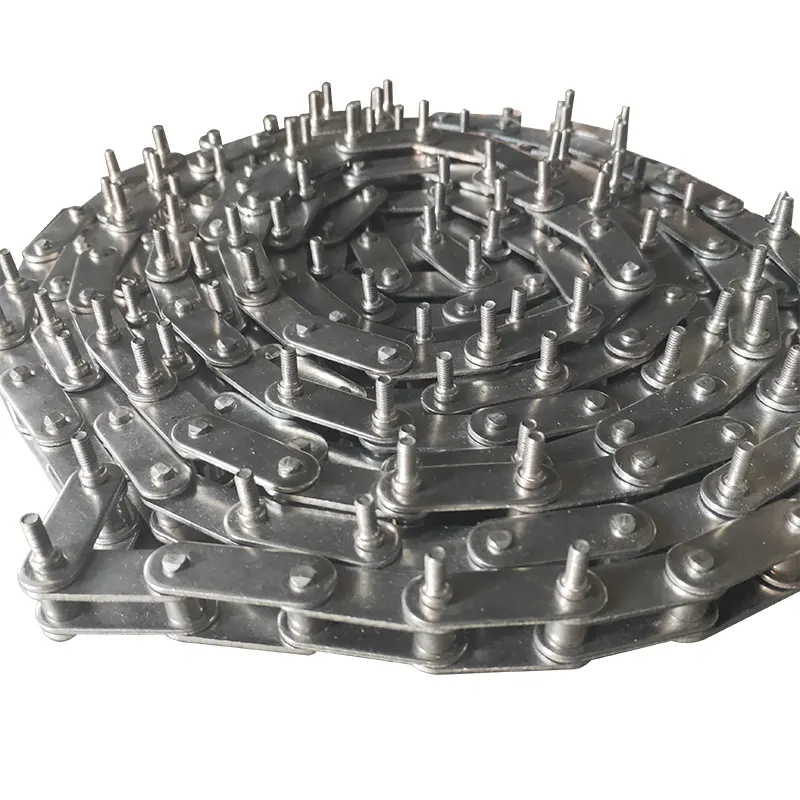
Can transmission chains be used in heavy-duty or high-load applications?
Transmission chains are commonly used in heavy-duty or high-load applications due to their robust construction and ability to handle substantial power transmission requirements. Here’s a detailed explanation:
1. Strength and Durability: Transmission chains are designed to withstand high loads and heavy-duty applications. They are constructed using high-quality materials such as alloy steel, ensuring exceptional strength, toughness, and resistance to fatigue. These chains are engineered to handle the demanding forces and loads encountered in heavy machinery, industrial equipment, and automotive applications.
2. Load Capacity: Transmission chains are available in various sizes and configurations to accommodate different load capacities. Manufacturers provide load ratings and specifications for their chains, allowing users to select the appropriate chain based on the anticipated loads. The load capacity of a transmission chain depends on factors such as chain size, material, design, and heat treatment. It is essential to choose a chain that can handle the specific load requirements of the application.
3. Power Transmission Efficiency: Transmission chains offer high power transmission efficiency, making them suitable for heavy-duty applications. The precision engineering of the chain links and sprockets ensures minimal energy loss during power transfer, maximizing the efficiency of the system. This efficiency is crucial in applications where large amounts of power need to be transmitted reliably and consistently.
4. Adaptability to High Loads: Transmission chains can adapt to various load conditions, including shock loads and dynamic forces. Their design allows them to accommodate sudden changes in loads without compromising performance or integrity. Additionally, heavy-duty transmission chains often incorporate features such as hardened pins, solid rollers, and specialized coatings to enhance their load-bearing capacity and resistance to wear.
5. Wide Range of Applications: Transmission chains find extensive use in industries such as construction, mining, agriculture, material handling, and power transmission. They are employed in heavy machinery, conveyor systems, lifting equipment, industrial drives, and many other applications that involve significant loads. Their versatility and ability to handle high loads make them a reliable choice for demanding environments.
When selecting a transmission chain for heavy-duty or high-load applications, it is essential to consider the specific requirements, including anticipated loads, operating conditions, and environmental factors. Consulting with chain manufacturers or industry experts can provide valuable guidance in choosing the most suitable chain to ensure safe and efficient power transmission in heavy-duty applications.
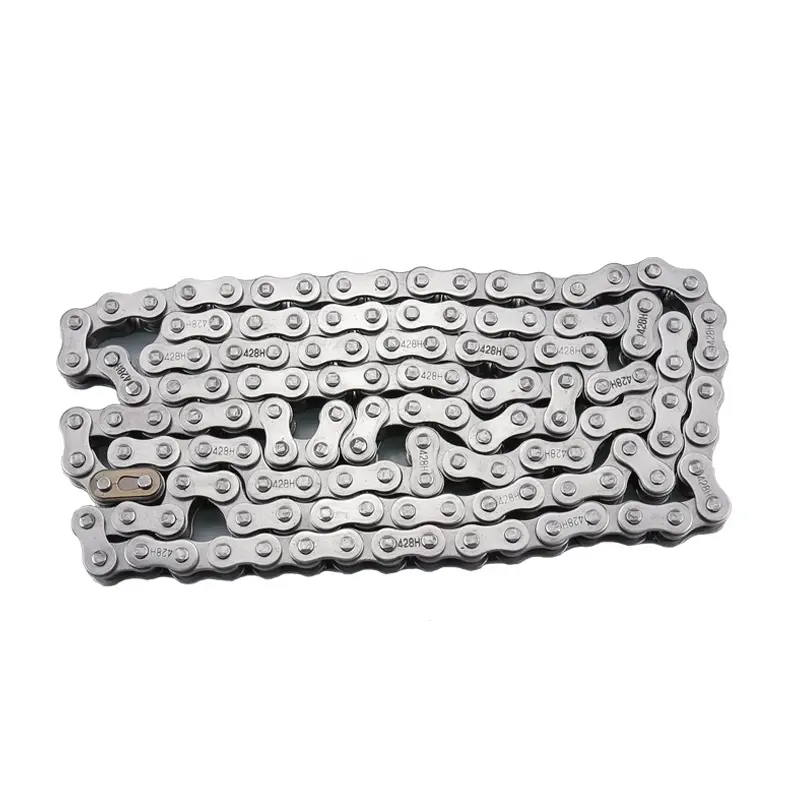
How does the alignment of sprockets affect the lifespan of a transmission chain?
The alignment of sprockets plays a crucial role in the lifespan and performance of a transmission chain. Here’s a detailed answer to the question:
1. Proper Load Distribution: When the sprockets are aligned correctly, the transmission chain is able to evenly distribute the load along its length. This ensures that the chain experiences uniform stress and minimizes the concentration of forces on specific chain links. Improper alignment can result in uneven load distribution, leading to accelerated wear and fatigue of the chain.
2. Reduced Friction and Wear: Proper alignment helps maintain the correct engagement between the chain and the sprockets. When the chain engages smoothly with the sprockets, friction and wear are minimized. On the other hand, misaligned sprockets can cause the chain to rub against the teeth or sides of the sprockets, leading to increased friction, wear, and potential chain failure.
3. Chain Tension: Sprocket alignment also affects the tension of the transmission chain. Proper alignment ensures that the chain remains properly tensioned throughout its operation. Excessive tension due to misalignment can lead to increased stress on the chain, resulting in accelerated wear, fatigue, and potential chain breakage. Insufficient tension can cause the chain to skip or disengage from the sprockets.
4. Smooth and Efficient Operation: When the sprockets are aligned correctly, the transmission chain experiences smooth and efficient operation. This allows for smooth power transfer, reduced vibration, and noise levels, and improved overall system performance. Misaligned sprockets can cause the chain to bind, jump, or produce excessive noise, leading to decreased efficiency and potential damage to the chain and sprockets.
5. Extended Chain Life: Proper sprocket alignment helps to extend the lifespan of the transmission chain. By ensuring that the chain operates within its design parameters and experiences minimal stress and wear, the risk of premature failure is reduced. This leads to longer chain life, reduced maintenance requirements, and lower overall operating costs.
It’s important to regularly inspect and maintain the alignment of sprockets in a transmission chain system. Proper installation, periodic alignment checks, and adjustment when necessary are essential for maximizing the lifespan and performance of the transmission chain.
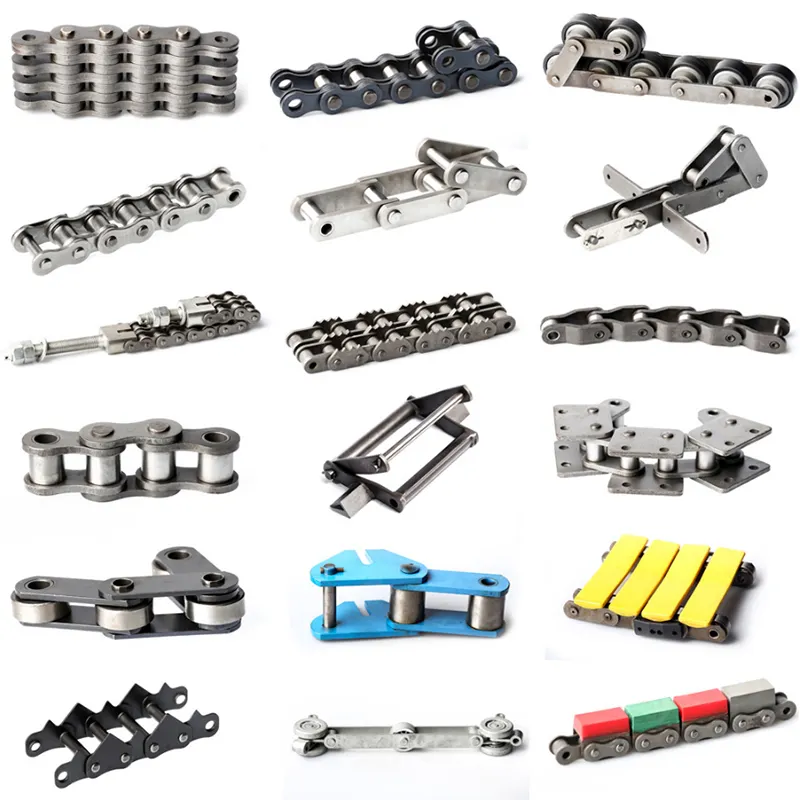
What materials are commonly used in manufacturing transmission chains?
Transmission chains are manufactured using various materials, each offering different properties and advantages. The choice of material depends on the specific application requirements, including load capacity, wear resistance, and environmental conditions. Here are some commonly used materials in the manufacturing of transmission chains:
- Carbon Steel: Carbon steel is a popular choice for transmission chains due to its excellent strength, durability, and affordability. It provides good wear resistance and can handle moderate loads.
- Stainless Steel: Stainless steel chains are highly resistant to corrosion and offer superior durability in challenging environments. They are commonly used in industries where cleanliness and hygiene are critical, such as food processing and pharmaceuticals.
- Alloy Steel: Alloy steel chains are alloyed with various elements to enhance their mechanical properties. They offer higher strength, increased wear resistance, and improved fatigue resistance compared to carbon steel chains.
- Plastic: Plastic chains are lightweight, corrosion-resistant, and offer excellent chemical resistance. They are often used in applications where noise reduction, low friction, or non-magnetic properties are required.
- Non-metallic Composites: Non-metallic composite chains are made from materials such as fiberglass, carbon fiber, or Kevlar. These chains offer high strength-to-weight ratios, exceptional chemical resistance, and low friction characteristics.
It’s important to select the appropriate chain material based on the specific operating conditions and requirements of the application. Factors such as load capacity, speed, environmental conditions, and maintenance considerations should be taken into account when choosing the material for a transmission chain.


editor by CX 2024-04-10