
Product Description
Product Description
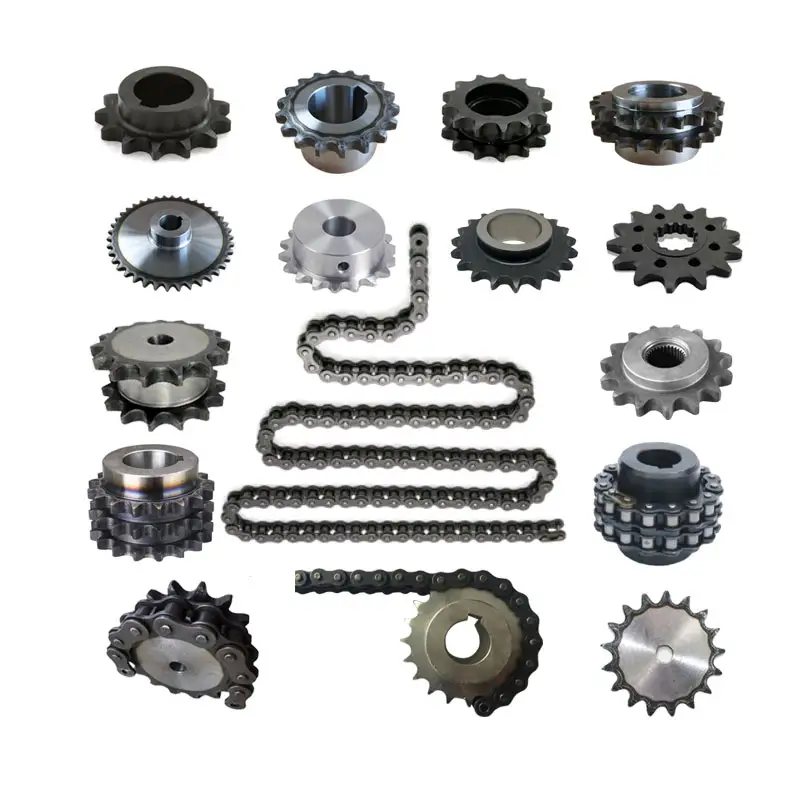
American standard chain sprocket with teeth hardened
With more than 15 years’ experience, high-precision equipment and strict management system, CIMO can provide sprockets for you with stable quality and best service.
| Item | Sprocket |
| Standard | DIN, KANA, ANSI, ISO, etc |
| Material | C45, stainless steel SS304 & SS316, Cast iron, etc |
| Bore | Pilot bore, finished bore, taper bore |
| Surface Treatment | Black oxided, Zinc plated, Electrophoresis, etc |
| Heat treatment | Teeth inductive hardened HRC45-50 |
| Process | Forging, Cutting, Hobbing teeth, CNC Lathe machining |
| European Type | 03B, 04B, 05B, 06B, 081B, 083B/084B, 085B, 086B, 08B, 10B, 12B, 16B, 20B, 24B, 28B, 32B |
| American Type | 25, 35, 40, 50, 60, 80, 100, 120, 140, 160, 200, 240 |
|
Taper bore sprockets |
|
| Finished bore sprockets | |
|
Idler sprockets with ball bearing |
|
|
Double simplex sprockets |
|
|
Sprockets with split taper bushings |
|
|
Sprockets with QD bushings |
|
| Double sprockets for 2 single chains | |
|
Double pitch sprockets |
C2042, C2052, C2062, C2082, C2040, C2050, C2060, C2080 |
| Platewheels for Conveyor chain | 20x16mm, 30×17.02mm |
Detailed Photos
Workshop
Packaging & Shipping
Export wooden box
FAQ
Q1: Are you trading company or manufacturer ?
A: We are factory.
Q2: How long is your delivery time and shipment?
1.Sample Lead-times: 10-20 days
2.Production Lead-times: 30-45 days after order confirmed.
Q3: What is your advantages?
1. The most competitive price and good quality.
2. Perfect technical engineers give you the best support.
3. OEM is available.
/* March 10, 2571 17:59:20 */!function(){function s(e,r){var a,o={};try{e&&e.split(“,”).forEach(function(e,t){e&&(a=e.match(/(.*?):(.*)$/))&&1
| Standard Or Nonstandard: | Nonstandard |
|---|---|
| Application: | Motor, Electric Cars, Motorcycle, Machinery, Agricultural Machinery, Chain |
| Hardness: | Hardened Tooth Surface |
| Manufacturing Method: | Cut Gear |
| Toothed Portion Shape: | Sprocket |
| Material: | Steel C45 |
| Customization: |
Available
| Customized Request |
|---|

Factors Affecting the Efficiency of a wheel sprocket Setup
Several factors can influence the efficiency of a wheel sprocket system in power transmission and motion control applications. These factors should be carefully considered and optimized to ensure the system’s overall effectiveness and performance:
- 1. Friction: Friction between the wheel, sprocket, and the chain or belt can lead to energy losses. Using high-quality materials and lubrication can help reduce friction and improve efficiency.
- 2. Alignment: Proper alignment between the wheel and the sprocket is critical. Misalignment can cause increased wear, noise, and reduced efficiency. Regular maintenance and alignment checks are essential.
- 3. Tension: The correct tension in the chain or belt is crucial for efficient power transmission. Too loose or too tight tension can lead to performance issues and premature wear.
- 4. Material and Design: The choice of materials for the wheel sprocket, as well as their design, can impact efficiency. High-quality materials and well-engineered components reduce wear and improve overall system performance.
- 5. Load Distribution: Uneven load distribution across the wheel sprocket can lead to localized wear and decreased efficiency. Ensuring proper load distribution helps maintain uniform wear and power transmission.
- 6. Environmental Factors: Harsh environmental conditions, such as dust, moisture, and extreme temperatures, can affect the efficiency of the system. Choosing suitable materials and implementing protective measures can mitigate these effects.
- 7. Maintenance: Regular maintenance, including lubrication, inspection, and timely replacement of worn components, is vital for the long-term efficiency of the system.
- 8. Speed and Torque: The operating speed and torque requirements of the application should be considered when selecting the appropriate wheel sprocket size and specifications.
- 9. Chain or Belt Type: Different types of chains or belts, such as roller chains, silent chains, or toothed belts, have varying efficiencies. Choosing the right type for the specific application is crucial.
- 10. System Integration: The wheel sprocket system should be integrated correctly with other components in the machinery to ensure smooth operation and minimal energy losses.
By carefully considering and optimizing these factors, it is possible to improve the efficiency of the wheel sprocket system, leading to reduced energy consumption, less wear and tear, and overall better performance.
Noise and Vibration in wheel sprocket Configurations
In a wheel sprocket configuration, noise and vibration levels can vary depending on several factors:
- Quality of Components: The quality of the wheel sprocket components can significantly impact noise and vibration. Well-manufactured and precisely engineered components tend to produce less noise and vibration.
- Lubrication: Proper lubrication of the sprocket teeth and chain or belt can reduce friction, which in turn helps minimize noise and vibration.
- Alignment: Correct alignment between the wheel sprocket is crucial. Misalignment can lead to increased noise and vibration as the components may not mesh smoothly.
- Tension: Maintaining the appropriate tension in the chain or belt is essential. Insufficient tension can cause the chain to slap against the sprocket teeth, resulting in noise and vibration.
- Speed and Load: Higher speeds and heavier loads can lead to increased noise and vibration levels in the system.
- Wear and Damage: Worn-out or damaged components can create irregularities in motion, leading to increased noise and vibration.
To reduce noise and vibration in a wheel sprocket setup:
- Use high-quality components from reputable suppliers.
- Ensure proper lubrication with appropriate lubricants.
- Regularly inspect and maintain the system to detect any misalignment, wear, or damage.
- Follow manufacturer guidelines for chain or belt tensioning.
- Consider using vibration-damping materials or mounting methods if necessary.
Minimizing noise and vibration not only improves the comfort and safety of the machinery but also extends the life of the components by reducing wear and fatigue.
Calculating Gear Ratio for a wheel sprocket Setup
In a wheel sprocket system, the gear ratio represents the relationship between the number of teeth on the sprocket and the number of teeth on the wheel. The gear ratio determines the speed and torque relationship between the two components. To calculate the gear ratio, use the following formula:
Gear Ratio = Number of Teeth on Sprocket ÷ Number of Teeth on Wheel
For example, if the sprocket has 20 teeth and the wheel has 60 teeth, the gear ratio would be:
Gear Ratio = 20 ÷ 60 = 1/3
The gear ratio can also be expressed as a decimal or percentage. In the above example, the gear ratio can be expressed as 0.3333 or 33.33%.
It’s important to note that the gear ratio affects the rotational speed and torque of the wheel sprocket. A gear ratio greater than 1 indicates that the sprocket’s speed is higher than the wheel’s speed, resulting in increased rotational speed and reduced torque at the wheel. Conversely, a gear ratio less than 1 indicates that the sprocket’s speed is lower than the wheel’s speed, resulting in decreased rotational speed and increased torque at the wheel.
The gear ratio is crucial in various applications where precise control of speed and torque is required, such as bicycles, automobiles, and industrial machinery.


editor by CX 2024-01-09