
A complete classification of industrial sprocket types — by tooth profile, hub configuration, material grade, and manufacturing standard — for design engineers and procurement managers.
What Makes Industrial Sprockets Different from Consumer-Grade Parts
An industrial sprocket is precision-engineered to operate under sustained loads, continuous duty cycles, and harsh environmental conditions that consumer-grade components simply cannot withstand. The tooth profiles are hardened to specific Rockwell values, bores are machined to tight tolerances, and hub dimensions are calculated to resist the bending moments imposed by tensioned chains. When a packaging line runs three shifts or a mining conveyor operates around the clock, the sprocket must deliver thousands of hours of reliable service without tooth deformation or bore wallowing.
Understanding the classification system for industrial sprockets allows engineers to specify the exact configuration needed for each application — and allows procurement teams to verify that incoming shipments match the engineering specification. The categories below cover tooth profile, hub style, material grade, and applicable standards, giving a complete picture of the options available from any competent sprocket wheel manufacturer.
Classification by Hub Type
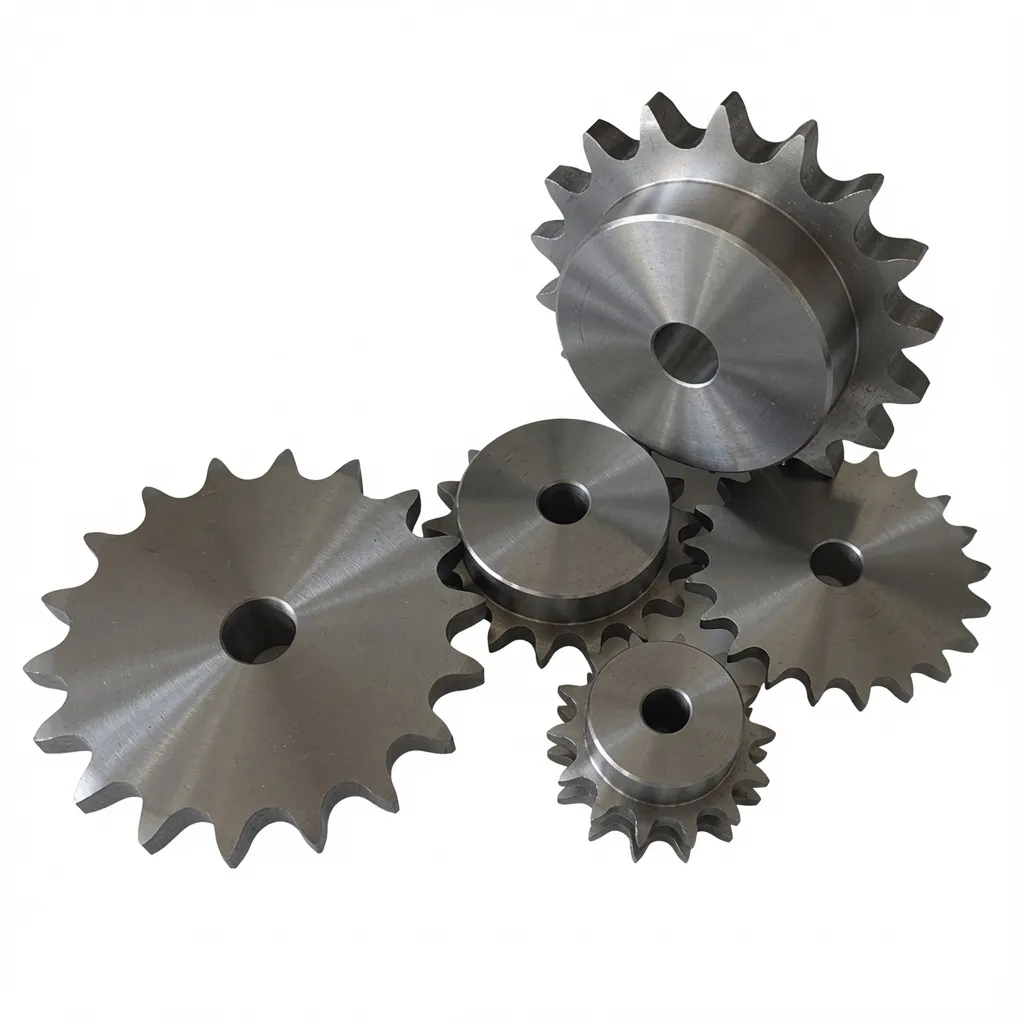
Hub configuration is the first major classification axis. The hub is the central body of the sprocket that mounts onto the shaft, and its design determines how the sprocket is secured, how loads are transferred, and whether the sprocket can be serviced without disassembling adjacent components.
The sprocket plate has no protruding hub on either side. It bolts directly to a flange or adapter plate. Used where axial space is extremely limited or where the sprocket is sandwiched between two bearing housings.
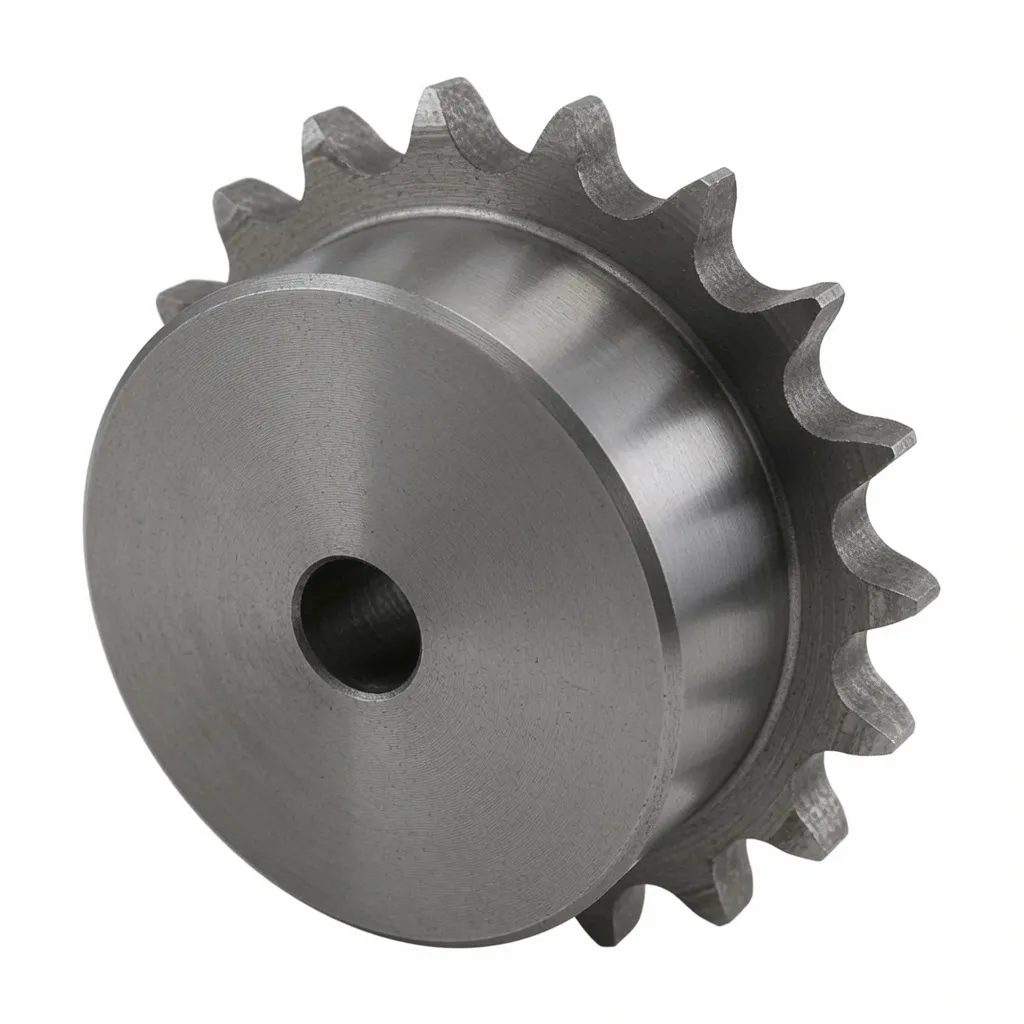
A hub extends from one face of the sprocket plate. This is the most common industrial configuration because it provides adequate shaft support while allowing the chain to run close to the bearing plane, minimizing overhung load.
Hubs extend from both faces, providing maximum shaft contact length and bending resistance. Specified for heavy-load applications or long-shaft installations where overhung deflection must be minimized. Common in mining and cement industry drives.
The bore uses a tapered bushing system that clamps onto the shaft when tightened. Allows tool-free installation and removal without a press or puller. Preferred for maintenance-friendly installations where sprockets are replaced periodically.
Classification by Strand Count
Industrial Sprocket Classification Hierarchy
Strand count determines the chain width the sprocket accepts and directly affects the load capacity of the drive. A simplex sprocket has a single row of teeth and mates with a simplex (single-strand) chain. Duplex sprockets have two parallel tooth rows separated by a center guide plate, and triplex sprockets have three rows. Quad-strand sprockets exist for extreme-load applications such as steel mill roller tables and heavy press drives, though they are far less common in general industry.
The key specification is the sprocket width across the tooth rows, which must match the chain’s pin length. For an ANSI 80 simplex sprocket, the tooth width is approximately 15.75 mm. The duplex version of the same sprocket is roughly 43.6 mm wide including the center plate. Always verify both the chain number and the strand designation when ordering to avoid receiving a sprocket that is the right pitch but the wrong width for your chain.
Classification by Material Grade
Material selection for an industrial sprocket depends on the operating environment, load severity, and budget constraints. Standard carbon steel (typically C45 or 1045 grade) is the default for indoor, non-corrosive applications. The teeth are induction-hardened to 40–50 HRC while the hub remains ductile for machining and shaft fitting. This combination provides excellent wear resistance at the tooth surface while maintaining structural toughness in the body.
Stainless steel sprockets — SUS304 for general corrosion resistance, SUS316 for chloride and acid exposure — are mandatory in food processing, pharmaceutical, and marine environments. Their lower hardness compared to carbon steel means faster tooth wear under heavy loads, so stainless sprockets are typically specified for lighter-duty, hygiene-critical applications. Cast iron sprockets offer good vibration damping and low cost for slow-speed, light-load drives such as agricultural implements. Engineering plastics like nylon and acetal are used where chemical resistance, low noise, and self-lubrication are priorities.
Classification by Manufacturing Standard
The dominant standards governing sprocket tooth geometry are ANSI B29.1 (North America), ISO 606 (international), JIS B1801 (Japan), and DIN 8187/8188 (Germany, now largely superseded by ISO). Each standard defines the tooth gap form, tip diameter, root diameter, and pressure angle for a given chain pitch. ANSI and ISO sprockets are not interchangeable even when the pitch matches — the tooth profiles differ because the chain roller diameters differ between the two standards.
A sprocket marked 40B-1 follows the ISO (B-series) standard for 12.7 mm pitch, simplex. The equivalent ANSI sprocket is marked 40-1 with no B suffix. The two will not interchange on the same chain because the tooth form is optimized for different roller diameters. When sourcing from a chain sprocket OEM like Ever-Power, always specify the full designation including standard prefix, pitch number, and strand suffix to eliminate ambiguity.
Why Choose Hangzhou Ever-Power as Your Supplier
Selecting a sprocket chain supplier is a decision that extends far beyond unit price. Delivery reliability, dimensional consistency across production batches, willingness to support OEM customization, and responsive after-sales technical backing all factor into the total cost of ownership. Hangzhou Ever-Power Sprocket Chain Co., Ltd. has built its reputation over decades by treating each of these factors as a baseline expectation rather than a premium add-on.
From raw steel blanking through heat treatment, shot peening, and final assembly, every production stage happens under one roof in Hangzhou — eliminating the quality drift that plagues multi-vendor supply chains.
Non-standard bore sizes, special tooth profiles, proprietary surface coatings, and unique attachment configurations are routine production orders — not special projects that require months of back-and-forth negotiation.
Every batch undergoes tensile testing, Rockwell hardness verification, dimensional inspection with CMM equipment, and pre-shipment elongation checks before products leave the factory floor.
Products ship to over 60 countries with packaging rated for ocean freight and documentation compliant with EU, North American, and Southeast Asian import regulations.
Selecting the Right Sprocket Type for Your Application
Start with the chain specification — the chain pitch, strand count, and standard dictate the sprocket dimensions. Then select the hub type based on mounting requirements: Type B for most general installations, Type C for heavy overhung loads, taper-lock for rapid-change maintenance schedules. Choose the material based on the operating environment: carbon steel for dry indoor use, stainless for washdown or corrosive conditions, cast iron or nylon for special requirements like vibration damping or chemical exposure.
Finally, specify the tooth count and bore dimensions. Minimum recommended tooth count for the driving sprocket is 17 teeth; fewer teeth increase chain articulation angle and accelerate both chain and sprocket wear. The bore should match your shaft diameter with the appropriate tolerance and keyway configuration. Provide complete specifications — including hub type, material, standard, tooth count, bore, and keyway — in your purchase order to ensure the sprocket wheel manufacturer delivers exactly what your drive system requires.
Frequently Asked Questions
Get in Touch with Our Engineering Team
Whether you need a standard catalog chain or a fully custom-engineered solution, our technical sales team is ready to assist with specification, pricing, and logistics.
Company
Hangzhou Ever-Power Sprocket Chain Co., Ltd.
Address
Shenhua Road, Hangzhou, China
Phone
+86-571-88220653