Understand the practical differences between OEM and ODM manufacturing models for sprocket chains — and determine which approach best fits your product strategy, timeline, and budget.
Defining OEM and ODM in the Sprocket Chain Industry
OEM (Original Equipment Manufacturer) and ODM (Original Design Manufacturer) are two distinct manufacturing models that differ fundamentally in who owns the product design. In an OEM arrangement, the buyer provides the complete engineering specification — dimensions, materials, tolerances, surface treatment, and packaging requirements — and the manufacturer produces to that specification exactly. The intellectual property remains with the buyer, and the finished product carries the buyer’s brand.
In an ODM arrangement, the manufacturer designs the product using their own engineering resources and the buyer selects from the manufacturer’s existing or customizable designs. The buyer may apply their own branding and packaging, but the underlying design belongs to the manufacturer. For sprocket chains, ODM typically means selecting a standard chain configuration from the manufacturer’s catalog and customizing minor parameters such as length, connecting link type, or surface coating.
When OEM Is the Right Choice
OEM vs ODM Decision Matrix
| Factor | OEM Model | ODM Model |
|---|---|---|
| Design ownership | Buyer owns all IP | Manufacturer owns base design |
| Engineering input required | Full spec from buyer | Minimal — select from catalog |
| Tooling cost | Buyer pays for custom tooling | Shared or included in unit price |
| Lead time | 3-6 weeks (tooling + production) | 1-3 weeks (existing tooling) |
| MOQ | Higher (justify tooling investment) | Lower (standard production run) |
| Unit price | Moderate to high | Competitive (economies of scale) |
| Customization depth | Unlimited | Limited to catalog parameters |
| Best for | Unique applications, proprietary specs | Standard applications, fast launch |
| Both models are available at Hangzhou Ever-Power. Contact our sales team to discuss which approach fits your requirements. | ||
Choose chain sprocket OEM manufacturing when your application requires specifications that fall outside standard catalog offerings. This includes non-standard pitch, custom attachment configurations, proprietary surface coatings, special material grades, or unique bore and keyway dimensions on the matching sprockets. OEM is also the correct model when you own patented designs and need a manufacturing partner to produce them under contract, or when your end product requires traceability from raw material to finished chain for regulatory compliance.
The tradeoff is time and cost. OEM orders require engineering review, potential tooling fabrication, first-article inspection, and production setup — all of which add 2 to 4 weeks to the timeline compared to ordering standard products. Tooling costs for custom chain plates, rollers, or sprocket tooth profiles can range from several hundred to several thousand dollars depending on complexity. These investments make sense when the custom design delivers measurable performance advantages or market differentiation that justify the premium.
When ODM Is the Better Path
ODM suits buyers who need reliable, standard-specification sprocket chains without the engineering overhead of a custom design. If your application uses a standard ANSI or ISO chain pitch, standard carbon steel or stainless steel materials, and conventional sprocket configurations, an ODM approach gets products into your hands faster and at lower cost. The sprocket chain factory already has the tooling, the production parameters are optimized, and the quality data from previous production runs provides a performance baseline.
Many distributors, trading companies, and aftermarket suppliers use the ODM model exclusively — they select products from the manufacturer’s catalog, apply their own branding and packaging, and sell through their distribution channels. This model minimizes capital risk because no tooling investment is required, MOQs are lower (since the factory runs these products regularly for multiple customers), and lead times are shortened to production and shipping only.
Cost Comparison: Total Landed Cost Perspective
On a per-unit basis, ODM chains are typically 10% to 30% less expensive than equivalent OEM chains because the factory amortizes tooling costs across all customers who order the same standard product. However, OEM chains may deliver lower total cost of ownership in the application if the custom specification extends service life, reduces maintenance frequency, or eliminates the need for field modification that standard products require.
Calculate total landed cost for both models: unit price, tooling amortization (for OEM), shipping, import duties, incoming inspection cost, and projected maintenance/replacement over the application lifetime. For high-volume, long-term supply agreements, OEM tooling costs become negligible on a per-unit basis — a $2,000 tooling investment spread across 100,000 units adds only $0.02 per unit.
Intellectual Property Protection in OEM Contracts
When you commission OEM production with your proprietary design, intellectual property protection is essential. The manufacturing contract should include a non-disclosure agreement (NDA), a clause prohibiting the factory from producing your design for third parties, and a provision for return or destruction of tooling at contract termination. Reputable chain sprocket OEM manufacturers like Ever-Power treat customer IP protection as a standard business practice and will sign NDA and IP protection agreements as part of the contracting process.
Additionally, register your product designs and trademarks in the manufacturing country (China) before beginning production. Chinese IP law operates on a first-to-file basis, and having registered rights in-country provides legal recourse in the unlikely event of unauthorized production. Your sourcing contract should reference these registrations explicitly.
Why Choose Hangzhou Ever-Power as Your Supplier
Selecting a sprocket chain supplier is a decision that extends far beyond unit price. Delivery reliability, dimensional consistency across production batches, willingness to support OEM customization, and responsive after-sales technical backing all factor into the total cost of ownership. Hangzhou Ever-Power Sprocket Chain Co., Ltd. has built its reputation over decades by treating each of these factors as a baseline expectation rather than a premium add-on.
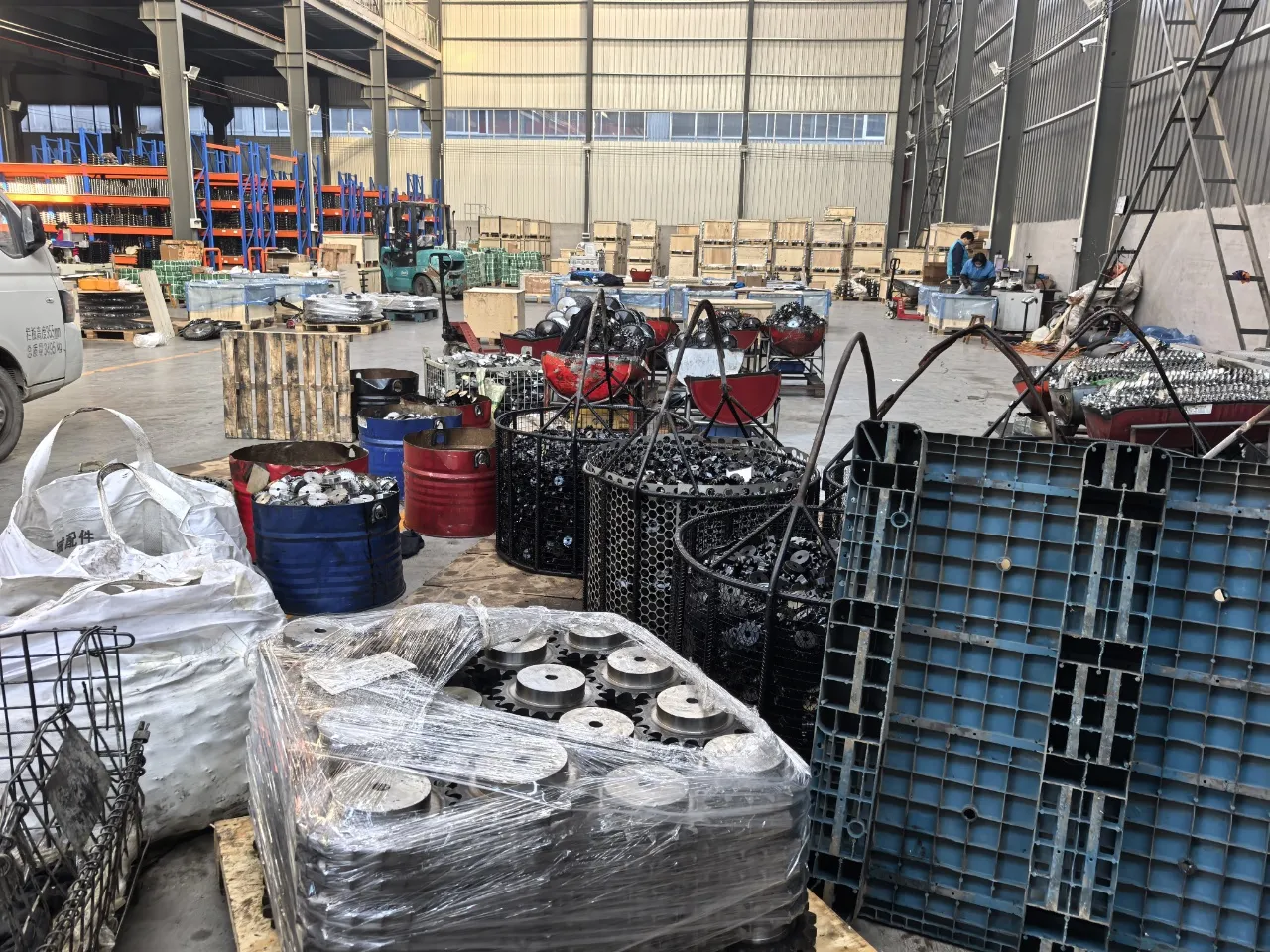
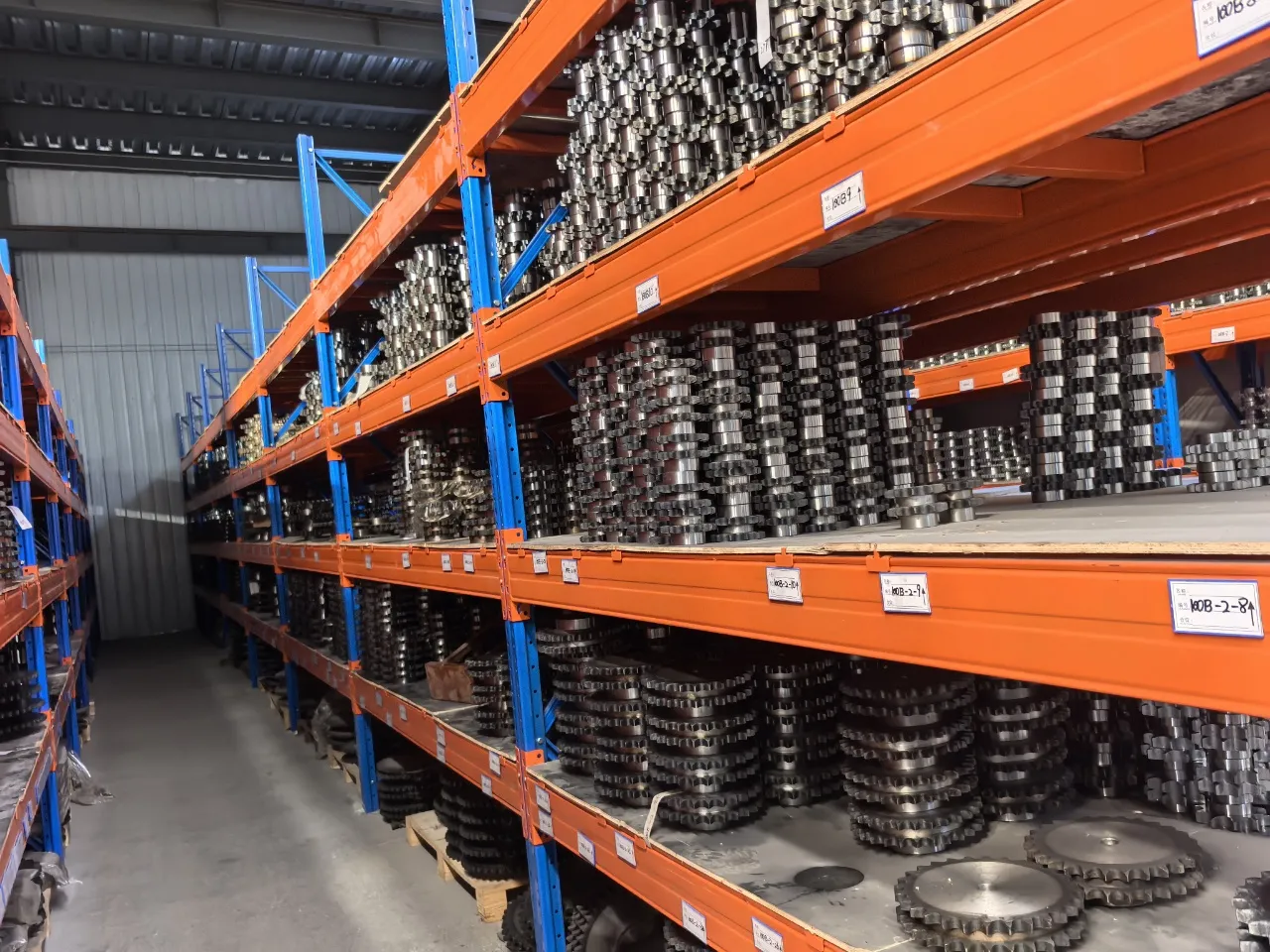
From raw steel blanking through heat treatment, shot peening, and final assembly, every production stage happens under one roof in Hangzhou — eliminating the quality drift that plagues multi-vendor supply chains.
Non-standard bore sizes, special tooth profiles, proprietary surface coatings, and unique attachment configurations are routine production orders — not special projects that require months of back-and-forth negotiation.
Every batch undergoes tensile testing, Rockwell hardness verification, dimensional inspection with CMM equipment, and pre-shipment elongation checks before products leave the factory floor.
Products ship to over 60 countries with packaging rated for ocean freight and documentation compliant with EU, North American, and Southeast Asian import regulations.
Frequently Asked Questions
Get in Touch with Our Engineering Team
Whether you need a standard catalog chain or a fully custom-engineered solution, our technical sales team is ready to assist with specification, pricing, and logistics.
Company
Hangzhou Ever-Power Sprocket Chain Co., Ltd.
Address
Shenhua Road, Hangzhou, China
Phone
+86-571-88220653