
Recognize the warning signs of a chain nearing end-of-life, understand the 3% elongation rule, and establish data-driven replacement intervals to prevent costly unplanned downtime.
The Real Cost of Running a Chain Beyond Its Limits
Delaying chain replacement saves the cost of one chain and one set of sprockets — and risks losing far more in unplanned downtime, secondary equipment damage, and emergency procurement premiums. A chain that breaks under load can whip with enough force to damage adjacent piping, electrical conduit, or safety guarding. In food processing and pharmaceutical plants, a broken chain can contaminate an entire production batch, resulting in disposal costs that dwarf the price of the chain by orders of magnitude.
The 3% elongation rule provides an objective, measurable threshold that removes guesswork from the replacement decision. Combined with visual inspection and operating-hour tracking, this approach transforms chain replacement from a reactive emergency into a planned maintenance activity that fits neatly into scheduled downtime windows.
Understanding the 3% Elongation Rule
Chain Elongation Wear Scale
When a roller chain wears, the pins and bushings lose material at their contact surfaces, effectively lengthening each link by a tiny amount. Over hundreds of links, these micro-increments accumulate into measurable elongation. At 3% total elongation — measured across a 10-pitch span — the chain can no longer seat properly in the sprocket tooth gaps. The rollers ride up on the tooth flanks instead of seating in the root, creating a condition where the chain can skip teeth under load or disengage from the sprocket entirely.
The 3% threshold is not arbitrary. It corresponds to the point where the roller position on the sprocket tooth shifts enough that the chain no longer distributes load across multiple teeth simultaneously. Below 3%, the load is shared among several teeth in the wrap zone. Above 3%, the leading tooth carries a disproportionate share of the load, accelerating tooth wear and increasing the risk of sudden chain failure. For drives where safety is critical, some operators adopt a lower threshold of 2% or even 1.5%.
Five Visual Warning Signs of a Worn Chain
Before reaching for a measuring tool, trained maintenance personnel can spot several visible indicators that a power transmission chain is approaching its replacement threshold. Recognizing these signs during routine walkthroughs enables proactive scheduling and prevents the chain from reaching a dangerous wear state between formal measurement intervals.
How to Measure Elongation in the Field
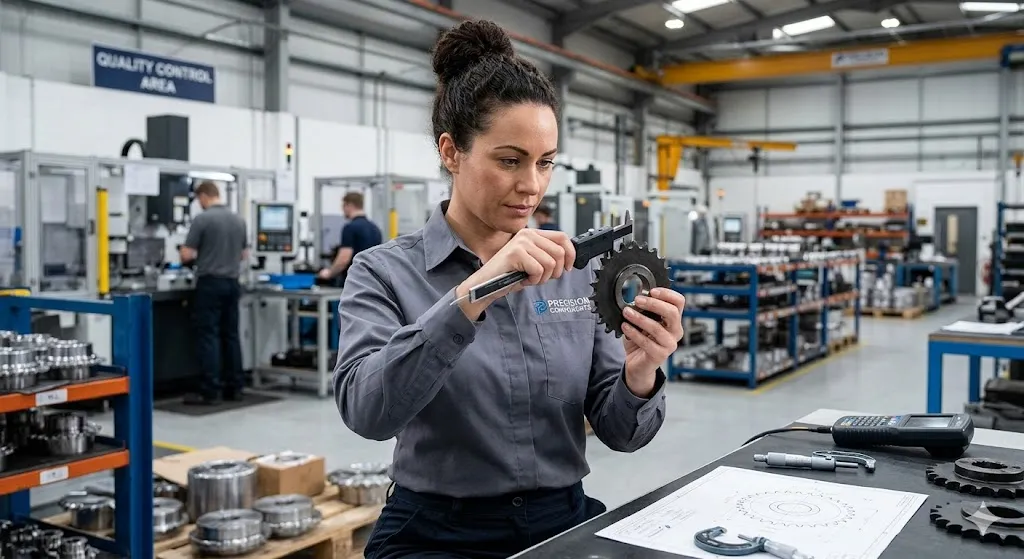
The standard field method uses a vernier caliper or steel rule to measure across 10 consecutive pitches on a tensioned span of the chain (not the slack span). For an ANSI 80 chain with a nominal pitch of 25.4 mm, the nominal 10-pitch length is 254.0 mm. If your measurement reads 261.6 mm, the elongation is (261.6 – 254.0) / 254.0 = 2.99%, which is at the replacement threshold.
Take measurements at three different locations along the chain — at the connecting link, 90 degrees around the sprocket from it, and at the midpoint of the slack span — and use the highest reading. Wear is rarely uniform along the entire chain; the most-worn section determines the replacement decision. Record all measurements in a log with the date and operating hours to build a wear trend that predicts the next replacement date.
Establishing Data-Driven Replacement Intervals
Instead of replacing chains reactively when they fail or hit the 3% threshold, use historical elongation data to forecast replacement timing. Plot elongation percentage against operating hours for each chain drive in your plant. The wear curve is typically linear during the normal wear phase (0.5% to 2.5%) and steepens as the chain approaches end-of-life. Extrapolate the linear portion to predict when the chain will reach 2% elongation — that is your order point — and when it will reach 3% — that is your replacement deadline.
This data-driven approach allows procurement to order replacement chains and sprockets at the optimal time, avoiding both premature replacement (wasting remaining service life) and late replacement (risking failure). For plants with multiple chain drives, stagger the measurement schedule so that one or two drives are measured each week, spreading the workload and providing continuous data updates.
Why Choose Hangzhou Ever-Power as Your Supplier
Selecting a sprocket chain supplier is a decision that extends far beyond unit price. Delivery reliability, dimensional consistency across production batches, willingness to support OEM customization, and responsive after-sales technical backing all factor into the total cost of ownership. Hangzhou Ever-Power Sprocket Chain Co., Ltd. has built its reputation over decades by treating each of these factors as a baseline expectation rather than a premium add-on.
From raw steel blanking through heat treatment, shot peening, and final assembly, every production stage happens under one roof in Hangzhou — eliminating the quality drift that plagues multi-vendor supply chains.
Non-standard bore sizes, special tooth profiles, proprietary surface coatings, and unique attachment configurations are routine production orders — not special projects that require months of back-and-forth negotiation.
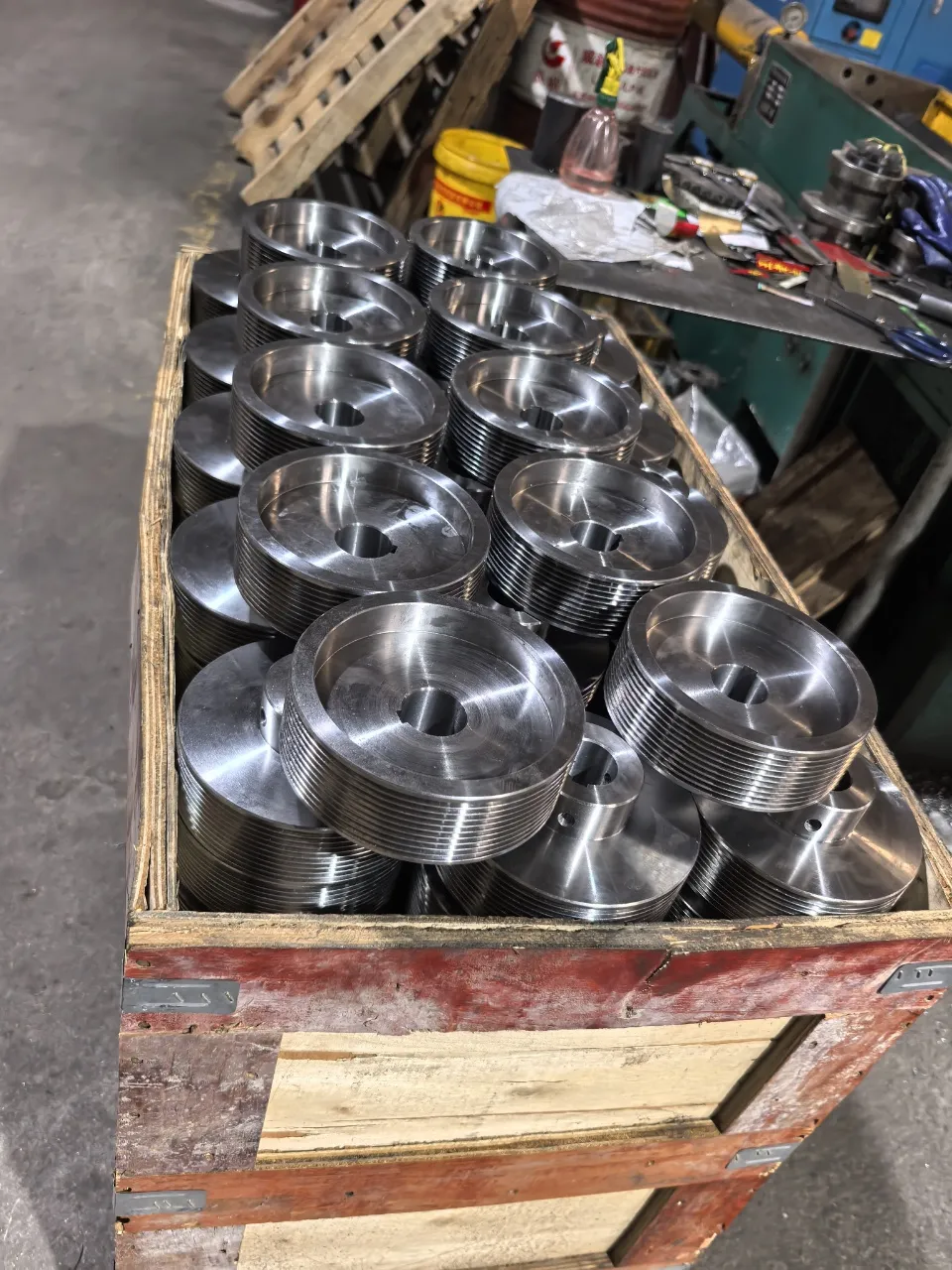
Every batch undergoes tensile testing, Rockwell hardness verification, dimensional inspection with CMM equipment, and pre-shipment elongation checks before products leave the factory floor.
Products ship to over 60 countries with packaging rated for ocean freight and documentation compliant with EU, North American, and Southeast Asian import regulations.
Frequently Asked Questions
Get in Touch with Our Engineering Team
Whether you need a standard catalog chain or a fully custom-engineered solution, our technical sales team is ready to assist with specification, pricing, and logistics.
Company
Hangzhou Ever-Power Sprocket Chain Co., Ltd.
Address
Shenhua Road, Hangzhou, China
Phone
+86-571-88220653