
Merchandise Description
Product Description
SV Oil Lubrication Single Stage Rotary Vane Vacuum Pump:
SV oil lubricated single rotary vane vacuum pump is new style Multi-purpose vacuum products, it produced from adsorbing several worldwide renowned business innovative engineering, take the positive aspects of lengthy services design, high vacuum diploma, environmental security, comprehensive specification and so on. We very own the exceptional patent.
Operating Principle:
Eccentric mounting rotor rotating in the pump inside, which sort centrifugal pressure driving vanes shut to pump wall rotating, vanes divide pump body and rotor into several operating chamber, when working chamber connect to inlet passageway, begin to suction gasoline, vanese preserve rotating and compressed gas into oil tank, oil tank inner constant differential pressure make oil enter comprssed chamber, lubricated oil and extracted gas enter into oil tank, with gravity action, exhaust filter independent lubricated oil, lubricated oil back again to the bottoom of oil tank and enter into operating chamber(oil recyle), oilless gasoline exhaust to environment.
Merchandise Parameters
| Product | Pumping Speed (mthree/h) |
Max Vacuum (Pa) |
Motor Electricity (Kw/Hp) |
Rotating Speed (RPM) |
H2o Vapor Ability (Kg/h) |
Inlet Hole | Oil Feeding (L) |
Sound (dB) |
Excess weight (Kg) |
Dimension (LxWxH,MM) |
| SVF571 | ten | eighty | .37/.55 | 1400 | .02 | G1/2 | .5 | 60 | 18 | 410x240x210 |
| SVF571 | twenty | 80 | .75/1. | 2800 | .04 | G1/2 | .5 | sixty four | 20 | 410x240x210 |
| SVF040 | forty | 50 | one.1/1.five | 1400 | .seventy five | G1-1/4 | 1.3 | sixty seven | 48 | 630x290x260 |
| SVF063 | 63 | fifty | 1.5/2. | 1400 | one.5 | G1-1/4 | one.3 | sixty eight | 50 | 660x300x270 |
| SVF100 | one hundred | fifty | 3./4. | 1440 | 1.six | G1-1/4 | 1.three | 68 | 70 | 730x410x290 |
| SVF160 | one hundred sixty | fifty | 4./6. | 1440 | 2.7 | G2 | 2 | 74 | one hundred sixty | 900x540x450 |
| SVF200 | 200 | 50 | four./6. | 1440 | three.4 | G2 | five | seventy four | a hundred and sixty | 900x540x450 |
| SVF250 | 250 | 50 | 5.5/7.five | 1440 | four.4 | G2 | five | seventy six | 190 | 1000x540x450 |
| SVF300 | three hundred | fifty | seven.5/ten | 1440 | five.four | G2 | 5 | seventy six | 220 | 1060x540x450 |
| SVF630 | 630 | fifty | fifteen.20 | 950 | 10 | G3 | 15 | seventy eight | 640 | 1500x900x760 |
| Remark: 1m3/h=.2778L/S, 1mthree/h=.5883CFM. 1Pa=.01mbar, 1Pa=.001Kpa, 1Pa=.0075Torr, 1Pa=.000145PSI, 1Pa=.00001Bar. |
||||||||||
Our Benefits
one. Lengthy life design and style, the best value to clients.
2. Entire rubber seals, enhanced sealing, easy disassembly.
three. Symmetrical mounting foundation for effortless set up and transportation.
4. Vane with some self-lubricating function, can adapt to harsh approach.
five. Substantial vacuum up to 10Pa, High pumping velocity also at low pressures.
6. Environmentally pleasant, built-in exhaust filter, thoroughly clean exhaust air. Outlet hole equip with examine valve, can avoid oil again to vacuum program. Multiple vanes design and style, large efficiency and energy conserving. Cooled air. Immediate-coupled relationship, lower sound, low vibration, can perform in horizontal plane. When ultimate vacuum get to atmospheric stress assortment, can steady managing.
Venture Circumstance
Exhibition
FAQ
Q1: If I want to inquiry, what can I want to provide?
A1: Remember to tell us your Functioning Vacuum Diploma(Pa,mbar or torr), Flowrate(L/S or M3/H) and Utilization.
Q2: Do you have MOQ?
A2: 1Pcs is okay,if you have much more amount, the price tag will be cut down.
Q3: How extended to shipping?
A3: We require about 4-5 weeks to generate,then added require about 5-7 days to arrange domestic delivery and port clearence.
This fall: What is your payment term?
A4: fifty% for prepayment, then the harmony should paid out just before delivery, by TT.
Q5: How long for the guarantee?
A5: one year for complete equipment, the successful day of warranty ought to be counted from 1 month the products arrived in client’s internet site. If the pump go improper, the shopper can pick back the pump to manufacturing facility repair,or we offer you remote specialized support.
| After-sales Service: | Remote Support |
|---|---|
| Warranty: | 1 Year |
| Oil or Not: | Oil |
| Structure: | Rotary Vacuum Pump |
| Exhauster Method: | Negative Pressure Air Pump |
| Vacuum Degree: | Vacuum |
###
| Customization: |
Available
|
|---|
###
| Model | Pumping Speed (m3/h) |
Max Vacuum (Pa) |
Motor Power (Kw/Hp) |
Rotating Speed (RPM) |
Water Vapor Capacity (Kg/h) |
Inlet Hole | Oil Feeding (L) |
Noise (dB) |
Weight (Kg) |
Dimension (LxWxH,MM) |
| SVF010 | 10 | 80 | 0.37/0.55 | 1400 | 0.02 | G1/2 | 0.5 | 60 | 18 | 410x240x210 |
| SVF020 | 20 | 80 | 0.75/1.0 | 2800 | 0.04 | G1/2 | 0.5 | 64 | 20 | 410x240x210 |
| SVF040 | 40 | 50 | 1.1/1.5 | 1400 | 0.75 | G1-1/4 | 1.3 | 67 | 48 | 630x290x260 |
| SVF063 | 63 | 50 | 1.5/2.0 | 1400 | 1.5 | G1-1/4 | 1.3 | 68 | 50 | 660x300x270 |
| SVF100 | 100 | 50 | 3.0/4.0 | 1440 | 1.6 | G1-1/4 | 1.3 | 68 | 70 | 730x410x290 |
| SVF160 | 160 | 50 | 4.0/6.0 | 1440 | 2.7 | G2 | 2 | 74 | 160 | 900x540x450 |
| SVF200 | 200 | 50 | 4.0/6.0 | 1440 | 3.4 | G2 | 5 | 74 | 160 | 900x540x450 |
| SVF250 | 250 | 50 | 5.5/7.5 | 1440 | 4.4 | G2 | 5 | 76 | 190 | 1000x540x450 |
| SVF300 | 300 | 50 | 7.5/10 | 1440 | 5.4 | G2 | 5 | 76 | 220 | 1060x540x450 |
| SVF630 | 630 | 50 | 15.20 | 950 | 10 | G3 | 15 | 78 | 640 | 1500x900x760 |
| Remark: 1m3/h=0.2778L/S, 1m3/h=0.5883CFM. 1Pa=0.01mbar, 1Pa=0.001Kpa, 1Pa=0.0075Torr, 1Pa=0.000145PSI, 1Pa=0.00001Bar. |
||||||||||
| After-sales Service: | Remote Support |
|---|---|
| Warranty: | 1 Year |
| Oil or Not: | Oil |
| Structure: | Rotary Vacuum Pump |
| Exhauster Method: | Negative Pressure Air Pump |
| Vacuum Degree: | Vacuum |
###
| Customization: |
Available
|
|---|
###
| Model | Pumping Speed (m3/h) |
Max Vacuum (Pa) |
Motor Power (Kw/Hp) |
Rotating Speed (RPM) |
Water Vapor Capacity (Kg/h) |
Inlet Hole | Oil Feeding (L) |
Noise (dB) |
Weight (Kg) |
Dimension (LxWxH,MM) |
| SVF010 | 10 | 80 | 0.37/0.55 | 1400 | 0.02 | G1/2 | 0.5 | 60 | 18 | 410x240x210 |
| SVF020 | 20 | 80 | 0.75/1.0 | 2800 | 0.04 | G1/2 | 0.5 | 64 | 20 | 410x240x210 |
| SVF040 | 40 | 50 | 1.1/1.5 | 1400 | 0.75 | G1-1/4 | 1.3 | 67 | 48 | 630x290x260 |
| SVF063 | 63 | 50 | 1.5/2.0 | 1400 | 1.5 | G1-1/4 | 1.3 | 68 | 50 | 660x300x270 |
| SVF100 | 100 | 50 | 3.0/4.0 | 1440 | 1.6 | G1-1/4 | 1.3 | 68 | 70 | 730x410x290 |
| SVF160 | 160 | 50 | 4.0/6.0 | 1440 | 2.7 | G2 | 2 | 74 | 160 | 900x540x450 |
| SVF200 | 200 | 50 | 4.0/6.0 | 1440 | 3.4 | G2 | 5 | 74 | 160 | 900x540x450 |
| SVF250 | 250 | 50 | 5.5/7.5 | 1440 | 4.4 | G2 | 5 | 76 | 190 | 1000x540x450 |
| SVF300 | 300 | 50 | 7.5/10 | 1440 | 5.4 | G2 | 5 | 76 | 220 | 1060x540x450 |
| SVF630 | 630 | 50 | 15.20 | 950 | 10 | G3 | 15 | 78 | 640 | 1500x900x760 |
| Remark: 1m3/h=0.2778L/S, 1m3/h=0.5883CFM. 1Pa=0.01mbar, 1Pa=0.001Kpa, 1Pa=0.0075Torr, 1Pa=0.000145PSI, 1Pa=0.00001Bar. |
||||||||||
Choosing the Right Chain Sprocket For Your Bike
When deciding which chain sprocket to buy, you should be aware of how they fit on the bike. These sprockets are often secured to the bike’s shaft by either one or more set screws. ANSI standards for sprocket keyways provide the proper dimensions for a given shaft diameter. However, they aren’t universal and might not apply to all applications. As a result, it is important to consult a supplier who is familiar with the exact keyway dimensions.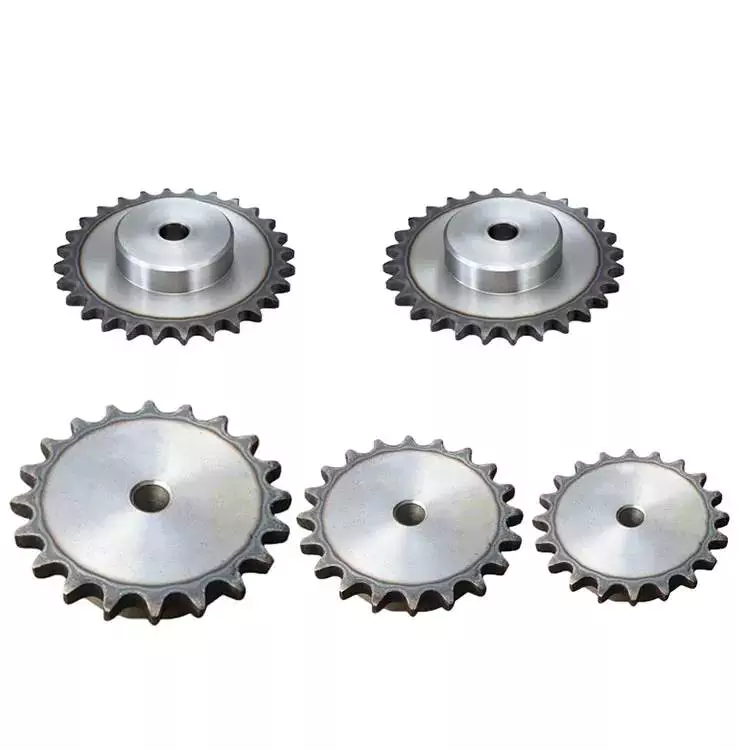
Roller chain sprocket
A Roller chain sprocket is a gear with toothed rollers. The tooth profile determines the arc length of the roller. A roller with an undercut tooth profile will not transmit movement properly. For this reason, the pitch line of the roller should be equal to the incremental circle length (r) divided by the number of teeth.
The chain sprocket is available in various types. They can be used in conveyor chains. They are usually available as ready-to-mount units. Finished bores and wide hubs are available for mounting them. They are also available with a roller-bearing design.
The teeth of sprocket wheels are derived from the involute-trochoid curve. In order to engage with these teeth, the roller chain must be sufficiently accurate to avoid backlash. However, conventional roller chains can also engage with these teeth. However, this cannot eliminate backlash completely. This is why the invention provides means for reducing the friction between the teeth and the roller. This also increases the life span of the roller-and-sprocket transmission.
In terms of standards, the ANSI standard is widely used in the industry. It accounts for nearly 15% of the market in Europe and holds an advantage over the ISO standards. In North America, manufacturers of sprockets follow the ANSI code B 29.1. The ANSI code provides clear design guidelines and allows for interchangeability among different types.
There are many considerations to make when selecting a sprocket. A key factor is the transmission input. For example, if the transmission has a high horsepower, the center distance between the large and small sprockets is smaller. To compensate for this, a chain with a smaller pitch may be appropriate. Also, if the transmission has a high horsepower ratio, a multiple-strand drive is a viable option.
If you’re looking for a quality roller chain sprocket, you should check out MDS. They stock a wide range of types and sizes for a variety of industrial machinery.
Gap-tooth sprocket
A gap-tooth chain sprocket has tooth-head heights greater than the ISO tooth form height. This ensures that the pins and rollers meet at a point near the tooth head, and eliminates pulsating movement and intermittent changes in speed.
The front and rear surfaces of the sprocket are convex arcs, with radii equal to each other and the center of the tooth gap bottom. This allows for a uniform pitch and reduced friction. The tooth-face height of a gap-tooth chain sprocket is equal to the pitch of the chain, while the radii of its tooth-faces are larger than that of an ISO tooth-form.
One form of gap-tooth chain sprocket has four teeth at regular intervals. The teeth are interconnected by arc-shaped tooth gap bottoms. The resulting chain pitch is called the chain pitch. The gap-tooth sprocket can be used on various types of wheels.
ISO 606 1994 (E) defines the standard chain length, while Japanese Industrial Standards (JIS B 1801) define the standard tooth form. The ISO and Japanese Industrial Standards define two different tooth forms, namely S-tooth and U-tooth. The ISO and Japanese Industrial Standard tooth forms have different tooth pitches, but the root diameter of both forms is the same. The distance between each tooth is measured from the pitch polygon.
The tooth gap bottom circle of the gap-tooth sprocket gradually contacts the surface of the front tooth in the opposite side of the tooth gap. As this process continues, the tooth surface of the gap-tooth sprocket moves closer to the tooth head. This reduces the impact, which results in less noise.
The gap-tooth chain sprocket is an ideal solution for many applications. It allows the chain to disengage easily. With the same frequency, the teeth of the sprocket also help in regulating vibration. A sprocket with short teeth will be easier to disengage when necessary.
Another popular style of gap-tooth chain sprocket is the random polygon 64. The random polygon is a quadrilateral. Each vertex of the quadrilateral is assigned to one of the four consecutive pins on the uniform chain. The four consecutive pins are aligned in a gap-tooth pattern.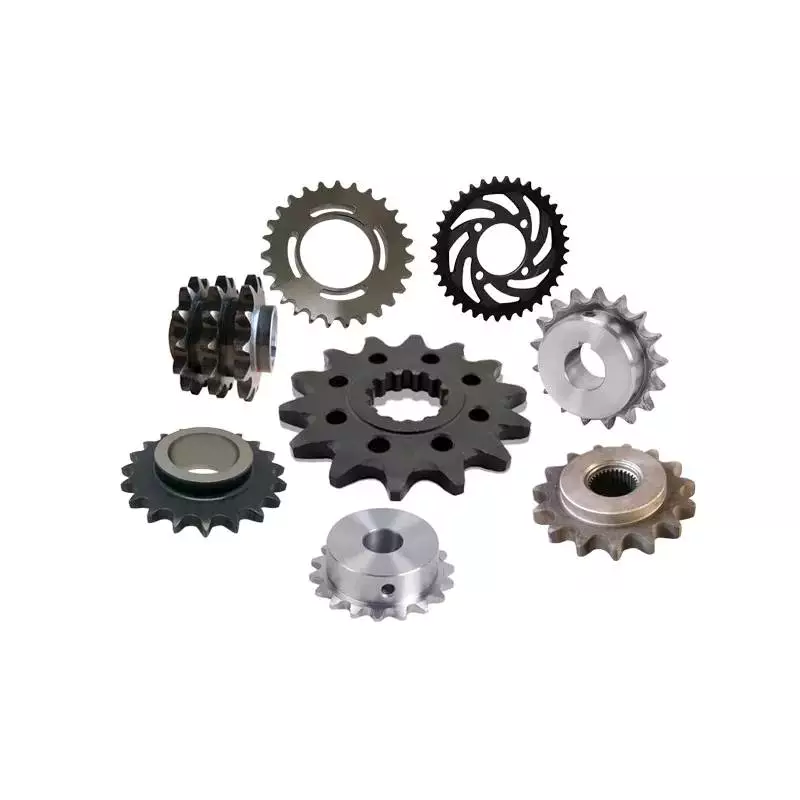
Steel split sprocket
Split sprockets are perfect for large portions of the drive system, as they can be installed without disassembling the entire shaft assembly. These sprockets are also useful in applications where there is limited workspace. They can be installed without disassembling the entire shaft assembly, minimizing the risk of damage to the conveyor system and reducing downtime.
There are several different types of split sprockets, including mat chains and table chains. Each type differs in bore diameter, number of teeth, block body style, and abrasion resistance. Some are made from steel, while others are made from a non-split material.
Split sprockets are available from many manufacturers. Typically, the split sprockets are made with two pieces of steel, which are then joined together again. This assembly technique is a cost-effective way to mount sprockets on a shaft. These sprockets can be stocked in multiple sizes and keyways.
Stainless Steel sprockets are available in stock and custom configurations. They are designed to last for years to come. These sprockets are suitable for conveyors, power transmission systems, and robotics. In addition, these sprockets offer heightened quality and durability. Some of these sprockets feature a bevel or spiral bevel gear, while others are made from helical gear.
Split sprockets are available in a variety of sizes. For instance, the RCS-03 is a plain bore type, while the RCS-04 is a finished bore type. Split sprockets are available with a split taper bushed design. They are also available with either single or multiple strands.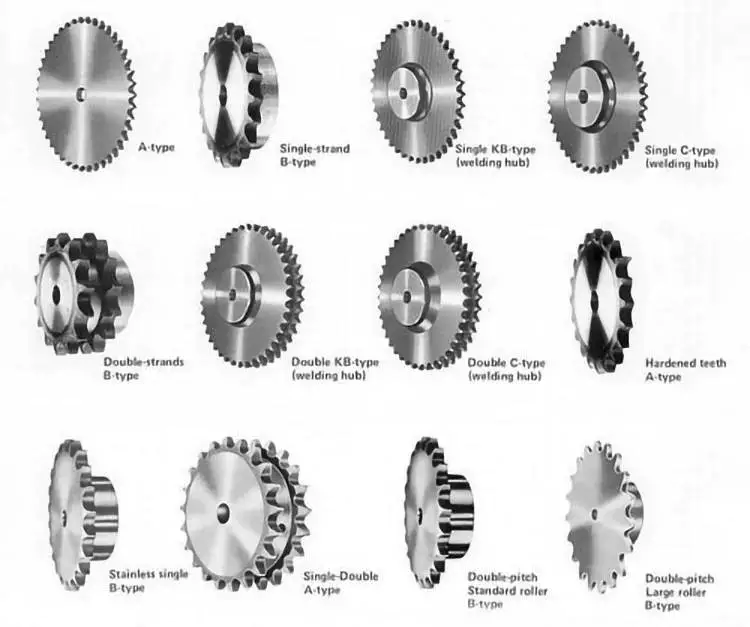
Double-duty sprocket
If you are looking for a heavy-duty chain sprocket, you have many choices. They come in different sizes, shapes, and materials. Some have wide teeth while others have narrow teeth. You should choose a sprocket that has the correct tooth pitch for your chain’s pitch diameter. You should also pay attention to the sprocket’s bore, or the hole in its center through which the drive shaft passes.
The type of transmission will also determine the type of sprocket you need. High-power transmissions, for example, require higher-pitch sprockets than lower-pitch models. To make sure that you choose the right sprocket for your application, check the horsepower and pitch of your transmission. If you have a low-pitch transmission, choose a smaller chain pitch. High-horsepower transmissions may also require multiple-strand drive.
There are different standards for sprockets, but ANSI standards are widely accepted. For instance, ANSI code B 29.1 requires sprockets to have two teeth per chain pitch, whereas ISO standards call for three. The double-duty sprocket, on the other hand, engages every other tooth. This helps the sprocket’s lifespan.
There are many different sprockets, and each has different performance characteristics. Generally, sprockets are made of metal or reinforced plastic and are similar to bicycle gears in their wheel-shaped design. Different types of chain sprockets have different teeth and work with different types of chains. The design of the chain and sprocket also determines the type of sprocket needed.
One popular type of double-duty sprocket is the steel-split sprocket. Its pitch is half the pitch of the chain and is usually referred to as a ‘double-duty’ sprocket. It is often used for heavy-duty purposes, as it distributes the load evenly on the chain.
While sprockets come in different tooth pitches and diameters, the recommended number of teeth is 17. The more teeth on the sprocket, the longer it will last. The height of the teeth is also important. A sprocket with more teeth will increase the life of the chain.


editor by czh2022-11-29